
The “Armenia–Turkey Media Bus Tour,” bringing together journalists from Armenia and Turkey as part of the European Partnership Foundation’s program “Support to Armenia-Türkiye Normalization: Enhancing Cross-border Linkages,” began on October 12, when media professionals participating from Armenia arrived in Istanbul.
As relations between Armenia and Turkey continue to advance, the “Armenia–Turkey Media Bus Tour” aims to ensure that the people of both countries receive accurate information through journalists. It also seeks to explore opportunities for cooperation between 14 journalists from the two countries and enable them to get to know each other’s societies firsthand. By conveying their experiences in a balanced, fact-based, and multidimensional manner, the participants aim to support the development of dialogue.
As Dink hoped
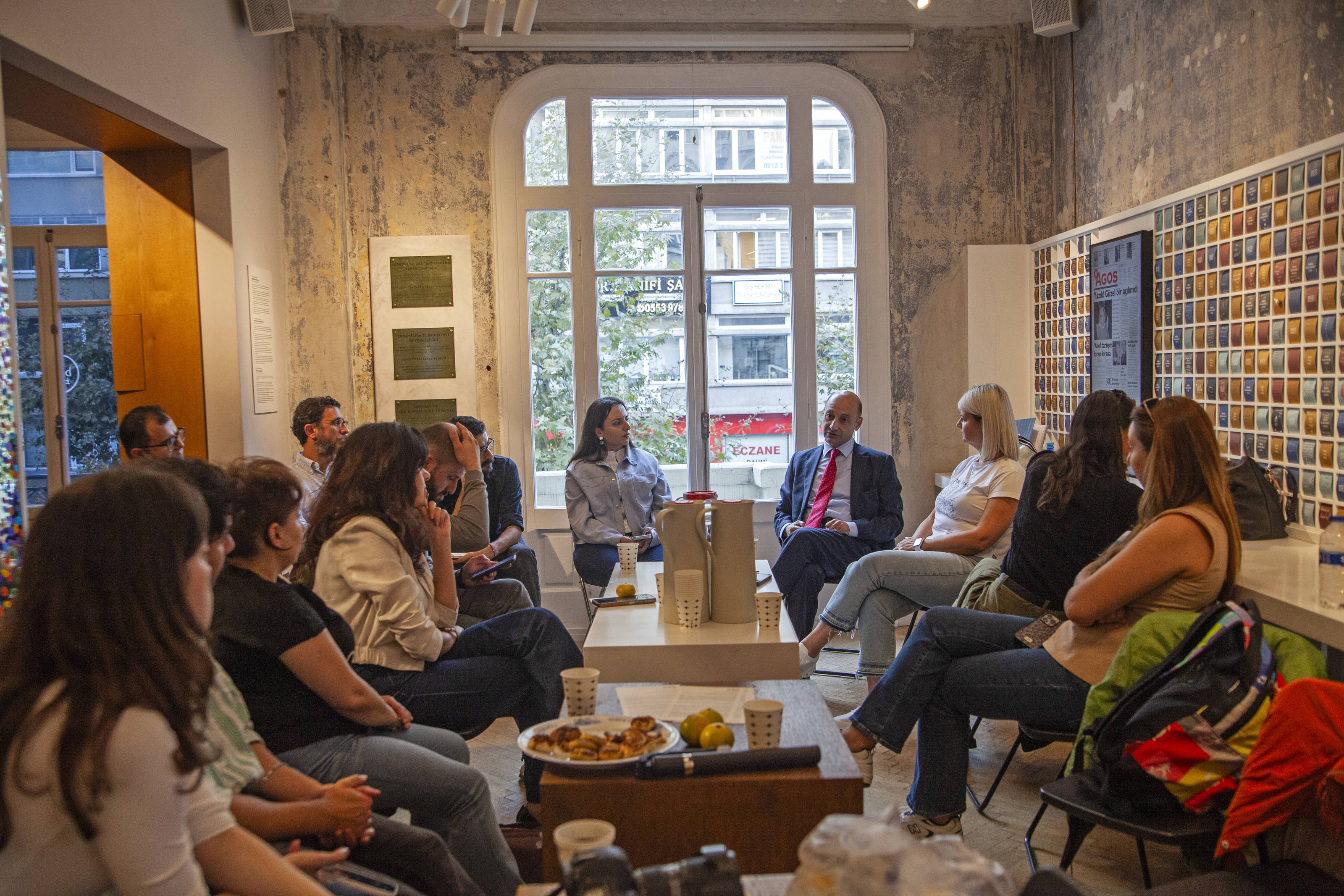
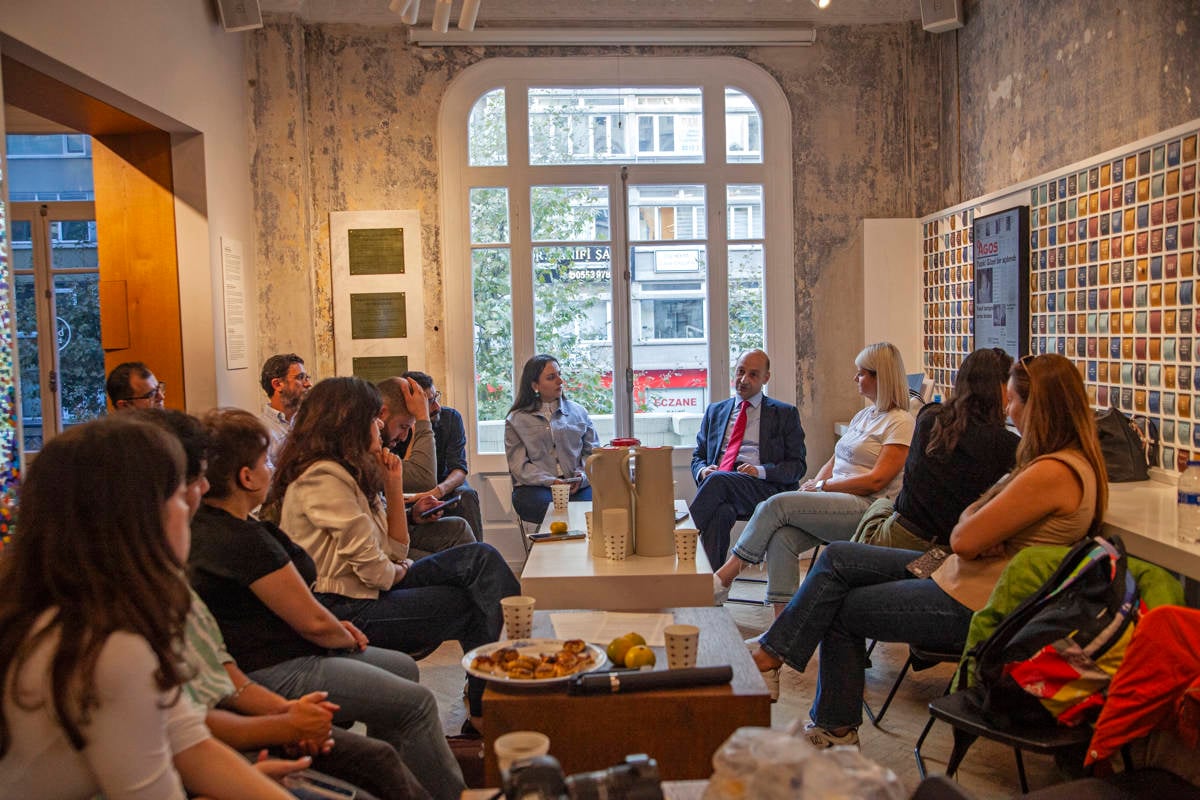
One of the first stops on the 12-day trip, which began in Istanbul on October 12 and will conclude in Yerevan on October 23, was 23.5 Hrant Dink Memory Site. After visiting the Istanbul Chamber of Commerce, the journalists were welcomed at 23.5, where they learned about Hrant Dink’s legacy through a guided tour.
The journalists then met with Nairi Petrosyan, Armenia’s Permanent Representative to the Black Sea Economic Cooperation organization. Responding to their questions, Petrosyan said that the Armenia–Turkey normalization process is progressing positively. In response to further questions, Petrosyan stressed “the great importance of maintaining communication under all circumstances,” explaining that Armenia completed all preparations for the opening of the border and that Turkey continues its work as well.
When journalists asked whether the border might remain closed because of Turkey’s close ties with Azerbaijan, Petrosyan said that Yerevan views Baku not as an obstacle but as a part of the solution. Referring to past and present relations between Turkey and Greece, Petrosyan posed the question: “Why shouldn’t Turkey do with Armenia what it has done with Greece?” Despite persistent questions, Petrosyan did not provide a date for the opening of Turkish–Armenian border.
From Istanbul to Kars, from Kars to Yerevan
During the “Bus Tour,” the journalists will visit İzmir, Diyarbakır, Van, and Kars on the Turkish side, where they will meet with local officials, businesspeople, factories, and civil society organizations. The “media bus” will then cross into Armenia, traveling to Gyumri, Dilijan, and subsequently Yerevan. The group of 14 journalists will also visit the currently closed Alican/Margara border crossing on both sides of the border.
During the tour, the journalists will meet with representatives of business communities, tourism professionals, researchers, and local communities, in addition to visiting economic centers, local businesses, educational institutions, and civil society organizations.
As journalists and media specialists from Armenia and Turkey travel together along a route stretching hundreds of kilometers from Istanbul to Yerevan, they will also follow the historic Silk Road firsthand. Their planned visits include Ephesus in Izmir, Surp Giragos Armenian Church in Diyarbakır, Akhtamar Church in Van, and the Ani Bridge in Kars.
On the Armenian side, after visiting historical and tourist sites such as Lake Sevan, the Temple of Garni, and Geghard Monastery, they will tour technology-focused ventures such as TUMO Center, Eleveight AI, and Picsart. The tour will conclude at the COP17 UN Climate Change Conference Expo platform.
The program’s first phase takes place in Turkey and its second in Armenia. The Eurasia Partnership Foundation and the Union of Manufacturers and Businessmen of Armenia are implementing the Armenian leg, while the Economic Policy Research Foundation of Turkey (TEPAV) and the Hrant Dink Foundation are responsible for the Turkish leg.