

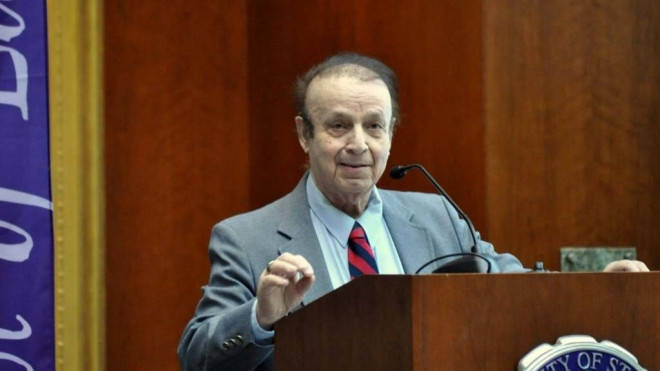
As is well known, Professor Vahakn N. Dadrian (1926–2019) was a pioneering scholar of the Armenian Genocide. Throughout his career, he devoted decades to uncovering and documenting the history of the Armenian Genocide through research in archives around the world. He assembled a collection of historical evidence drawn from Ottoman, German, British, French, American, Armenian, and other sources. His archive contains official documents, correspondence, newspapers, unpublished drafts, research notes, and numerous other materials of considerable scholarly value.
For the first time, this important collection is being made freely accessible to everyone around the world through a pioneering AI-powered digital platform. According to a statement from the three organizations, the platform goes beyond traditional digitization methods, transforming the archive into an interactive research resource and opening up new possibilities for historical inquiry.
It will be possible to ask Vahakn Dadrian questions with the help of AI
At the heart of this innovation, according to the announcement, is an AI-powered feature called "Ask Dadrian," which allows researchers to pose questions directly to the archive, almost as if they were consulting Professor Dadrian himself.
Users will be able to engage in interactive dialogue with the collection, investigate historical questions, locate relevant documents, and discover connections across thousands of pages.
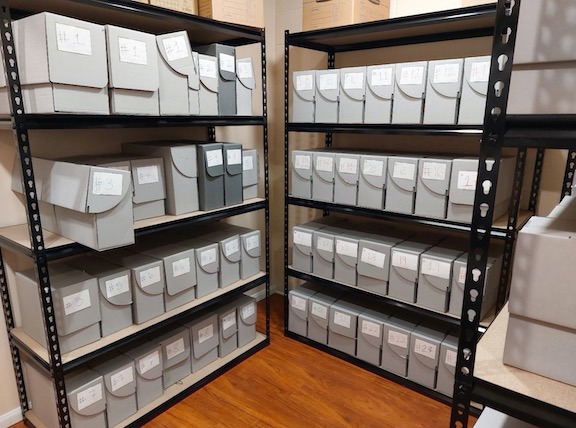
The project, consisting of more than 100,000 pages organized into hundreds of folders and over 660 gigabytes of digitized materials, is the result of sixteen years of work. Transported across the country from upstate New York to Los Angeles, the collection underwent an extensive process of preservation, organization, scanning, and digitization.
The initiative began in 2009, when Professor Dadrian decided to entrust his personal archives to the Ararat-Eskijian Museum and Research Center. Recognizing the historical significance of the collection, Museum President Martin Eskijian initiated the preservation efforts, while Museum Director Maggie Mangasarian Goschin oversaw the lengthy and challenging process of transporting, organizing, and digitizing the materials.
The project subsequently developed into a major collaborative effort involving UCLA's Armenian Genocide Research Program. It was brought to fruition through the dedicated efforts of scholars, technical specialists, volunteers, and partner institutions, as well as the generous contributions of donors and supporters.
The digitization process was completed in December 2025, after which an online platform was developed to make the collection accessible worldwide.
At the launch event, Museum Director Maggie Mangasarian Goschin, Carina Goschin, and Professor Taner Akçam, Director of the Armenian Genocide Research Program, will deliver remarks.
Dr. Anna Alexanyan will also participate in the program via Zoom, while a prerecorded presentation by Dr. Hayg Demoyan will be shown.
Garegin Chookaszian, joining via Zoom from Germany, will conduct a 12-minute guided tour of the website, introducing participants to its main features. Dr. Carla Garabedian will serve as the event's master of ceremonies.
Event Information
"A Lifetime of Scholarship, Now Open to the World"
Official Launch of the Vahakn N. Dadrian Digital Archive
Date: Sunday, November 15, 2026
Time: 4:00 p.m. (Pacific Time)
Venue: Ararat-Eskijian Museum / Sheen Chapel
Address: 15105 Mission Hills Road, Mission Hills, CA 91345
Registration and participation:
Event registration – UCLA
For further information: UCLA Armenian Genocide Research Program
Email: [email protected]
About the Organizers
Ararat-Eskijian Museum and Research Center (AEMRC) was founded in 1985 by Luther Eskijian, a survivor of the Armenian Genocide. The museum preserves an important collection of artifacts, books, documents, and archival materials related to Armenian history. It serves as a center for research, education, and community engagement focused on Armenian history and culture.
The Armenian Genocide Research Program (AGRP) was established in 2022 under the Promise Armenian Institute at the University of California, Los Angeles (UCLA). Led by Professor Taner Akçam, the program advances academic research on the Armenian Genocide, its historical context, consequences, and continuing impact through archival research, interdisciplinary collaboration, and international academic partnerships.
The Armenian Film Foundation was established in 1979 in Thousand Oaks, California, as a nonprofit educational and cultural organization dedicated to documenting and preserving Armenian heritage in multimedia formats. Its primary mission is to foster a sense of pride in the Armenian people and their contributions to society, and to ensure that these contributions are recognized around the world.
Who Was Vahakn Dadrian?
Vahakn N. Dadrian was born in Istanbul on May 6, 1926. He studied mathematics in Berlin, history in Vienna, and international law in Zurich.
He worked as a research associate at Harvard University and served as a visiting professor at MIT and Duke University. In 1998, he became an honorary member of the Armenian National Academy of Sciences. Dadrian was also a recipient of the Movses Khorenatsi Medal.
Between 1970 and 1991, Dadrian served as a professor of sociology at the State University of New York.
His books played an important role in bringing the Armenian Genocide to wider public and academic attention. His work ‘The History of the Armenian Genocide: Ethnic Conflict from the Balkans to Anatolia to the Caucasus’ is considered a significant scholarly contribution.
Another important work by Dadrian is ‘German Responsibility in the Armenian Genocide’.
Dadrian's books were published in Turkey by Belge Publishing. His book ‘Genocide as a Problem of National and International Law’, published in 1995, became the subject of legal proceedings, after which he was acquitted.
Dadrian also served as director of the Genocide Research Department at the Zoryan Institute.
He died in the United States on August 2, 2019.