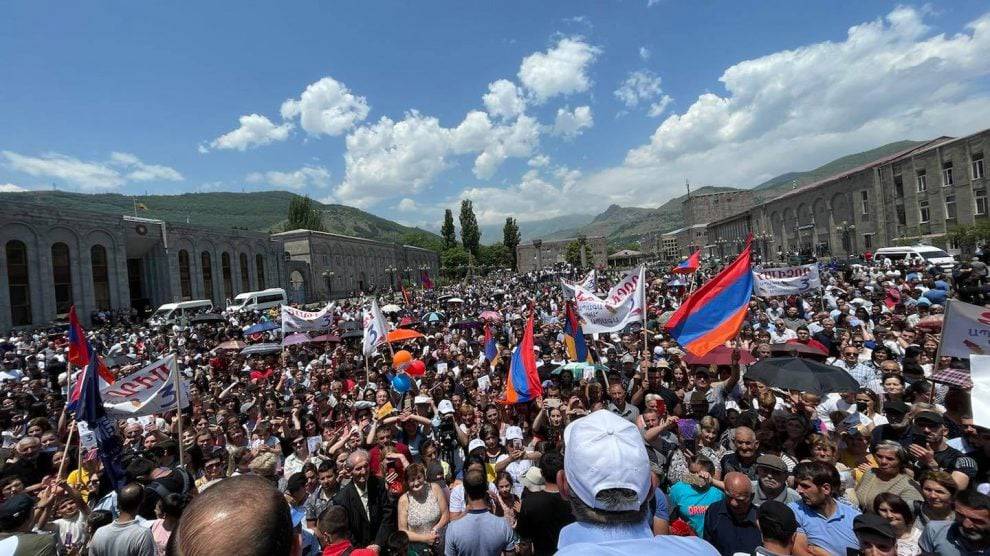


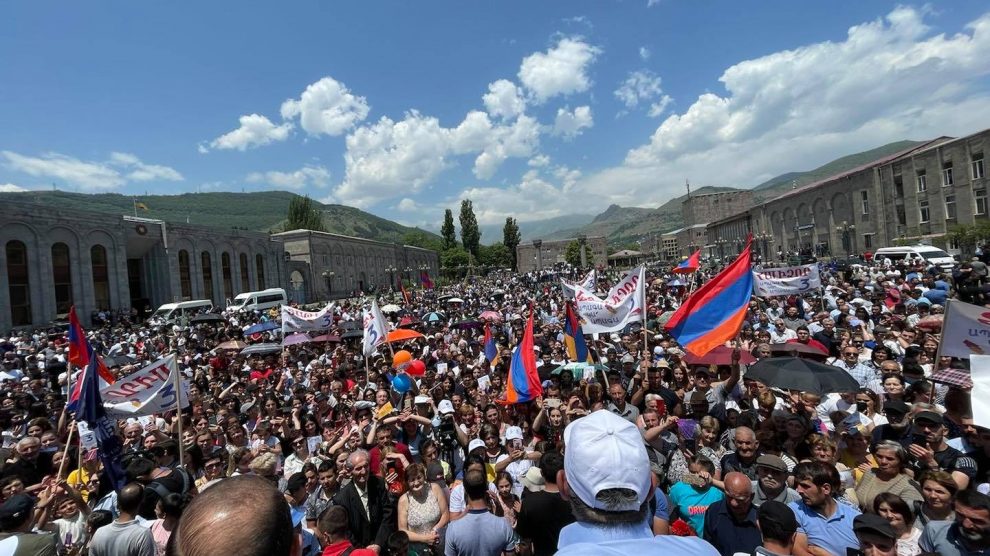
With a high voter turnout of 59%, Armenia’s citizens reaffirmed their trust in the incumbent Prime Minister Nikol Pashinyan, whose Civil Contract party secured victory with 49.8% of the votes. This marks an impressive achievement, granting a third mandate to Pashinyan - who came to power in the 2018 Velvet Revolution, guiding the nation through defeat in the Second Karabakh War in 2020, and the consequent ethnic cleansing of Nagorno-Karabakh by Azerbaijan in 2023. Although international observers noted the use of state administrative resources to influence the outcome, the elections stand as a remarkably democratic exercise in a region heavily plagued by autocratic regimes.
Why did Armenian voters place their trust in Pashinyan? Ultimately, he understood - more than any other domestic politician - how to break from the past, move beyond the defeat and articulated a vision for the future. Rather than exhausting national energy on a lost cause for which Armenia lacks both resources and external allies, Pashinyan promised peace, to normalize relations with neighbouring Azerbaijan and Turkey, and effectively bring Armenia out of its 35 years of regional isolation.
The only other Armenian leader who tried to get a third mandate was Serge Sargsyan, who was immediately overthrown by a popular revolution in 2018. The irony is that Sargsyan had made constitutional “reforms” with limitless mandate so that he stays in power, and now it is the leader of the Velvet Revolution who is profiting from it.
Samvel Karapetyan a political novice, an oligarch with financial ties with Russia, received 23.2% of the votes. Former President Rober Kocharyan, whose “Armenia Alliance” includes ARF-Tashnagtsutyun, got 9.9% of the votes. Both opposition parties who entered the parliament have pro-Russian positions. It is surprising how the two opposition parties who promised better relations with Russia, while Russian politicians were blackmailing Armenia, blocking the import of fruits and vegetables, threatened to double the gas prices, got so many votes. Russian leaders are evidently angry and want to “punish” Armenia. They seem unable to grasp that the geopolitical situation has changed in the South Caucasus largely due to their policies, when Russia abandoned Armenian and Nagorno-Karabakh to be defeated by Azerbaijan-Turkey alliance in a series of wars between 2020 and 2023.
Nikol Pashinyan’s biggest challenger was not the pro-Russian opposition, but Nikol Pashinyan himself. While he understood the necessity of political change and was able to produce a new vision to stabilize Armenia after the series of wars and incoming refugees, often he went way too far. Instead of explaining the reasons of policy changes, he spent time and energy to develop a new “ideology” that he calls “Real Armenia”. In his efforts, Pashinyan is attempting to rewrite Armenian history, including that of the 1915 genocide, for which he has neither qualifications, nor a mandate. By his over-zealous attacks on symbols of Armenian nationalism and identity, Pashinyan is unnecessarily creating a legitimate space to oppose him on the ground of nationalism and identity. This topic is especially popular among the youth, urban, educated classes, who are sceptical about the capacity of Pashinyan to deliver what he is promising: security and prosperity.
The other problem of Pashinyan is his incapacity to control his tongue. He often aggressed Nagorno-Karabakh refugees, like a refugee woman he encountered in the metro, or war veterans, calling them “fugitives” who did not defend their land. Such populist discourses attacking refugees might earn him some votes among those who dislike refugees, but it can also cause deep distrust among educated classes.
The outcome of the 2026 parliamentary elections is a victory for Pashinyan, but not a total one. The opposition, by collecting a third of the votes, has the capacity to block major decisions, such as the constitutional reforms promised by Pashinyan. This is a good thing for Armenia’s parliamentary democracy: now ruling party and opposition need to talk to each other, negotiate, and find compromises. Will the opposition use this opportunity to help the country move beyond “with-us-or-against-us” type of polarization?
The constitutional reforms promised by Pashinyan are driven by foreign policy and security considerations, as Azerbaijan and Turkey are pushing for even more concessions: an Armenian constitution that is cleansed from any reference to Nagorno-Karabakh. Parallelly, Azerbaijan is continuing the destruction of remaining references to Armenian identity in Nagorno-Karabakh that it occupied during recent wars: churches, cemeteries, villages, and entire neighbourhoods of Stepanakert.
Now that the elections are finished, the next chapter of Armenia’s history will largely depend on what Turkey will do. Ankara has two choices: either decide to take positive steps and open the closed borders and open Armenia’s routes to Europe, or continue its negative policies towards Armenia, maintain the blockade, and push Armenia once again back to the lap of Russia. Turkey already did that once in the first years of independence.