


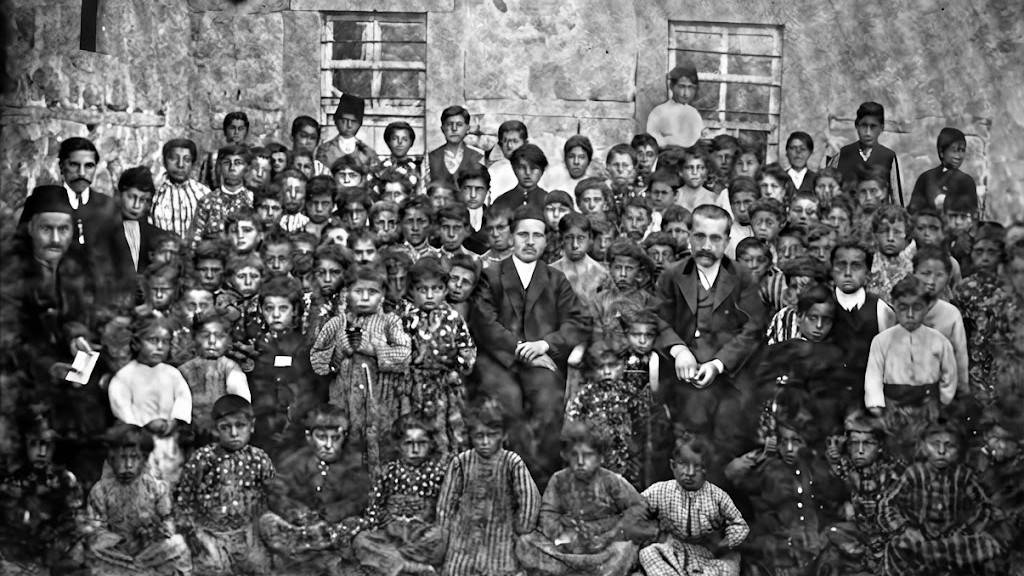
I previously discussed the history of Kurdish-Armenian relations and noted that this history is far too complex, multifaceted, and fluid to fit into a simple “friend or foe” dichotomy. One of the main factors behind this complexity is the relationship of these actors with the Ottoman central government. Here, too, it is impossible to speak of a consistent, uniform pattern over time. In other words, neither all Kurds nor all Armenians were continually allied with the central government or continually in conflict with it. Instead, we can speak of shifting, fragmented alliances that divided both communities internally.
For example, when the Tanzimat administration in Istanbul launched a military campaign onward to break the power of the Kurdish emirates in the eastern provinces, the Armenian Patriarchate in Istanbul called on Armenians to support government forces. Yet among the Armenians in the region, there were also those who supported the Kurdish beys who held influence there. Toward the end of the nineteenth century, as is better known, the government of Abdülhamid turned Kurdish notables into instruments of its own policies through the Hamidiye Regiments (and Tribal Schools), in order to undermine the growing influence of Armenian political parties in the region. From its own perspective, the government was essentially successful in this endeavor, since these regiments served to intimidate Armenians and caused enormous destruction among them.
Setting all of this aside, if you ask me what the central issue, and the defining factor, in Armenian-Kurdish relations in the eastern provinces was, particularly from the mid-1850s onward (and perhaps even earlier), I would say: the land question and the breakdown of public security. Indeed, these issues also lie at the heart of what came to be known as the “Eastern Question” or the “Armenian Question.”
We cannot examine these issues in detail in an article of this length and scope. But from the 1850s until the end of the empire, a period of roughly 65 to 70 years, Armenians continually complained about their lands being seized, their property being plundered, their women and girls being abducted, and murders going unpunished. In other words, they had no security for their lives, property, or personal dignity and honor. Over the course of several decades, numerous reports on these matters were submitted to the Ottoman state through the Patriarchate. At times, delegations from the provinces themselves even traveled to the capital to try to make their grievances heard.
In essence, the establishment of Armenian political parties and their turn toward armed resistance from the second half of the 1880s onward were a consequence of the failure to obtain any results through these efforts. (As is well known, the official narrative claims that the aim of these parties was to establish an “independent Armenia.” However, this objective appears only in the first party program of the Hunchaks whereas it does not appear in the Dashnaks’ party programs. The most maximalist demand was for a decentralized administrative structure within the borders of the Ottoman Empire, which was seen as offering a definitive solution to the security problem.)
In cases of land seizure, the perpetrators were not exclusively, but predominantly, powerful Kurdish aghas, beys, or sheikhs in the region concerned. Indeed, from the time of the Reform Edict (1856) through to the period following the Second Constitutional Era (1908), whenever attempts were made to introduce reforms that would establish public order, return confiscated lands, and bring equality to the governing of these regions, the strongest resistance came from this segment of society, which we can broadly describe as the Kurdish elite. Even during the genocide, the desire to avoid returning confiscated lands played an important role as a motivating factor.
Naturally, issues of land and public security were among the foremost subjects covered by both the Armenian press in Istanbul and the provincial Armenian press. In virtually every time period from the mid-1800s to the early 20 the century, newspaper pages were filled with reports of lands being seized here or there, murders, robbery, assaults, the abduction of girls, and similar incidents. Consequently, there was always a “Kurdish question” on the Armenian press' agenda.
Particularly following the Second Constitutional Era, one idea became prominent in the Armenian press: Armenians would never be able to live in peace unless the question of Kurdish education was solved. In other words, according to this line of thinking, unless Kurds were enlightened by “the light of civilization,” the power exercised over them by aghas, beys, and sheikhs could not be broken. And unless that power was broken, Armenians would never find peace either.
The educated Armenian classes also assigned Armenians a special role in expanding educational opportunities for Kurds in every possible way. Indeed, as readers may know, in the series published in Agos over the past few weeks by Zakarya Mildanoğlu, which I also referred to in my first article, he presents examples from the Armenian-language press of that period. These include everything from a Kurmanji alphabet printed in Armenian letters for Kurdish children to projects that would have enabled Kurdish children to learn to read and write in their own language in Armenian schools. Some of these initiatives were implemented, while others never materialized.
One point needs to be emphasized here: among Armenians, the idea that Kurds and Armenians were two peoples who would inevitably live together or alongside one another was as natural as air or water. They probably could not even imagine an alternative in their dreams. In other words, far from imagining that they themselves might be erased from this equation forever, they regarded the Kurds as an enduring part of that geography, a people who had always been there and always would be. That is why they sought ways to achieve a peaceful life together. Improving the educational level of the Kurds was one such effort.
But let me immediately say that what I have said does not mean that, throughout the 65-to-70-year period in question, Armenian groups never harmed Kurds or never massacred them. On the contrary, if you narrow your lens in terms of time and place, you will find numerous instances in which Armenians massacred Kurds. Nevertheless, particularly in the hopeful atmosphere following the Second Constitutional Period, when there was greater optimism about the future, people increasingly sought ways to reach a compromise rather than resorting to conflict. Unfortunately, for many reasons, these efforts did not succeed.
The essence of the matter is this: the two ancient peoples of the region had shared that land, sometimes fighting and coming into conflict, sometimes showing solidarity, and naturally engaging in commercial and cultural exchange. Then one of those peoples was erased, in its entirety, from its ancestral homeland.
That is what is painful and unjust.
Note: In the last two articles I devoted to this subject, I repeatedly emphasized the complexity of Armenian-Kurdish relations. But I did not even get to mention one important factor that made these relations more complicated still: internationalization of the question of Armenian security in the eastern provinces, which became an issue and an instrument of international politics following the Russo-Ottoman War of 1877–78, first through the Treaty of San Stefano and then through the Treaty of Berlin. This meant that powerful states of the time, such as Russia, Britain, and France, entered the equation as actors in their own right. This complicated matters even further, but that is a subject deserving of its own article, or perhaps several.


