


For me, the words migration and migrant—encountered both in their Arabic forms via Lebanese media and in their Armenian meanings, learned from Armenian newspapers—have always been associated with the horrors inflicted upon a community by war and bombardment. Years later, however, migration—in a different guise—came knocking at our own small door. How was I to know that migration had never truly left our home, and that my very existence is a product of exodus and exile? Yet, to a naive observer, this instance of migration knocking at our door might be mistaken for a "migration at peaceful times." Naturally, no such thing exists; what I mean to say is simply that this was not the migration I had come to understand during my childhood.
Most of us who were born and raised in Lebanon live with the prospect of migration. It is a vision, not a dream, because migration has become the ultimate goal in life—a way to escape the ongoing insecurity imposed on Lebanon. During the orientation program on my first day as a student at the American University of Beirut, as we newcomers gathered in a hall, the person in charge asked us to raise our hands if we had dual citizenship. The overwhelming majority—if not everyone but me—did so. In that moment, feeling a sense of shame, I began to wonder why my family or I had never sought—as they had—to acquire citizenship in America, Europe, or even Armenia, so that if something were to happen to us here in Lebanon, "our embassy" could whisk us away to the safety of its own country. Honestly, at heart, I have always aspired to migrate. For me, this migration was framed in terms of education; the prevailing belief was that a successful scholar pursuing a master’s or doctoral degree ought to do so abroad. Anyone who stayed—or even returned—was inevitably seen as lacking something. Years ago, while discussing this subject with a friend who had lived in various parts of the world, I remarked, "I have much to accomplish here. Burj Hammoud needs me." His response was, "By leaving, you could actually become far more useful to your Burj Hammoud."
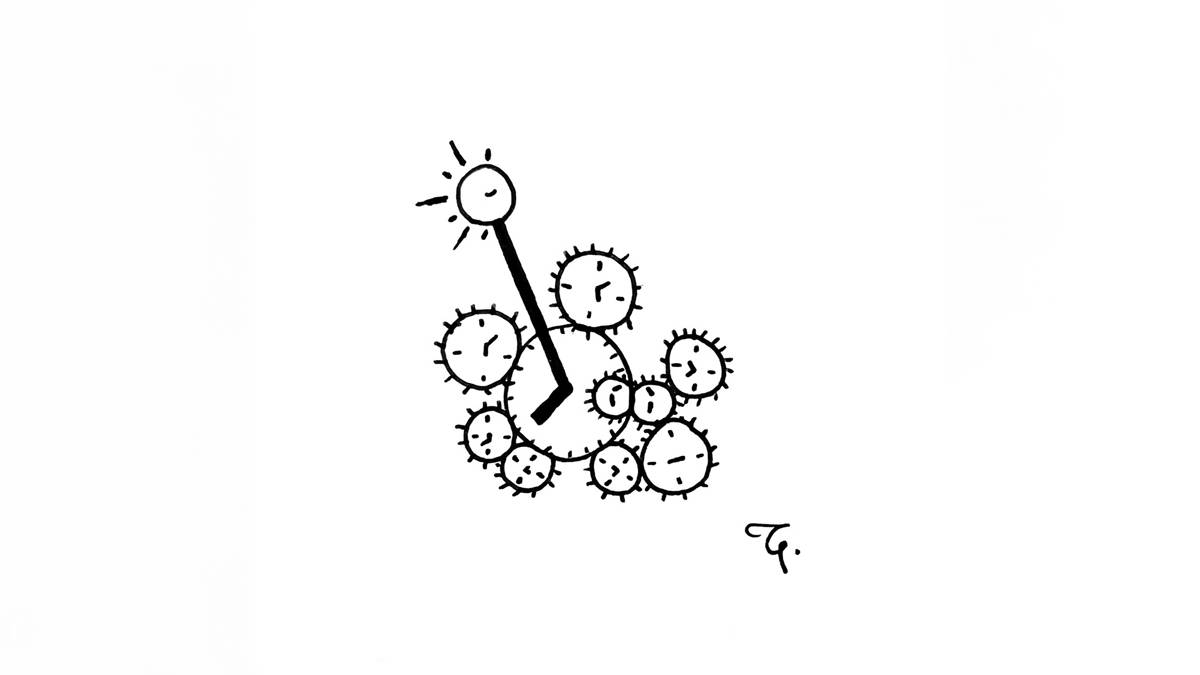
Within our small family, my brother was the first to migrate—more than a decade ago. His emigration weighed heavily upon my parents—except during the recurrent periods of war in Lebanon or times of internal strife within the country. At such moments, my parents would often repeat, "It’s a good thing our son isn't here." Before long, my sister also left, taking with her the first grandchild of our family. The departure of my siblings forced our family into an existence spanning multiple time zones; the question, "What time is it over there?" echoes incessantly against the now-hollow walls of our home. In our house, the hours—marked by the movement of clock hands—are divided according to the spaces that exist between the numbers on the clock face. My parents go back and forth, get flustered, start all over again, and when patience finally runs out, turn to me: "What time is it over there right now?" And whenever a call comes in from their children, my parents sit right next to the modem to circumvent the consequences of an unstable connection. I’ve noticed that keeping track of these time differences has really worn thin my parents’ patience—especially when they’re forced to endure the questions and opinions of some random acquaintance they happen to run into at the market: "How are they doing over there? I’m sure they’re much better off. So, when are they going to invite you over? Aren’t they coming back to Lebanon? Why would they? What’s there for them to come back to? The important thing is that they have a better future ahead of them now." "At least, unlike Lebanon, there is a retirement pension there..." and other such remarks, comments that diminish the reality of a person’s or a family’s existence when measured against the "good life" others have imagined.
Between my siblings’ migration, many of my close friends and relatives also left—some to pursue their education in the West, others simply to escape the dire situation in Lebanon. Gradually, my relationships moved onto digital platforms. Weather and time zone widgets now occupy a significant space on my smartphone screen. Just as I once memorized the multiplication table, I can now recite by heart the time differences between Lebanon and the countries where my loved ones reside.
For nearly half of my life, the clock has been my constant companion. Throughout the day, I often respond to “good morning” messages, regardless of the hour. At various seemingly insignificant moments throughout the day, I receive and share brief, moving messages. Each year, I eagerly anticipate three occasions—summer, the New Year, and Easter—when flights from around the world bring my friends back to Lebanon. I do all of this from Bourj Hammoud—a place from which I am currently unable to venture out—believing that my actions here benefit my community, even as I strive to find meaning within the temporality imprisoned by the hands and numbers of a clock.
I am not certain what constitutes the "best" life for a Lebanese: is it migrating to "safer" and more "favorable" places—though such places hardly seem to exist anymore, given the current global reality—or is it the seemingly hopeless pursuit of creating better conditions right where we are? Nevertheless, I can confirm that living by the clock, separated from your siblings and close friends in your birthplace, is an inexpressible pain.


