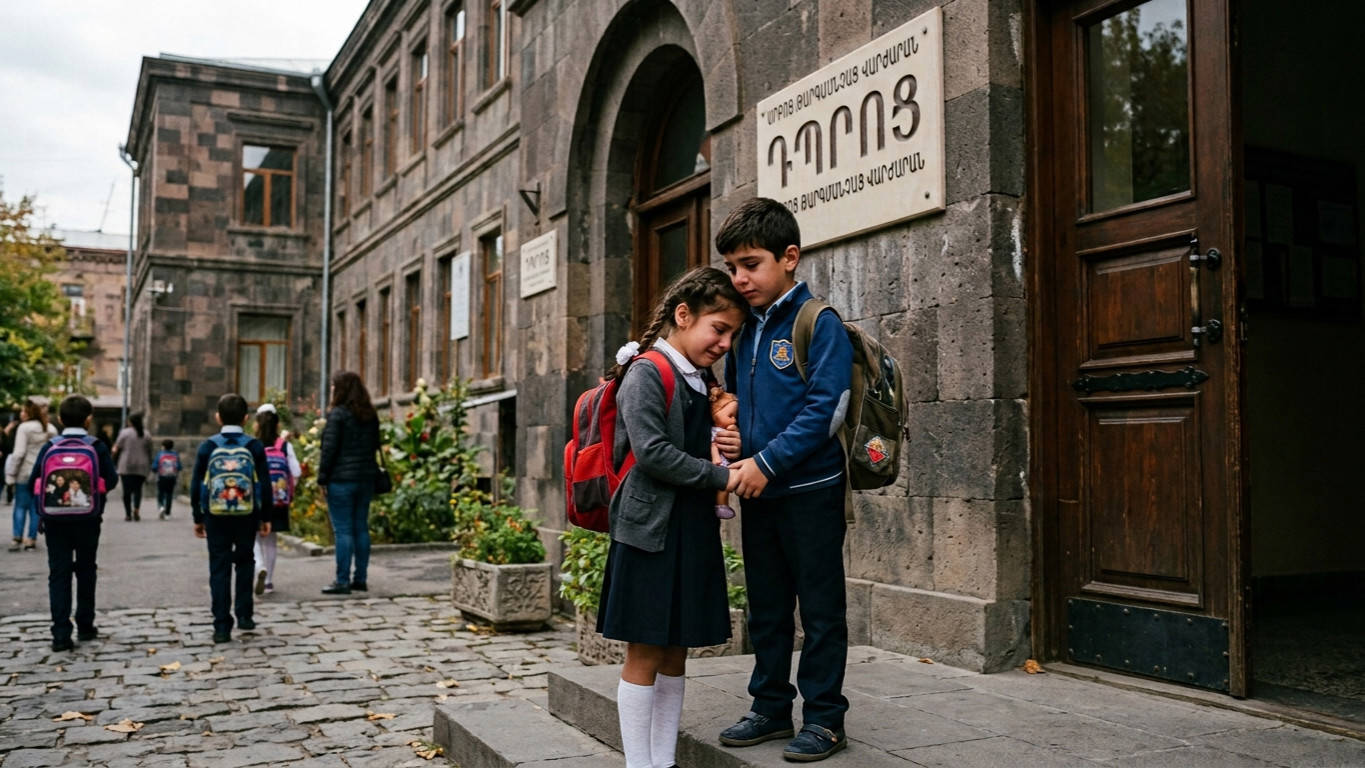


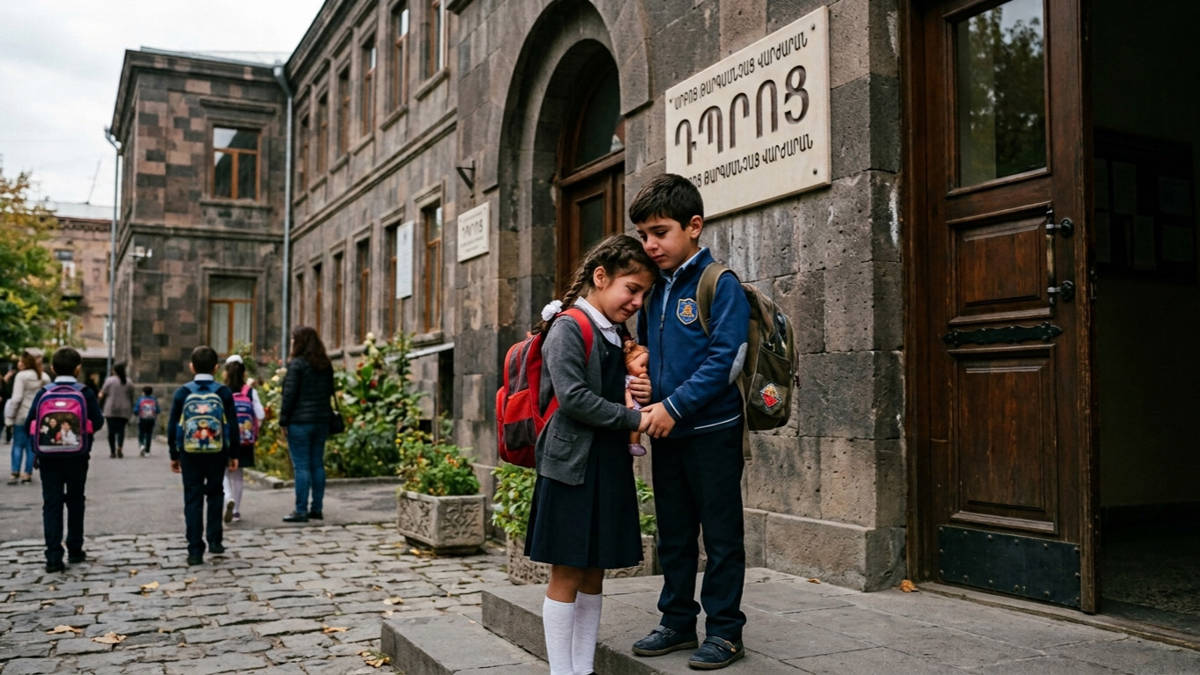
Last week, you may have seen İşhan Erdinç’s report in Agos about restrictions on students attending minority schools. To summarize, a regulation introduced in 2012 allowed foreign-national students to attend private schools not as regular students but as “guest students.” These students could be given a document showing the grades they had received, but not a diploma. Under this regulation, Armenian children who were citizens of Armenia or Syria were therefore able to attend classes at Armenian schools in Turkey.
In fact, the regulation itself was inadequate and created grievances, because, as noted, these students could not receive diplomas. The fact that the same students could receive diplomas if they attended public schools but could not acquire the right to a diploma by attending Armenian schools, was both a violation of the right to education and an inconsistency. Moreover, public schools obviously could not—and still cannot—provide Armenian students from Armenia or Syria with education in their mother tongue. Therefore, the most sensible and rational solution for these children was to officially attend Armenian schools and receive official diplomas.
However, while an improvement in this direction was expected, the situation is now being regressed even further: these children are being deprived of their status as guest students, their ability to attend Armenian schools is being eliminated, and they are being required to attend public schools instead. (This will probably not be a regulation applicable only to Armenian schools. Greek and Jewish schools are likely to be included as well.)
So, the question before us is this: Why would a state need such a regulation? Why would it want to prevent these children from being educated together with their peers who speak the same language?
To answer this question, it is useful to provide a little background. In Turkey, Armenian schools (as well as other minority schools) are regulated under the 2007 Law No. 5580 on Private Educational Institutions. Under the same law, beside private schools, foreign schools, and even such completely unrelated institutions as private driving schools are handled. This in itself is a situation that does not correspond to reality, because Armenian and other minority schools fit none of these definitions. They are not schools established by private individuals for profit; they are not schools established by foreign nationals; and they certainly are not driving schools! These schools need a separate legal framework that reflects their actual identity and defines them as what they really are.
Yet despite being classified as private schools, they are not allowed to enroll just any student they want because Articles 2 and 5 of the aforementioned law stipulate that only the children of Turkish citizens belonging to that particular minority may attend these schools. Although it is not our subject here, how “belonging to a minority group” should be certified has long been a problem. The root of today’s problem concerning the exclusion of foreign-national students from these schools lies in the articles of this law. The 2012 regulation had introduced some flexibility into this restriction.
To repeat our question after this background: Why does the state not want foreign-national Armenian students to be educated, or even to be present, at Armenian schools in Turkey? After all, these are schools attended by Turkish citizens, operating within the framework of the laws and curriculum of the Turkish state and under the state’s supervision. Are these schools not problematic for citizens but somehow problematic for foreign nationals? This does not make sense.
Let us put it plainly, without beating around the bush: From the very beginning, the aim of the state in Turkey has been to reduce the number of Armenians as much as possible and ultimately eliminate them completely, alongside the other non-Muslim minorities; to unravel, weaken, and assimilate Armenian identity. Keeping schools under control and pressure was, of course, one of the most important components of this policy. Indeed, from the perspective of those implementing it, the policy was successful. In parallel with the Armenian population, the number of students in Armenian schools steadily declined, and continues to decline.
Therefore, bringing new energy to these schools by adding some students from outside, even if the number is small, is something the state would not want. In other words, if the objective is to reduce the number of students, taking a step that would increase that number contradicts state policy. In addition to this quantitative aspect, students from Armenia have also brought a qualitative contribution and interaction to Armenian identity. In other words, when İşhan Erdinç wrote in the aforementioned report that “the education of students from Armenia in Armenian schools for 14 years has also enabled dialogue to develop between Armenians from Turkey and students from Armenia,” he was, knowingly or unknowingly, pointing precisely to the reason why the state has decided to terminate the guest-student system.
Although saying it after 14 years is legally and morally unacceptable, I believe the authorities’ statement that “that regulation actually did not cover your [minority] school” is entirely sincere and reflects the reality. This was probably something they had overlooked and have only noticed now. And I suspect what led them to notice it was MAZLUM-DER’s well-intentioned initiative seeking to eliminate the students’ rights violations and enable them to receive diplomas as regular students.
Can those, who think the reasons and reasoning in this article are not true, offer any other explanations that are compatible with reason, logic, and conscience?