

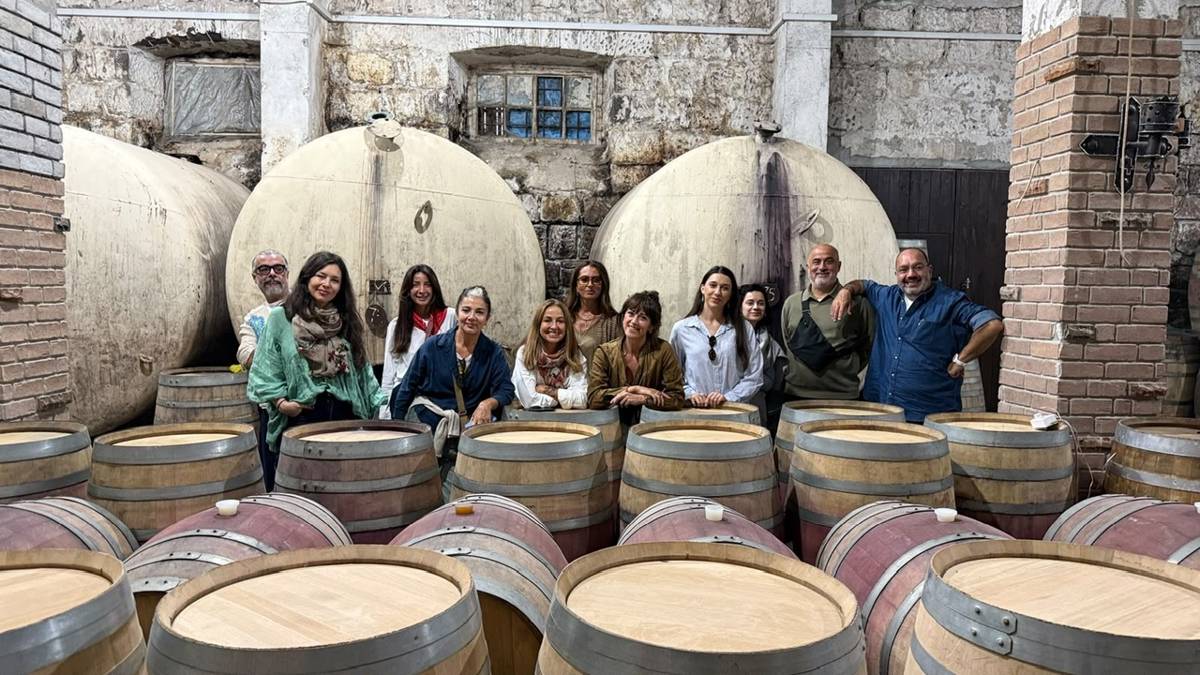
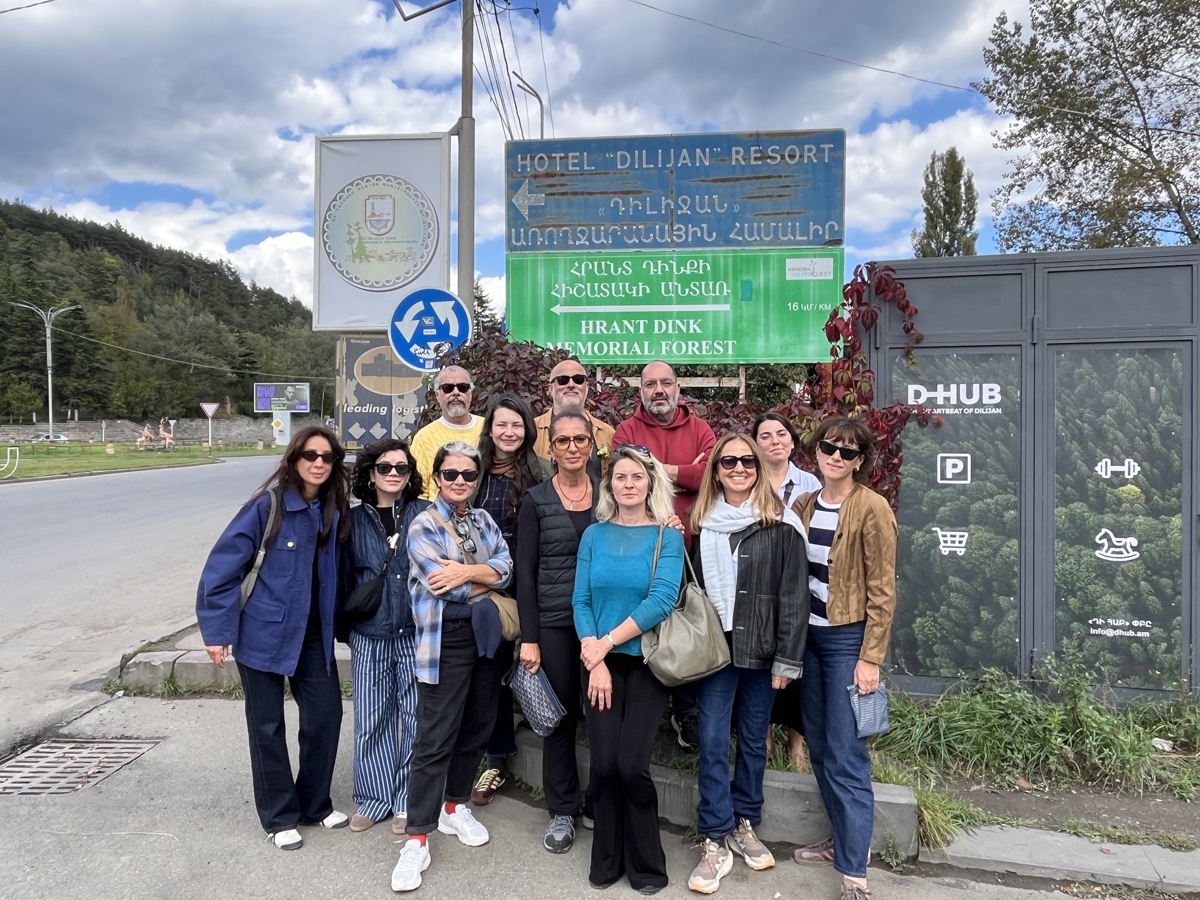
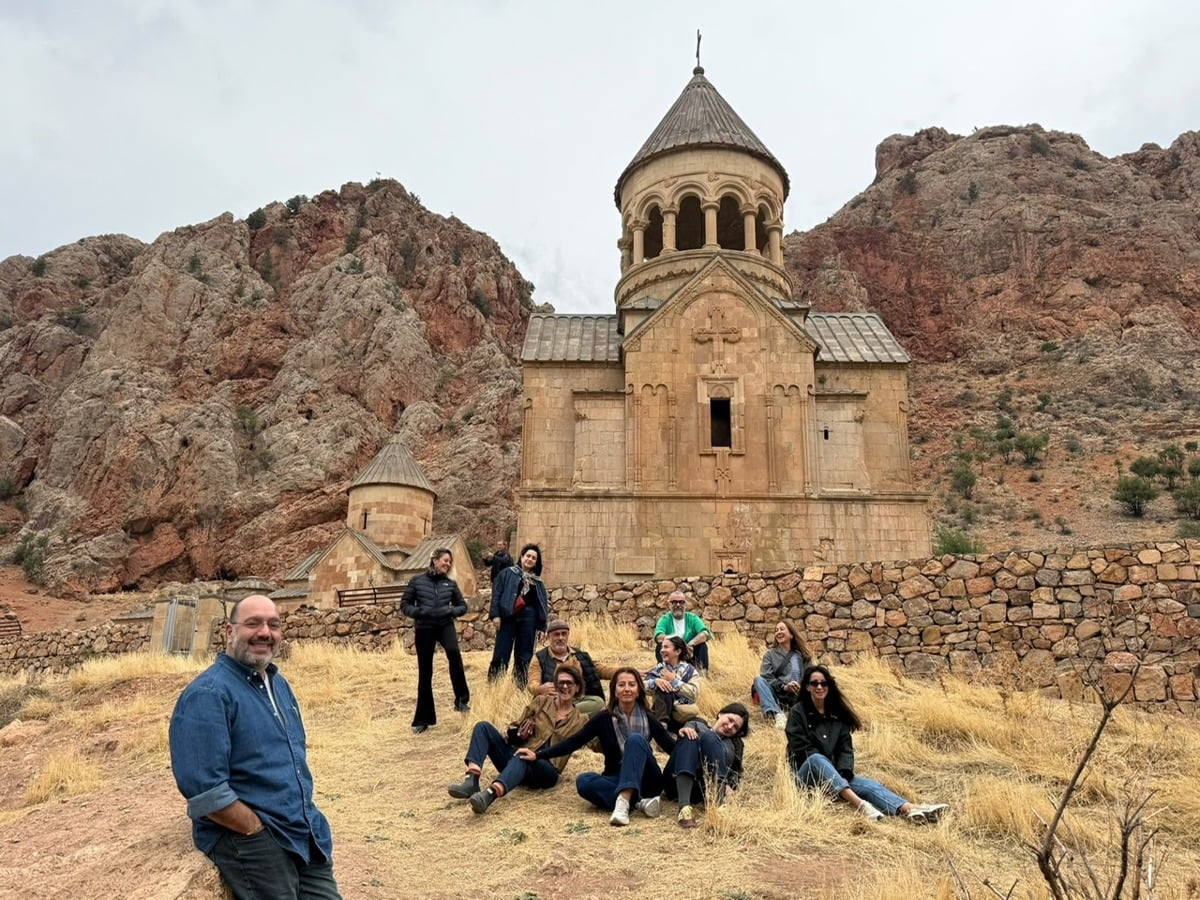
The Hrant Dink Foundation’s Dialogue Program, which brings together professionals working in gastronomy, took place from October 5 to 11 in Yerevan, Dilijan, and Vayots Dzor. The group, consisting of ten professionals, had the opportunity to get to know Armenia’s gastronomic culture and cultural richness closely.
The social life of Yerevan and the vibrancy of its streets were among the first things to catch the participants’ attention. Journalist and writer Tan Morgül, who focuses on gastronomy, meyhane (traditional/old school tavern in Turkey) culture, and street food, described encountering an unexpected level of activity in the city:
“I found it quite lively, both structurally and spatially, as well as in the way people use the streets. There is investment in many areas, from gastronomy to technology.”
Müjde Mısırlı Zoto, who has many years of experience in the tourism and communications sectors and is also part of the management of Armada Hotel, said that the city’s development and architecture impressed her, adding, “I didn’t expect such a vibrant city or such magnificent architecture.”
Sabiha Apaydın Gönenli, one of Turkey’s experienced wine consultants, said she saw Armenia as “on the threshold of change”: “There are restaurants, cafés, and a life lived outdoors. I saw that wine has made a huge leap forward.”
“A renaissance in wine”
Wine, which was at the heart of the program, left the strongest impression on the participants. Gönenli added that although the region has a very long history of winemaking, it had experienced major disruptions, and that Armenia is entering a period in wine that could be described as a “renaissance.”
“During the Soviet era, Armenia produced only brandy. There has also been a major rupture in Turkey. The disappearance of Armenians from the country as a result of the genocide wiped out, overnight, all the knowledge, culture, and traditions there as well.”
Gözdem Gürbüzatik, a wine expert and educator and one of the founders of the Heritage Vines of Turkey (HVOT) project, also drew attention to this revival, saying, “It feels very encouraging to see people from the diaspora gradually pursuing their work with passion.” Speaking about vineyards at elevations of up to 1,800 meters and the Areni grape in particular, Gürbüzatik said, “It was an approach that allowed me to experience the vitality of the grape to a great extent and left a deep impression on me.”
“The language of the land brings people together”
Participants emphasized that wine and geography could establish a common language between the two societies. Gürbüzatik said, “I believe that the language of the land and the language of geography are highly conducive to reconciliation and bring people together. Wine is like that, too. We experienced a sense of speaking the same language here.”
Sharing the view that gastronomy provides an important foundation for dialogue, Tan Morgül said the border needed to open for similar efforts to involve more people: “Flying is nice, but crossing the border should be different. It needs to become something more than an experience visited by only certain groups; people should be able to come and go freely and easily.”
Recalling the title of Hrant Dink’s book ‘Two Close Peoples, Two Distant Neighbors’, Müjde Mısırlı Zoto said, “When I looked at Ararat, I realized that this distance could be bridged and the two sides brought much closer. All that is needed is for the borders to be lifted. Then crossing back and forth, all kinds of dialogue, and all kinds of relationships will become much easier.” Mısırlı Zoto noted that they formed new friendships even during a short visit of just five days, adding that an Armenian she met will be coming to Istanbul the following week to visit her.
“I would come back”
Sabiha Apaydın Gönenli said, “... I would also like to take a trip where I can become more immersed in everyday life and stay longer. I would definitely come back.” Gürbüzatik also said she wants to return to follow this process, while Mısırlı Zoto said she would like to bring her husband as well.
The Dialogue Program was carried out with the financial support of the European Union within the framework of the project entitled ‘Support to Armenia-Turkey Normalization: Enhancing Cross-border Linkages’.


