


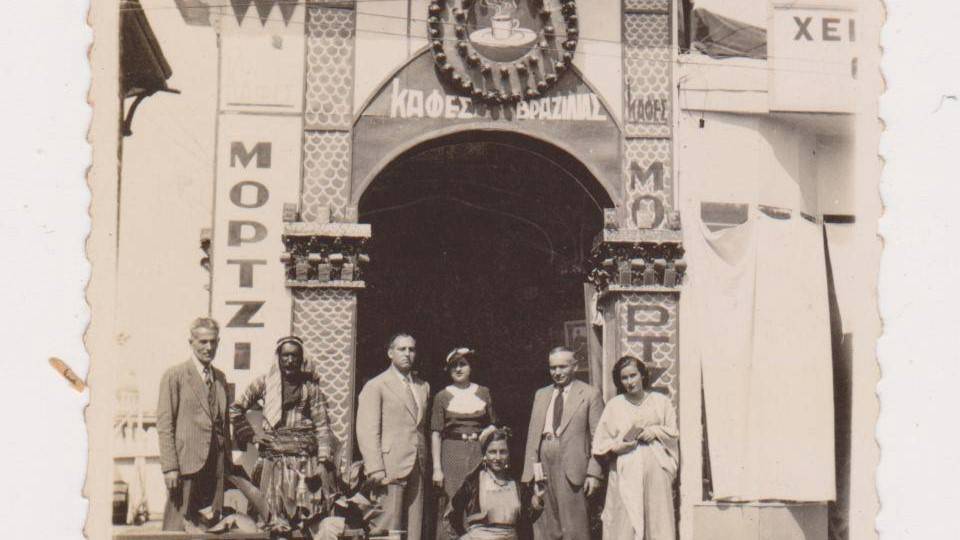
This may sound a bit cliché, but in Greece, coffee is a way of life. For a Greek, drinking coffee is almost like washing one’s face in the morning. Think of it as an unquestionable necessity. With a history spanning nearly seven centuries, coffee has shaped the rhythm of life in the country, whether in private or public spaces.
I decided to look beyond today’s popular coffee chains in Greece and set my research route toward Thessaloniki, with its multicultural historical fabric. This “journey” introduced me to the Armenians who made significant contributions to the city’s coffee culture.
Roasting and sales in Armenian hands
In fact, when we look at the story of coffee in Europe, we see that it was Armenian entrepreneurs who popularized this mysterious bean in the West. According to researcher Ross Jamieson, in Paris of the 1660s, “Armenian” was almost synonymous with “coffee seller.” The first café in Vienna, which laid the foundations of the city’s famous coffee culture and paved the way for establishments such as Daniel Moser that still exist today, was opened in 1685 by an Armenian merchant named Johannes Diodato (Hovhanness Astvatsatour).
This tradition took root in the ports and bazaars of Thessaloniki during the 18th and 19th centuries. At the time, coffee beans arriving from Yemen and Red Sea ports, or transported from distant colonies such as Granada and Jamaica, were roasted in the streets of Thessaloniki. Although imports changed after the Ottoman era and “Brazilian coffee” came to the forefront, Armenians remained prominent in the craft itself—the roasting and selling of coffee beans.
The skill of Armenian masters
As folklorist Ilias Petropoulos emphasized in his important work, the expertise of Armenian craftsmen was always behind the coffee establishments of “old Thessaloniki.” A glance at Nikolaos Inglesis’ 1926 city guide reveals that five of the six major coffee businesses listed belonged to Armenians: Abrahamyan Hasen, Berberyan Kalust, Bulutyan Liran, Zakaryan Samuel, and Papaciyan Takvos.
These names were not merely shop owners; they were figures who helped shape the urban identity of Thessaloniki at the time. The stretch running along Egnatia Street, around Kamara, and up to Sintrivani, where today’s ABC Hotel stands, was filled with the aroma of roasted coffee wafting from these shops. Over time, this network expanded to the lively public market of Vardaris and Vasilissis Olgas Avenue, where elegant mansions rose. Names such as Kasparyan, Morcikyan, Dereyan, and Atamyan became as familiar in collective memory as the city’s street signs.
Why were there so many?
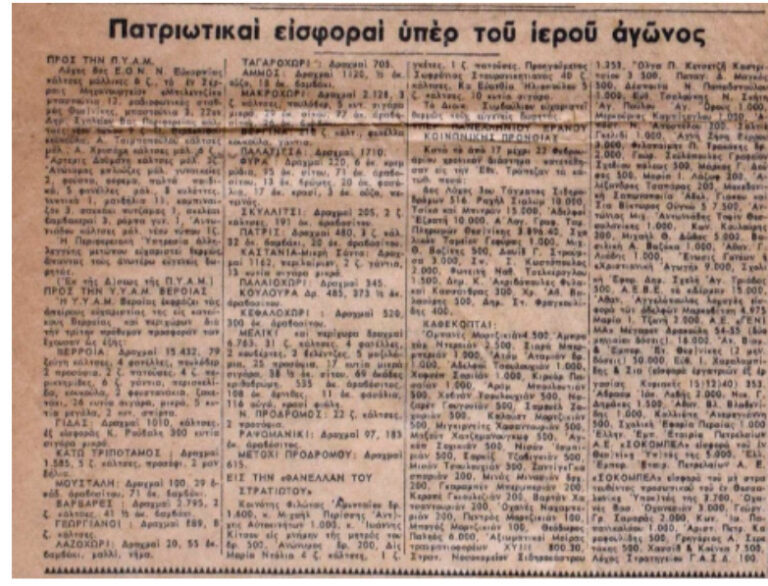
In one issue of the newspaper Makedonia from 1941, a list was published detailing donations made by professionals and social organizations in Thessaloniki for the country’s defense at the beginning of the Second World War. In the section concerning coffee shop owners, most of the donors’ names were Armenian.
So why were there so many Armenian coffee merchants in Thessaloniki?
The answer lies in the difficult turns of history. In the early 20th century, thousands of refugees who survived the Armenian Genocide and the Asia Minor Catastrophe found refuge in Thessaloniki. In this new land, where they did not know the language, lacked citizenship rights, and could not own property, one of the ways to survive was through their craft.
For Armenian refugees, turning to trade and professions that did not require fluent Greek was also a practical solution. Thus, like many other refugees from the Ottoman Empire, numerous Armenians tried to establish businesses as a means of integrating into local society. Some brought with them what they knew best: the art of coffee roasting just like master coffee merchant P. Kasparyan’s grandfather.
Solidarity with New Refugees
Uprooted from his homeland, he had to begin life anew. There was hardly anyone who had not tasted the coffee of the elderly craftsman who spent his days grinding beans with a hand mill in front of his shop in Vardaris.
Ohannes Morcikyan, who had arrived in the city long before the Asia Minor Catastrophe and established himself there, acted almost like a guardian angel. According to his grandson, Ohannes kept the doors of his shop wide open to Armenians who had suffered persecution and exile in Asia Minor and Pontus. To his refugee compatriots arriving in Thessaloniki in desperate condition, he would gift a coffee grinder and a sack of coffee so they could build a new life.
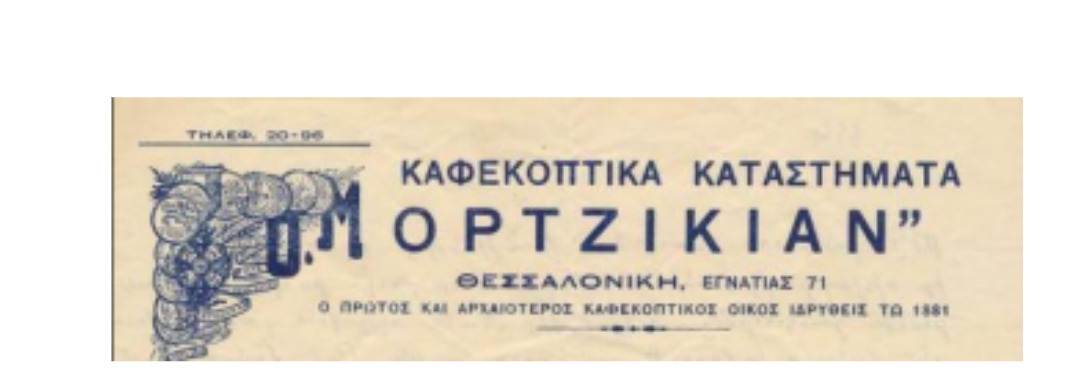
The shop Morcikyan opened at 71 Egnatia Street in 1881 was more than a business; it was also a gathering place for friends. It became one of the leading establishments during Thessaloniki’s caffeine-free coffee craze—a trend born out of necessity. During the difficult years of the Second World War, especially under German occupation, real coffee became a luxury, and cups were filled instead with “substitute coffees” made from chickpeas, almonds, barley, and wheat. It was not real coffee, but chickpea coffee filled stomachs and offered people at least a little of coffee’s comforting warmth during those dark days.
The Aris Coffeehouse
There was also the famous Aris Coffeehouse and Grocery Store at 98 Tsimiski Street, a story in itself. The shop took its name from the Greek football club Aris. Founded by Kalust Berberyan, who arrived in Thessaloniki from Istanbul around 1870, and later run by his son Saram, it became a beloved institution both for the Armenian community and the surrounding neighborhood. Kalust’s first shop was located in the Kamara district. Although the exact founding date is unknown, it is estimated to have opened in the early 20th century (1910–1920). In 1925, Saram moved the business to Tsimiski Street and managed it until his death in 1972. Later, his grandson S. Daoudakis-Berberyan took over the shop together with his mother, Rosita Berberyan, and continued operating it until its final closure in 1986.
Tall, gentle, and kind-hearted, Saram risked his life during the occupation years by secretly grinding flour in coffee mills and distributing it to the hungry. In 1942, when the Nazis occupied Thessaloniki and began rounding up Jews from their homes for deportation to camps, Saram Berberyan showed remarkable courage by saving the valuables of a Jewish doctor. He was later honored by the Jewish community of Thessaloniki for his friendship and bravery.
This is why speaking about the history of coffee culture in Thessaloniki takes us beyond merely discussing commercial establishments. Those shops, long since shuttered, remain pages in the story of humanity, solidarity, and the struggle to survive, waiting to be remembered and retold.
If one day your path leads you to Thessaloniki and you decide to have a coffee, do not forget that the enchanting aroma in the air contains not only roasted beans, but also Ohannes’ hand grinder, Saram’s courage, and the stories of Armenian refugees who had to make a city whose language and roads they did not know into their home.


