


Where did the idea of organizing an exhibition featuring exclusively women artists originate?
My doctoral dissertation, which I completed in December 2024, was actually the starting point for this idea. While researching the relationship between painting and literature in contemporary British women's literature, I also found myself thinking a great deal about women's place in the art world. The seminars I attended in England showed me just how important this subject remains, both theoretically and in practice.
This curiosity led me to explore the work of contemporary Armenian women painters. There are many highly accomplished women artists in Armenia who are internationally recognized but whose work is not sufficiently known in Istanbul. I wanted to make their original and diverse artistic practices, which cannot be confined to a single framework, more visible here. My husband, Baykar Demir, who has worked with important Armenian painters for many years, also supported the idea.
Eda Tekcan, the first person I consulted and someone whose opinions I greatly value, responded positively and offered her support, which truly encouraged me. The assistance of painter Artsun Apresyan and Anna Avetisyan, beginning with my trip to Armenia, as well as the support of the Parrhesia Collective throughout the process, were also invaluable.
I contacted the artists directly, and with their confidence in the project, we were able to bring this exhibition to life. It is a great pleasure to work with them. This process has also been a wonderful opportunity to bring my arts management education and my experience working for many years at rh+ art magazine and gallery together with my academic interests, and to put them back into practice.
What does “Inner Landscapes” tell us? How many paintings are included in the exhibition?
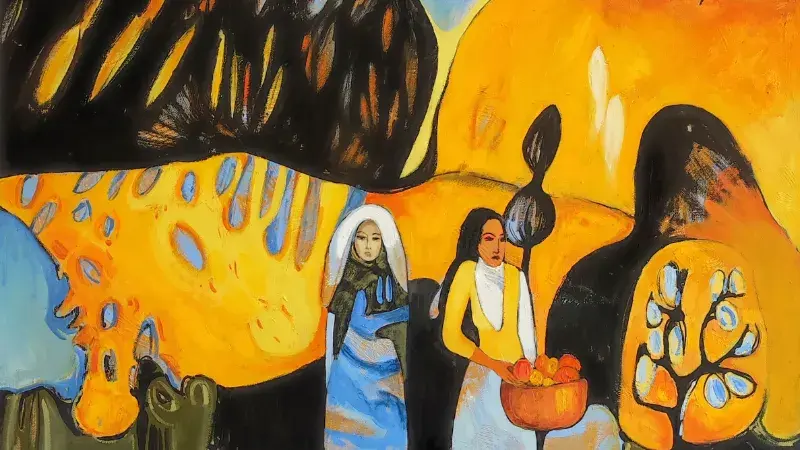
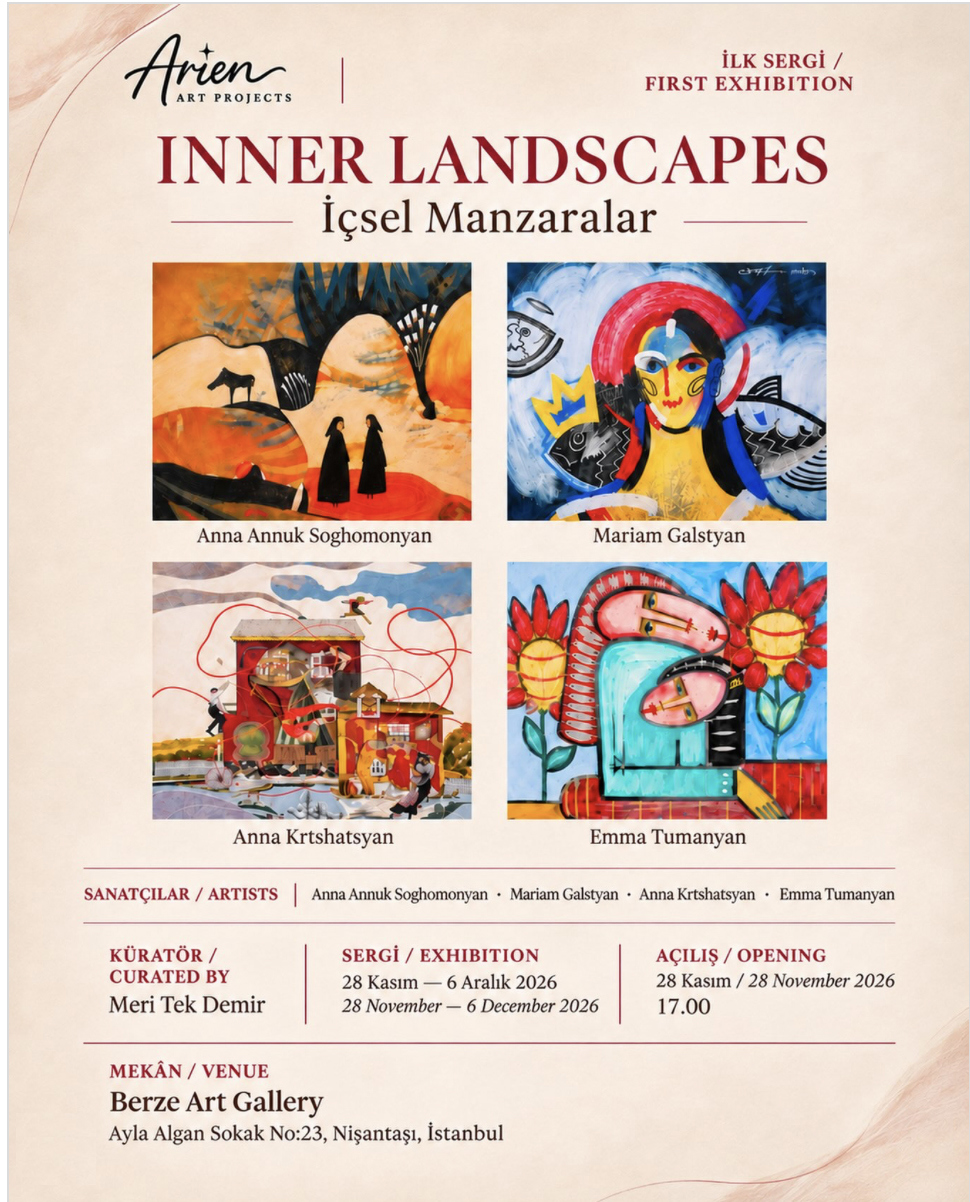
The exhibition features nearly 30 works by four well-known contemporary women painters from Armenia. Anna Annuk Soghomonyan, Mariam Galstyan, Anna Krtshatsyan, and Emma Tumanyan. Created using oil paint, acrylic, and collage techniques, these works encompass a variety of approaches, ranging from portraits to landscapes and from figurative expression to abstraction.
With Inner Landscapes, I wanted to approach landscape not simply as an image we see in the external world, but as a reflection of memory, emotions, and personal experiences. One of the important starting points of feminist art criticism is the fact that women artists have historically been associated with certain subjects and genres of painting. Yet, as we see here, women artists are not limited by these conventions. The works also reveal traces of the cultural memory and visual traditions of Armenian art, reinterpreted and reshaped through contemporary and personal perspectives.
What excited me most was seeing how each painter could create such different worlds through her own distinctive visual language. Bringing precisely this diversity together is what I wanted to achieve with this exhibition. We see various approaches from portraits to landscapes, from figurative expressions to abstractions in these works.
 Could you tell us a little about the painters and their works?
All four painters have received academic art training, yet each has a distinctly different and original artistic vision. Anna Annuk Soghomonyan is an artist who has previously participated in the ArtContact art fair in Istanbul. I also think her background in psychology is important to understanding her work. Her paintings convey a powerful sense of the relationship between nature, human beings, and emotions. We can also recognize traces of the Fauvist tradition, which holds an important place in Armenian painting through Martiros Saryan, in her vibrant colors and her contemporary interpretation of nature.
In Mariam Galstyan's work, I find her approach to portraiture particularly intriguing. By combining realistic faces with fantastical and abstract elements, she takes portraiture beyond its traditional boundaries.
Anna Krtshatsyan is an artist who works with a variety of techniques. Alongside her large-scale abstract oil paintings, she has a highly distinctive visual language in her collages as well. I am particularly impressed by the way she brings colors, layers, and different images together.
Emma Tumanyan, meanwhile, is a painter who combines the cultural heritage of her family, which descends from Hovhannes Tumanyan, with her own contemporary artistic vision. Through the human figure and face, she explores themes such as identity, individual experience, and the self.
In fact, one of the reasons I wanted to bring these four artists together was precisely this diversity. Each demonstrates, through her own artistic language, just how rich, original, and varied the creative output of women painters in contemporary Armenian art can be.
You announced that the exhibition will run until December 6. Isn't that a rather short period for an exhibition?
Yes, I would have liked the exhibition to remain open for longer, too. However, since we set out as an independent project, we initially established this schedule.
I see this as a beginning. I hope that in the future we will have the opportunity to continue this project by organizing new exhibitions, both with the artists currently involved and with others, in different venues in Turkey and abroad.
Address: Berze Art Gallery, Ayla Algan Sokak, No. 23, Nişantaşı, Istanbul
Opening: November 28, 5:00 p.m.


