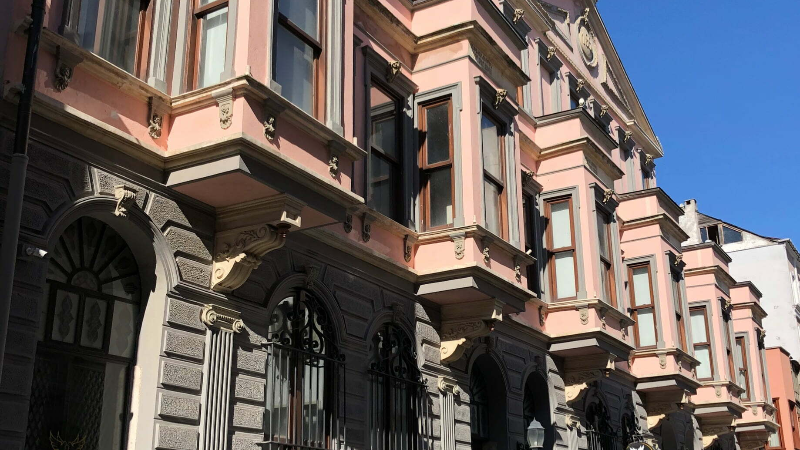


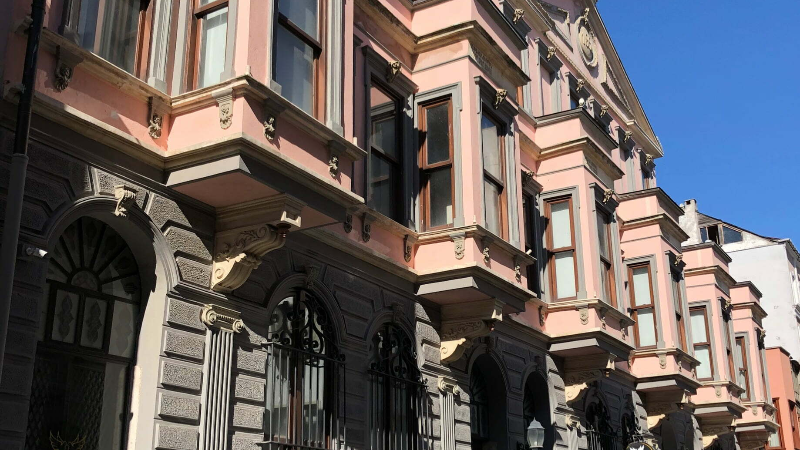
The decision regarding the lawsuit between the Kumkapı Meryemana Patriarchal Foundation and Norayr İşler was published on the official website of the Court of Cassation. The Foundation had leased the dilapidated property in Kumkapı, known as the Priest Houses, to İşler for renovation and operation as a hotel. Although İşler renovated the ruined building, the Foundation obtained an eviction order against İşler and his operating company, Zela Jewelry, citing frequent delays in rent payments. Following the eviction, İşler filed a lawsuit for the reimbursement of his expenditures, and the court ruled in favor of İşler (Zela Jewelry). The Kumkapı Foundation subsequently appealed to the Regional Court of Appeals (İstinaf), but the decision remained unchanged. The Foundation then brought the case to the Court of Cassation. In its ruling, the Court of Cassation stated: “It is clearly stipulated that any expenses for repairs and alterations of the leased property, as well as the increase in value of the property, shall be paid to the lessee; there is no error in the findings and evaluations made by the Courts of First Instance…”
The hearing held on December 2, 2025, at the 3rd Civil Chamber of the Court of Cassation was attended by Hrant Moskofyan, president of the defendant Kumkapı Foundation, the plaintiff Norayr İşler, and the attorneys of both parties. In its appeal, the Kumkapı Foundation argued that Article 3 of the lease agreement could only be applied in the case of unfair termination; that the lease agreement ended by court order due to the plaintiff’s default; that the plaintiff was at fault for the termination; and that the restaurant built illegally by the plaintiff in the garden of the property had been demolished and thus had no economic value. They further claimed that, according to the contract, the plaintiff could only perform repairs suitable for the intended use, and it was legally impossible for the lessee to claim receivables/compensation. They asserted that since all removable items in the leased property could be returned to the plaintiff, the court's decision to collect the value from the defendant was contrary to procedure and law. They also argued that luxury expenses were not specified, the start date of the lease (2013) should be considered since the manufacturing date was unknown, no scientific calculation was made regarding the value increase, the calculation regarding depreciation was erroneous, their client was not a merchant, and since the lease agreement was not considered a commercial transaction for the defendant Foundation, commercial "advance interest" (avans faizi) could not be applied.
The Court of Cassation, in its reasoned decision, stated that the legal relationship in the Court of Appeals' decision and the relevant law articles regarding the dispute were correctly applied. It emphasized that the contract explicitly stipulated that in the event of the termination of the lease before its term for any reason, all expenses for repairs and changes and the value increase would be paid to the lessee. The Court ruled that there was no inaccuracy in the findings of the Courts of First Instance and that the commercial interest rate determined by the court was in accordance with the Turkish Commercial Code, thus upholding the Court of Appeals' decision. It was decided to send the file to the Court of First Instance and a copy of the decision to the Regional Court of Justice. The management of the Kumkapı Foundation stated that the legal process would continue and a comprehensive statement would be made in the coming days.
How Did the Case Develop?
Norayr İşler, Chairman of Zela Jewelry Ltd. and former President of the Istanbul Chamber of Jewelers, signed a contract in 2013 to restore and operate the ruined building belonging to the Kumkapı Meryemana Church Foundation, located on Tavasi Çeşme Street in the Muhsine Hatun neighborhood, known as "Papaz Evleri" (Priest Houses). Under the contract, İşler restored the building and converted it into a hotel. However, the Foundation later issued warning notices citing frequent rent payment violations and eventually evicted the hotel via court order. İşler sued the foundation, citing his investment and expenses.
In the case heard at the Istanbul 9th Civil Court of Peace, the court decided on April 24, 2024, that the amount specified in the expert report must be paid to Zela Jewelry with interest. The reasoned decision emphasized that “according to Article 3 of the lease agreement signed between the parties, the foundation accepted and undertook to pay the lessee for the repairs and changes in the event that the 30-year lease process was terminated by the foundation for any reason.” The court ordered the Kumkapı Foundation to pay Zela Jewelry 14,734,000 TL for the renovation of the hotel and restaurant building, and 73,242,000 TL for the property's value increase, along with commercial interest. Following the decision, a lien was placed on the foundation's bank accounts.
The Court of Appeals, in its evaluation, stated that the interest for the 73.2 million TL should start from the date of the lawsuit rather than the date of eviction. The court noted that the restaurant in the hotel appeared in the sketch attached to the supplementary contract dated April 21, 2015, and was known to the foundation despite being an unauthorized structure demolished by the Monuments Board. The court rejected the Foundation's appeal on the merits. During the trial, the foundation’s bank accounts were blocked.
Statement from Norayr İşler and Zela Jewelry
Following the Court of Cassation decision, Norayr İşler released a statement: “According to legal experts, any step taken from now on is not legal but aimed at distracting the public. If the finalized debt is not paid, the seizure of foundation properties is on the agenda.”
The statement noted: “The decision clearly states that the phrases ‘for whatever reason’ and ‘all kinds of expenses’ in the lease agreement are not open to interpretation, these provisions cannot be narrowed down later, and the contract cannot be rewritten by the court.” It continued: “The High Court revealed that the works carried out with the explicit written consent of the foundation were not simple repairs but investments that added permanent value to the property... With this decision, all investments made to rebuild a ruined property into a high economic value enterprise as a hotel and restaurant, and the value increase arising from these investments, have been legally protected.”
“A Debt Burden Has Emerged; Administrative Responsibility Must Be Debated”
The statement included the following:
“With the finalization of the decision, a serious debt burden has emerged for the foundation. Legal experts state that if this debt is not paid, liens can be placed on income-generating real estate, commercial enterprises, and some properties including the complex containing the Patriarchate building, and collection can be sought through sale.”
Norayr İşler said: “At this point, it is clear that the debate should not be legal but about administrative responsibility. The claim that this damage was ‘unforeseeable’ has vanished. The point reached today is the result of years of imprudence, stubbornness, and personal ambitions. While the possibility of reconciliation was on the table many times, it must be seen that the foundation managers consciously blocked these paths and chose to prolong the lawsuit, making the community pay the price. The question that must be asked now is: Whose work is this loss, and who will be held accountable?”
İşler concluded: “If the finalized receivable is not paid, the entry of foundation properties into the seizure and sale process is not a choice, but a legal consequence... This responsibility belongs to the managers who turned the process into a personal show of power despite the clear contract, risking a community asset instead of protecting it.”