



One of the cherished ensembles of the Armenian community of Istanbul, the Vartanants Choir, presented its VOX Aeterna (Dzayn Havidenagan/Voice of Eternity) concert program under the direction of conductor Sibil Arsenyan on June 18 and 19. Through the festivals they attend, the joint concerts they perform, and the voices they lend to historic moments, the 60-member choir makes our music visible and audible while making a significant contribution to representation. With this concert, another unforgettable night was added to the choir’s history.
Held at St. Antoine Church in Beyoğlu with the accompaniment of a chamber orchestra, the concert once again demonstrated the valuable support that the Ortaköy Foundation, the main sponsor, provides to the arts and made its contribution distinctly felt and appreciated.
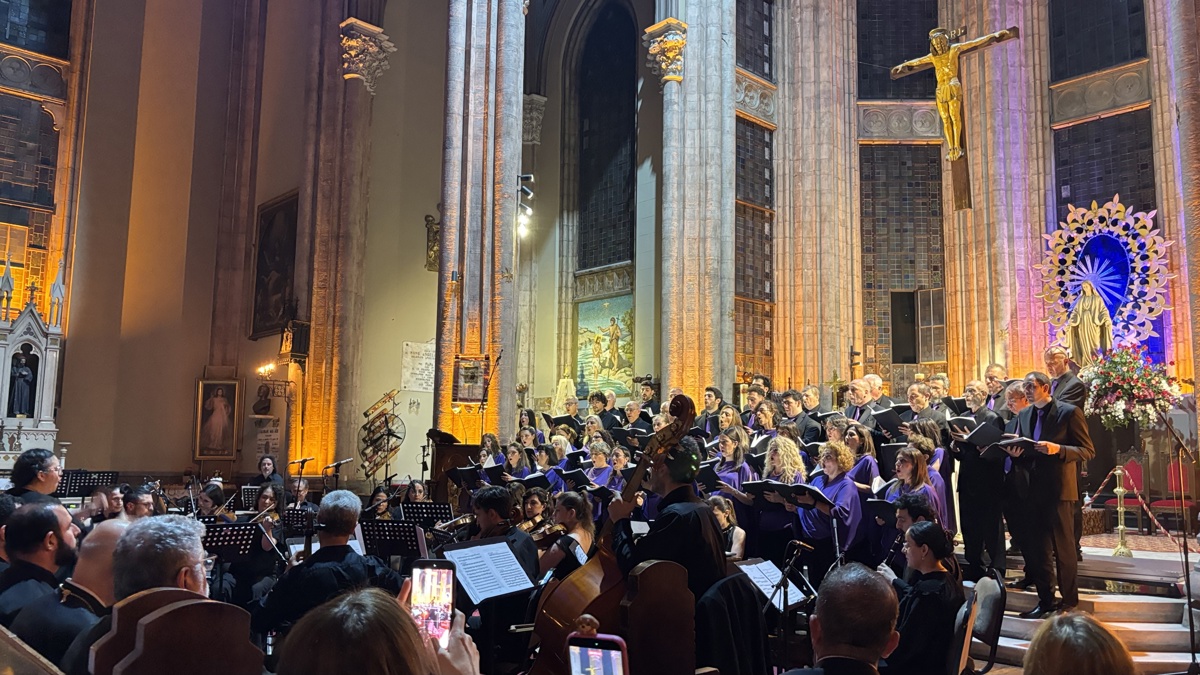
Founded in 1909, the choir continues to bring both sacred and secular choral works from the past to the present through its distinguished conductors, musicians, and choristers. As someone who has followed its concerts for many years, witnessing its growth in both quality and scale is a great pleasure. This concert, too, was in many respects a cohesive event that offered its audience a genuine experience.
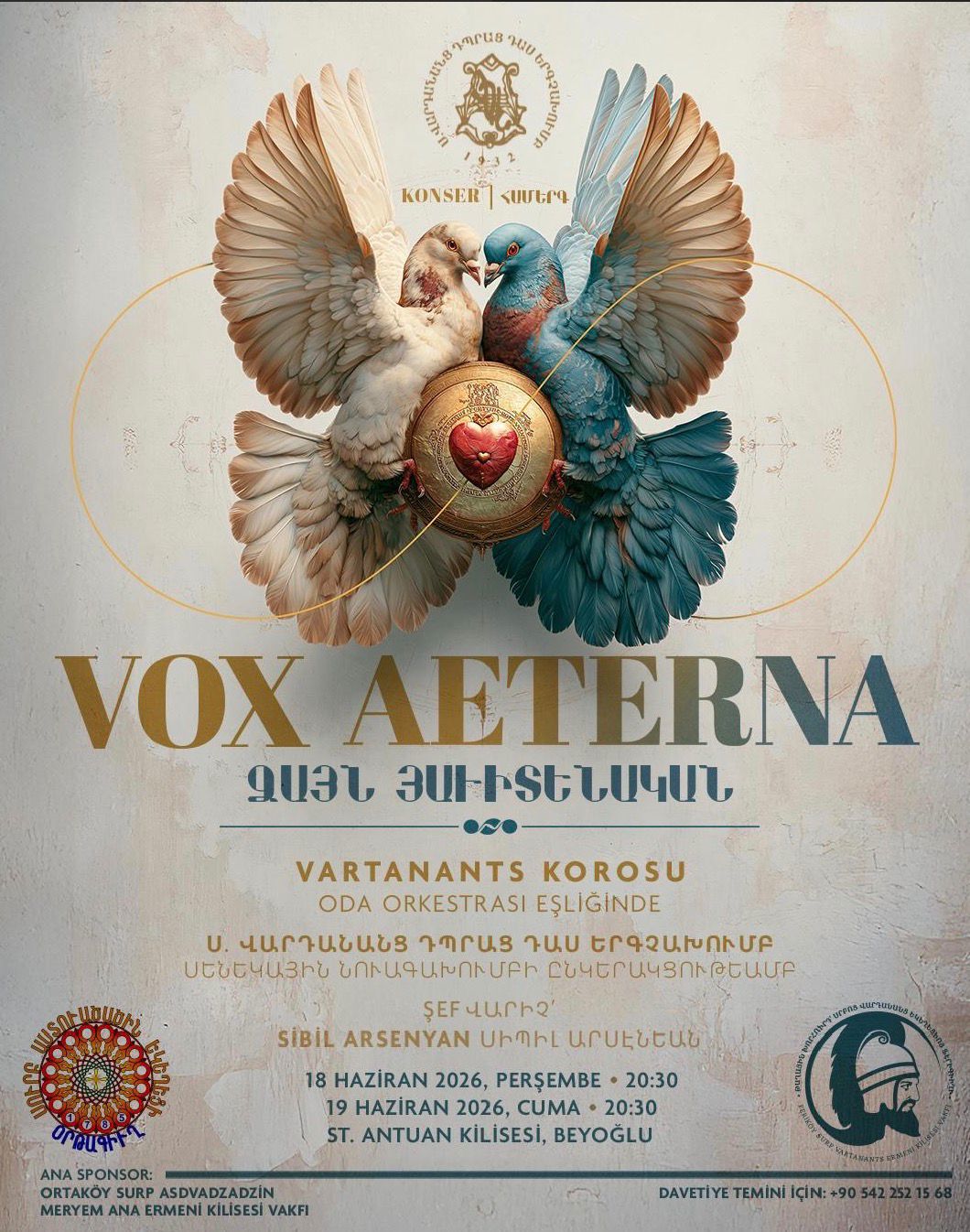
The concert’s title, graphic design, venue, and selected repertoire together created the atmosphere of a medieval night. As the Latin echoes of Carmina Burana and Requiem drifted among the church’s Gothic columns, the dim glow of candlelight made the experience even more complete. The chamber orchestra’s accompaniment added a distinct depth to the evening.
Works performed in Istanbul for the first time
The meaningful, innovative, and risk-taking part of the evening consisted of David Haladjian’s Im Luys (My Light) and Siro u Mahvan Yerkı (Song of Love and Death), integrated with the poetry of Rupen Sevag. One performed by the orchestra and the other by the choir, these works introduced us to contemporary Hay (Armenian) choral music through their emotional intensity and minimalist elements. The fact that both pieces were performed in Istanbul for the first time turned the occasion into a true moment of discovery for the audience.
Sibil Arsenyan, who has served as the choir’s conductor since 2022 and has earned affection and respect through her education, professionalism, and character, deserves thanks if only for including David Haladjian in the program and taking this courageous step.
Carmina Burana and Requiem
Carl Orff’s Carmina Burana and Wolfgang Amadeus Mozart’s Requiem were, of course, the highlights of the evening and the works in which the audience was most intensely engaged. Although they belonged to different periods, works by Gabriel Fauré, Johann Sebastian Bach, and Ahmet Adnan Saygun progressed in a fluid line throughout the night. Admittedly, the church’s acoustics and the balance between the orchestra and choir were more favorable to some works than others, and the seating arrangement occasionally made it difficult to connect with the choir. Particularly on the night of Thursday, June 18, the frequent interruptions for applause felt excessive for both the audience and the musicians. Nevertheless, none of this diminished the overall integrity of the concert experience.
“Can I applaud now?”
I have reflected upon, discussed, and internalized what it means to be a listener of classical music ever since my years at Boğaziçi University, my lessons with Evin İlyasoğlu, and my regular attendance at the Albert Long Hall Wednesday classical music concerts. That brief question that appears in one’s mind at the end of every piece, “Can I applaud now?”, and the small glances exchanged around the hall are an inevitable part of these concerts.
There is no need to make too much of it. Even in the program booklet of the ongoing Istanbul Foundation for Culture and Arts (İKSV) Music Festival, applause points are indicated with applause emojis, and pre-concert announcements remind audiences to follow this arrangement. In classical music, this approach involves perceiving a work as a whole and accepting that silences and pauses are also part of music’s breath, moments for reflection and preparation. Of course, there can also be exceptional moments when collective enthusiasm takes precedence.
At the beginning of the concert, Conductor Sibil, with a very appropriate reminder, asked the audience to be attentive during transitions between composers, while also emphasizing that enthusiastic and spontaneous applause should not be suppressed when it arises. At the end of the concert, it would be incomplete not to say that my ears longed to hear a prayer in Hayeren (Armenian) echo within those walls as well.
I remember, as a small child, falling asleep on the steps of the church’s vernadun (mezzanine) during my elders’ Friday evening rehearsals. I am one of those who know how much labor lies behind every beautiful concert night. Dance, music, song... For some of us, even the rehearsal itself is a blessing and a source of happiness because it makes artistic performance possible.
After that, making certain evenings unforgettable through special effort and sharing them with those who appreciate them is an entirely different kind of joy. The organization of this evening was completed thanks to the contributions of the individuals and institutions involved, the devoted work of the Vartanants Choir Administration and the Board of the Surp Vartanants Foundation, an engaged audience, and prayers and appreciation of our Patriarch. The Board of the Surp Vartanants Foundation made its gratitude and appreciation toward the Vartanants Choir visible through a commemorative plaque, while the Vartanants Choir similarly expressed its gratitude to the Ortaköy Foundation with a plaque presentation. When all these elements came together, the result was both a cohesive and impressive concert experience.
Congratulations.