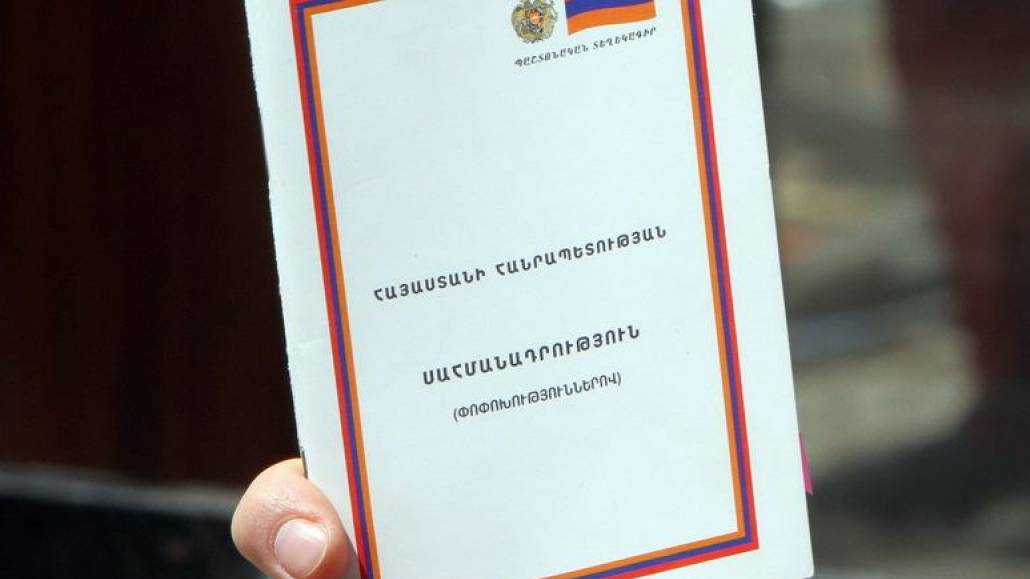

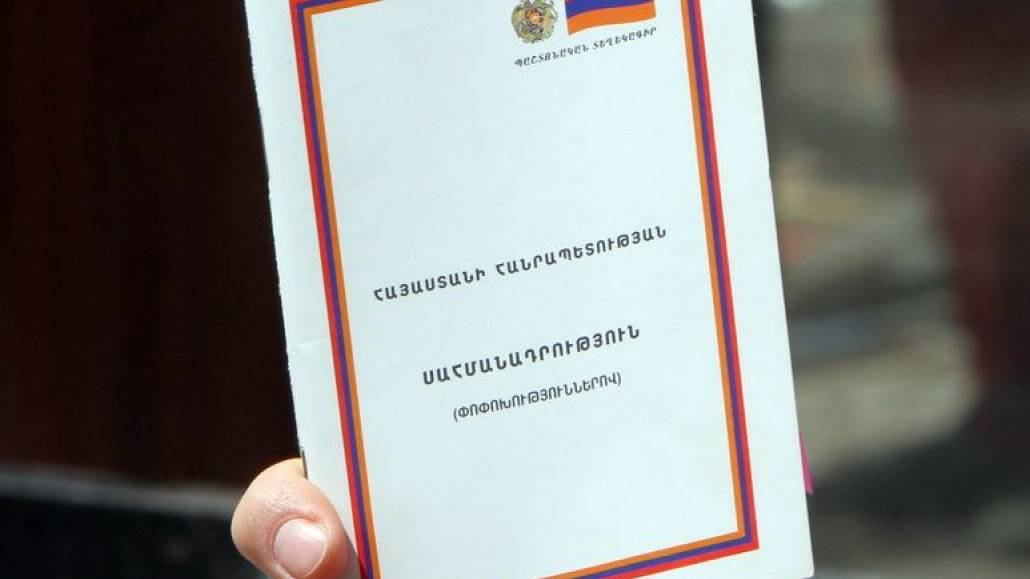
A new draft constitution has been prepared in Armenia; however, before being shared with the public, it will be evaluated by the board and parliamentary group of the ruling Civil Contract Party. As the sole supporter of the constitutional change, the ruling party will be the first political force to examine the text.
Even before official negotiations have begun, disagreements have started to become clear on fundamental issues, such as whether to reference the Declaration of Independence in the preamble and the limitation of dual citizenship for high-level officials.
The most debated article of the change is the idea of removing the reference to the Declaration of Independence in the preamble, a topic that has been on the agenda for about a year. Prime Minister Nikol Pashinyan, who shared this view with the public during regional visits, argues that the current reference is no longer up-to-date.
Pashinyan: Armenia has escaped the hook
Making a statement on the subject, Prime Minister Pashinyan said: "We must face all our problems. The text we call the Declaration of Independence is actually a declaration of conflict and dependency. If you adopt a declaration that challenges all your neighbors, it means you are relying on someone from the outside. When you trust those powers, you hook yourself onto them. In 2024-2025, Armenia freed itself from this hook, and we must appreciate its value."
The reference to the Declaration of Independence in the preamble—which also includes the unification of Nagorno-Karabakh with Armenia—is described by Baku as the final obstacle to a peace agreement. This situation remained on Azerbaijan’s agenda even after the Armenian Constitutional Court’s (AYM) decision in September 2024. During the review of the border delimitation regulation, the AYM ruled that the Declaration of Independence has no legal binding force and that only the Constitution holds supremacy.
Warning from the opposition: "Basis of independence"
The government's intention to remove the Nagorno-Karabakh phrasing has drawn backlash from the opposition. Edmon Marukyan, Leader of the Bright Armenia Party and member of the Constitutional Change Expert Council, claimed that this step would "destroy the foundation of the country's independence," pointing to two possible scenarios.
Marukyan stated: "The AYM says there is no territorial claim in the Constitution. However, if the government views this as a declaration of conflict and goes to a referendum to change it, and if a 'no' vote emerges from the referendum, Aliyev could say: 'You admitted that you have territorial claims and your people approved this; therefore, I can wage war against you.' In the second scenario, if the people say 'yes' at the ballot box to removing the preamble, we destroy the country's birth certificate and will face much deeper problems." Meanwhile, it is noted that Marukyan has not attended expert council meetings for some time due to his objections.
Minister of Justice: Parliamentary system will be preserved
Providing information about the general changes in the Constitution, Minister of Justice Srbuhi Galyan stated that the expert commission prepared the text based on the conceptual framework developed before the pandemic and the war. Emphasizing that the parliamentary system will not be abandoned, Galyan said: "The human, the citizen, and the people are still at the center. To make the separation of powers more decentralized and balanced, we have provided the National Assembly with oversight mechanisms over the prime minister's activities. Additionally, we will propose that rights in the third chapter, such as social security and the right to health, be moved to the status of fundamental rights."
Regarding the dual citizenship restriction, another critical article in the text, differing views are being expressed within the expert commission. Council member and lawyer Tigran Yegoryan stated that the basic principle is maintained: "High-level officials in Armenia should only be Armenian citizens. The last hope of someone aspiring to office should be Armenia; they should not be subject to another country or its legislation." It is predicted that the scope of officials subject to this restriction could be expanded with the new draft.
Referendum in 2027
The process of preparing the constitutional draft has not yet been completed. Deputy Minister of Justice Tigran Dadunts stated that the expert council would continue its duties and that public information efforts would proceed following the intra-party discussions. Dadunts pointed out that the submission of the text to parliament and the subsequent referendum phase would be a long process.
To prevent the overlap of two major elections, the constitutional referendum is planned to take place after the regular parliamentary elections in 2026. According to the draft schedule, parliamentary elections will be held in June 2026, and the referendum will be carried out in 2027.