

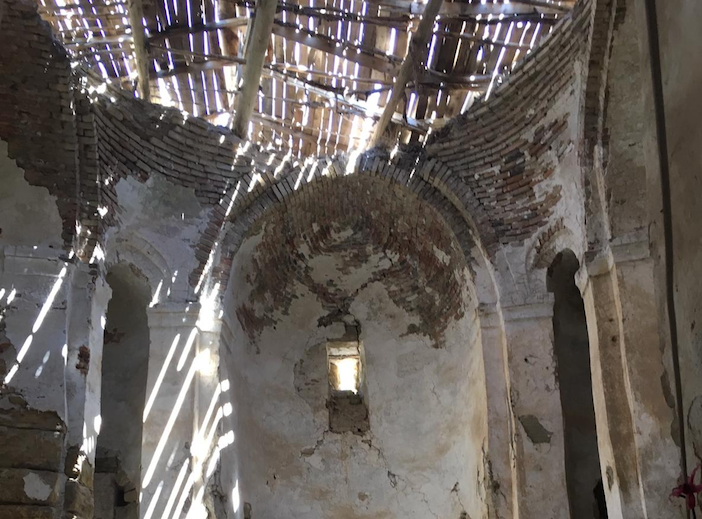
Speaking on journalist Nil Gülsüm’s YouTube program, journalist Fatih Altaylı said in response to a question: “The land where the church or church complex is located does not belong to me. The land is still registered in my grandfather’s name. If the Ministry of Culture wants it, let them come and I will speak with the other members of the family as well. Let them take it and use it, let them expropriate it without compensation; we are not church enthusiasts.”
Altaylı explained how the land on which the church stands came into his family’s ownership with the following words: “I do not know the details firsthand, but what was said was this: when the state built public buildings on some lands belonging to the family at the time, it exchanged them for some state-owned lands, and it turned out that one of those plots included the church. We did not demolish the church, nor did we try to sell it; it has simply remained there.”
The issue has long been on the agenda of the Armenian community. The Varakavank complex in Van is important in terms of architecture, religion, and the Armenian heritage of these lands. However, because the complex has been neglected, it has suffered damage over the years and is now on the verge of collapse.
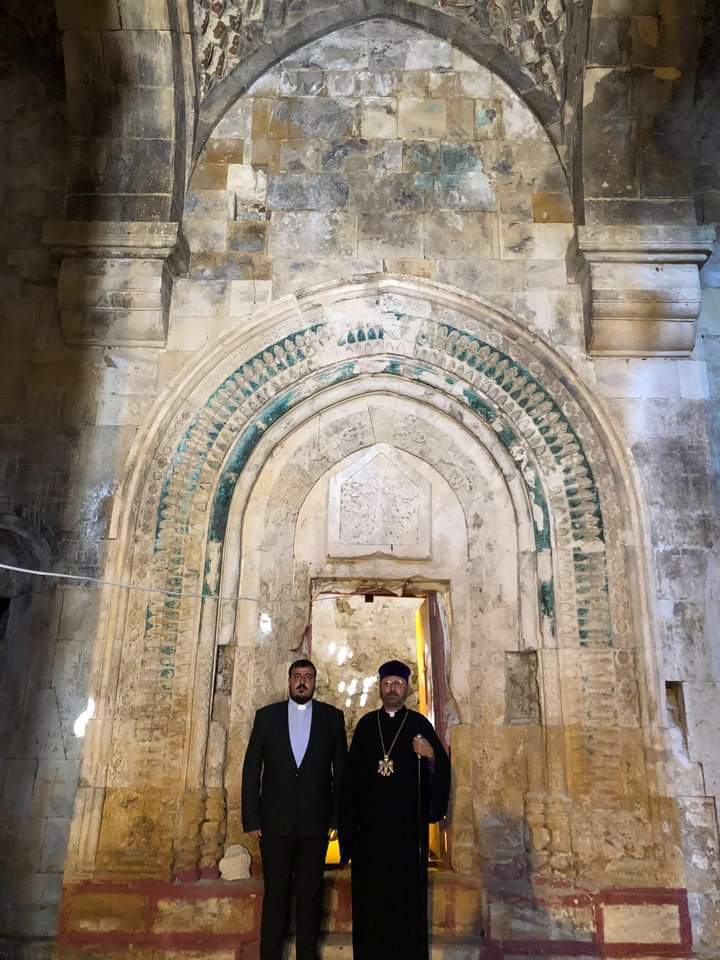
The issue was also raised during Patriarch Maşalyan’s visit to Minister of Culture and Tourism Mehmet Nuri Ersoy in December 2025. Patriarch Maşalyan emphasized that restoring and reopening the Varakavank Monastery (Seven Churches) in Van to visitors would make a significant contribution to regional tourism while also helping preserve cultural and historical heritage. In a later statement about the meeting, Patriarch Maşalyan said that he had reminded the minister that “the state can still take over this site,” and that Minister Ersoy had replied that he would deal with the matter after Altaylı’s release from prison (where he was being held at the time).
Known popularly as the Seven Churches, the complex is a historic Armenian monastery built in the 8th century.
The monastery, which has not undergone restoration for years and whose damage has steadily increased through successive earthquakes, is today protected, at least in part, by local residents.


