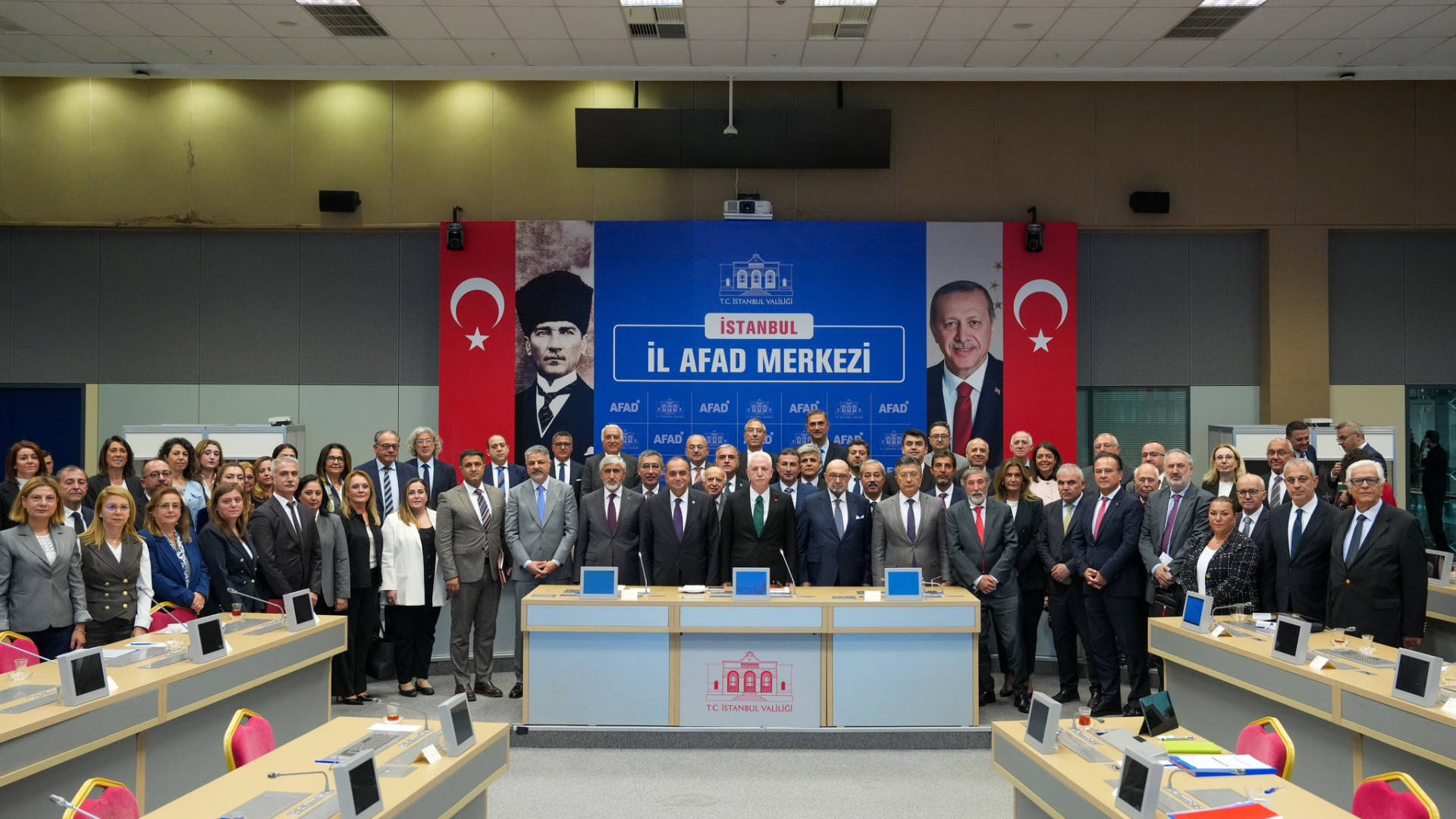


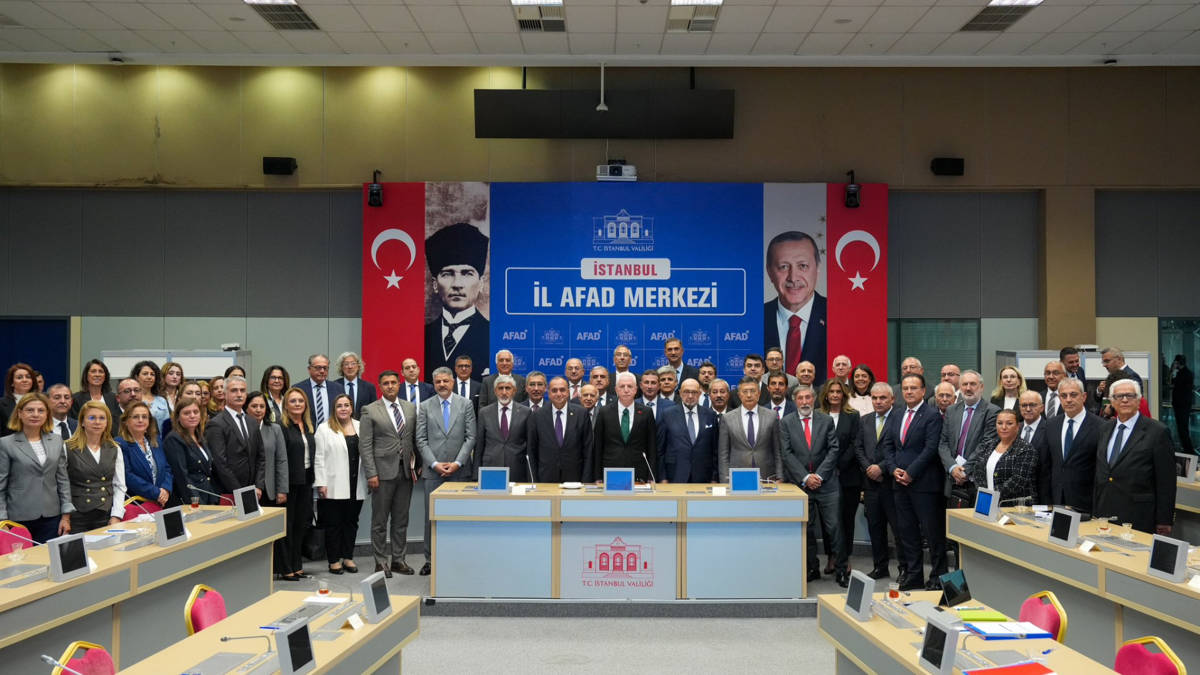
A review meeting was held on Monday, September 28, in the hall of the Emergency and Disaster Management Directorate in Hasdal. The meeting was organized by AKP Istanbul MP Assoc. Prof. Dr. Sevan Sıvacıoğlu. In addition to Sıvacıoğlu and Governor Gül, the meeting was attended by Istanbul Deputy Governors Mustafa Asım Alkan, Dr. Ahmet Süheyl Üçer, and Elif Canan Tuncer; Istanbul Provincial Director of National Education Assoc. Prof. Dr. Murat Mücahit Yentür; Yavuz Güner, director of the Foundations’ 1st Regional Directorate; Arif Özsoy, director of the Foundations’ 2nd Regional Directorate; Istanbul AFAD Director Prof. Dr. Haluk Özener; Bedros Şirinoğlu, president of the Yedikule Surp Prgich Hospital Foundation and the Union of Armenian Foundations (ERVAB); presidents and administrators of church foundations; and school principals. Following the meeting, ERVAB President Bedros Şirinoğlu issued a written statement.
Şirinoğlu: There are too many schools, they should be merged
According to Şirinoğlu’s statement, Governor Davut Gül opened the meeting by saying, “Welcome to your home. Today we will listen to the problems of the Armenian community and seek solutions,” and gave the floor first to Bedros Şirinoğlu.
In his brief remarks on the condition of Armenian schools, Şirinoğlu said that the schools are facing financial difficulties and budget deficits. He stated that there are 2,500 students but 15 schools currently operating, meaning there are too many schools and that they should be merged. He also said that some schools are at risk in terms of earthquake safety.
According to the statement, Governor Davut Gül then asked all the school principals, one by one, to introduce themselves by stating the names of their schools. According to Şirinoğlu’s statement, the principals who spoke said that “there are generally no problems” and provided information about the terms of service of the Turkish school principals (deputy head principals) and student enrollment figures.
Governor Gül then gave the floor to the foundation presidents, asking them to introduce themselves and mention any problem they have. The foundation presidents said that there are generally no problems but noted that the Monuments Board was too slow to respond to applications concerning school buildings that are historical.
The system of deputy head principal: request to return to the 2015 system
According to information obtained by Agos beyond the official statement, school principals requested at the meeting that the terms of service for Turkish language teachers and deputy head principals be regulated according to the rules in effect in 2015.
On July 4, 2015, the Ministry of National Education had given minority schools the right to choose their Turkish language teachers who had been directly appointed by the ministry along with a bunch of other courses called Turkish Culture Courses without any say by the schools. By that regulation schools that wished to continue employ their current Turkish or Turkish Culture teacher who had completed five years of service, or wished to work with another teacher, would submit a petition to the governor’s office for approval. In addition to the school administration, the relevant teacher would also submit a petition.
However, a new regulation concerning minority and foreign schools was introduced in the Regulation Amending the Regulation on Private Educational Institutions of the Ministry of National Education, published in the Official Gazette on January 3, 2025. This new regulation stated that Turkish and Turkish Culture teachers would be “appointed by the governor’s office for a maximum period of five years in accordance with the provisions of the Law on Teachers of Turkish and Turkish Culture. One of them shall be appointed by the governor’s office as deputy head principal.”
Thus, the ministry decided to return to the system that had been in place before 2015. The change came as a surprise to minority schools. The issue was raised at the meeting, but it is not yet known what the outcome was.
According to information obtained by Agos, foundation administrations also stated at the meeting that the property taxes imposed on foundations were very high.
Directorate General of Foundations: “Rental rates are below current market values”
Şirinoğlu’s written statement also included remarks by Yavuz Güner, director of the Foundations’ 1st Regional Directorate. According to the statement, Güner discussed the rental rates of properties under the control of the Armenian foundations.
He said that inspections detected that the rental rates for some properties are below current market values, and stated that rents should be reassessed according to current market rates. In this context, he recommended obtaining a new appraisal report from any one of three appraisal firms designated by the Regional Directorate of Foundations and revising the rents in line with current values.
At the meeting, Kevork Özkaragöz, head of the ERVAB Earthquake Commission, also gave a detailed presentation, accompanied by projected visuals, on the earthquake safety of Armenian schools.
Governor recommends merging schools for earthquake safety
According to Şirinoğlu’s statement, the meeting concluded as follows:
“Our esteemed Governor Davut Gül had the final word. Mr. Gül recommended that schools with small numbers of students, and the students attending schools that face earthquake risks, be merged with schools that have larger student populations and are earthquake-resistant, stating that this is important both economically and in terms of safety. He said that the Governor’s Office would assist with matters related to earthquake risk and that projects prepared by the foundations would receive not only assistance during the preparation and permitting stages but also financial support. He told the Armenian community to share the problems and difficulties of their foundations with the Directorate of Foundations and said that the state would provide assistance. The meeting took place in a very positive and constructive atmosphere.”
Education of children from Armenia was not discussed
At the meeting with Istanbul Governor Davut Gül, it was expected that the registration problems experienced by students from Armenia attending Armenian schools would be raised. However, according to information obtained by Agos, the situation of students from Armenia was not discussed at the meeting.
The Regulation on Private Educational Institutions of the Ministry of National Education, published in the Official Gazette on March 20, 2012, included the following provision:
“Foreign-national guest students may also receive education at schools, taking into account the institution’s enrollment capacity; however, diplomas may not be issued to these students. Students who leave the school shall be given a document prepared by the school administration indicating the courses they attended and the grades they received.”
Armenian schools have been accepting students from Armenia for approximately 14 years on the basis of this provision. However, they have not been permitted to issue diplomas to these students.
Last month, inspectors from the Ministry of National Education conducted inspections at minority schools and verbally told school principals that guest students could not be accepted and that the enrollment of students already registered should be transferred to private or state schools. The inspectors also requested information from Armenian school principals about what had happened to students from Armenia who had attended the schools in previous years. Agos had reported on the issue, and the story generated repercussions in both Turkey and Armenia.
The situation of students from Armenia was also raised at the ERVAB meeting on August 24, where AKP Istanbul MP Assoc. Prof. Dr. Sevan Sıvacıoğlu said that he would address the issue. In comments to Agos on August 26, Sıvacıoğlu said that, during a meeting with Minister of National Education Yusuf Tekin, the Ministry had conveyed the following message:
“There has been no new regulation in recent days concerning guest students attending Armenian community schools; the schools are continuing their educational activities in accordance with the existing regulation.”
These developments created the impression that the problem had been resolved “verbally.” Despite the developments, however, no official written notice was sent to the Armenian schools, and retrospective inspections continued. In this environment, some Armenian schools have been hesitant to accept new registrations from students from Armenia, and some are not accepting them at all.
At present, some Armenian schools are proceeding according to the following formula: students from Armenia who are already enrolled in intermediate grades at Armenian schools are continuing their education where they left off. However, students from Armenia who are starting school for the first time cannot be registered because the Ministry of National Education has not issued an official statement.
As a result, some Armenian families have had to enroll their children at the Hrant Dink School in Gedikpaşa so that they do not fall behind in their education. The problem, however, remains unresolved for Armenian families living in other districts.