


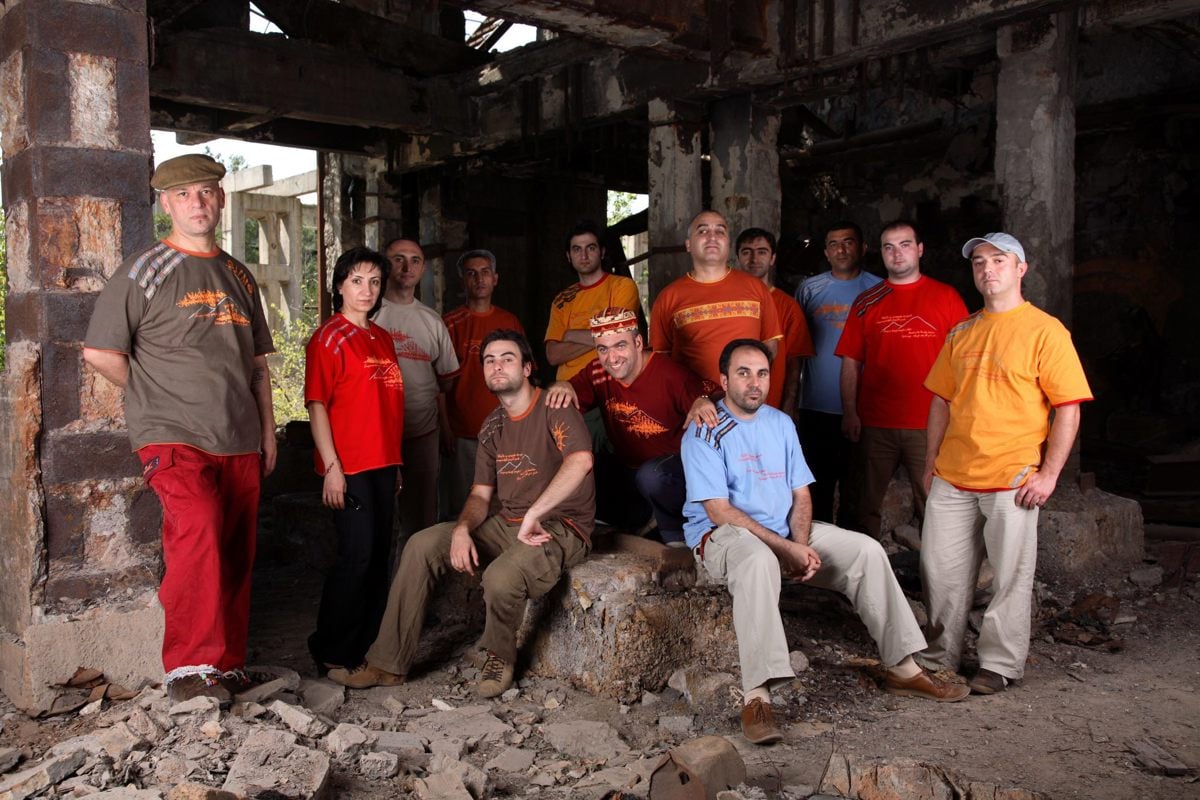
Establishing a navy in a landlocked country and naming it the "Armenian Navy Band" is something that undoubtedly could only suit Arto Tunçboyacıyan.
The group, whose "seas are the imagination of the people," shared the first two parts of the long-running “Sound of Our Life” series in 2019. They have now brought the series to a magnificent conclusion with “Cold Mountain - The End.” Defying the speed of the digital age with a duration exceeding 30 minutes, the series invites the listener not just to a musical finale, but to an eternal journey in the ocean of love, respect, and truth.
In the 12-member ensemble, ancient instruments like the duduk and zurna converse on the same stage with modern Western instruments. Having transformed from a local project into an international phenomenon after winning the BBC World Music Award in 2006, we spoke with the architect of this legend, Arto Tunçboyacıyan, about the finale.
"Cold Mountain - The End" was released last week. Can you tell us about this long journey and its conclusion with the Navy Band?
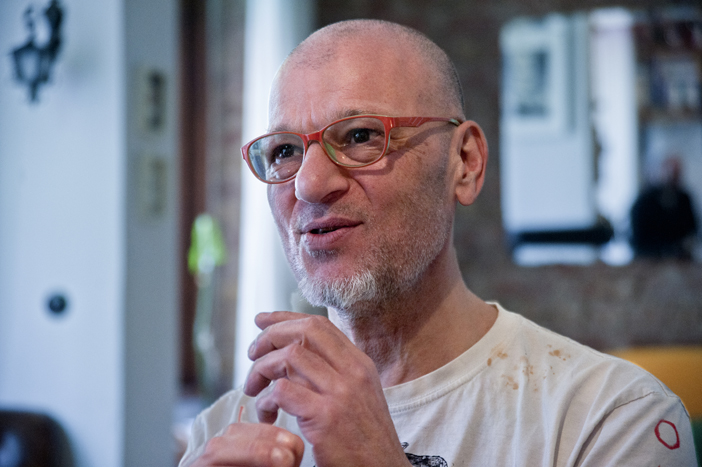
 I actually composed this song back in 1981-1982, but we were only able to bring it to life in 2019 and conclude it in 2025. I am based in New York because it is very organized here, which makes it easier for me to realize my ideas. If you look at the essence of it, I was born in Turkey, but I couldn't be "Turkish." I don't mean this in a bad way; I later realized that my true reality is being a human being. My Armenianness is the spice, the flavor on top of that identity.
As for the name Armenian Navy Band... Its meaning is to establish a "Navy" where there is no sea. This isn't just a random name. If you wish, you can see it as belonging to every geography where Armenians live, from the Caspian Sea to the Black Sea; you can even see it as Noah’s Ark. The Navy Band is a name that symbolizes how an honest and beneficial idea for humanity can reach its goal as long as you maintain your faith in it.
What kind of reactions did you receive regarding your Armenian identity and your stance in society during this process?
Every person has a path ahead of them, and obstacles arise. You overcome an obstacle in two ways: you either face it by suffering, or you walk around it. We, the Hayer (Armenians) in Istanbul, are two groups. The first is the group that stays within its own core and smells of mothballs; they always have "Dle Yaman," cognac, apricots, and the genocide on their tongues. Then there is a second group like me; those who are like water, finding their own way, able to stand tall even in a place where they are not loved.
This was my family’s will. Whatever they suffered, they had to accept it, digest it, and pass it on to the next generation. I am not talking about forgetting; I am talking about digesting. For me, my brother Onno did not end in 1996. On the contrary, the real Onno was born inside me in 1996. When creative people pass away, they leave their profession "pregnant," meaning their ideas continue to sprout and be born.
When I founded the group in 1998, my goal was the development of its members. I knew that if they developed, the people and Armenia would develop too. We released 15 albums, and this was the last one. The "The End" in the song's title is our end. A new page will open. The concept of the Navy Band is over; it has completed its mission.
What do you think about the impact of artificial intelligence (AI) on music and today's technology?
Artificial intelligence offers you technical freedom, but it cannot provide the soul. I define the era we live in today as the "Era of Cauliflower and Concrete." Why cauliflower? From a distance, it looks like a brain, but it isn't a brain; there is shape, but no content. In technology and in society, we are getting stuck on formalism and losing the content. It is clear how the mindset that sets traps and manipulates people works. We artists want to remind people of this: if you want to achieve something, you can do it through creative quality, not through trickery.
Setting traps for people, manipulating them, and profiting by harming them—it's clear how that mindset operates. However, we artists want to remind you: if you want to achieve something, you can also achieve it with creative quality. Producing good shoes doesn't necessarily mean setting exorbitant prices that no one can afford. If everyone makes quality shoes, quality becomes the standard and prices normalize. Just as it was done in the music market; by raising the quality, ears were accustomed to that high standard.
You have lived in New York for many years. After all these years, where is "home" both in your music and your soul?
Even though I am physically in New York, my soul is in Armenia. I am not trying to find my identity by being here; everything I am looking for is already inside me. The past is inside me, and the future is inside me. I only gain experience by living. The reason I am in Armenia is to better realize my musical ideas there.
I left Istanbul in 1981, when I was 24. But I cannot leave these lands; the moment I leave them, I leave myself. Sometimes when they see me in Armenia, they ask, "Are you Arto?" Half-jokingly, I say, "At these hours, no, I am not." Sometimes they say, "We don't understand what you're saying or singing." I say yes, I sing in a language I created myself; the notes are dancing. Even if you don't understand the content, look at the song title; what I'm trying to convey is hidden behind those titles. I say, if you want to see yourself while explaining something to someone, look at the person across from you; their reaction while listening to you is actually you.
In your songs, you use political and multi-layered references like blue roses or "31 wreaths." What do these symbols represent?
Look, if you claim to be a nationalist, I say do it consistently. If you truly love your race, you protect your own people without harming others. But if you make your own people eat toxic, hormonal tomatoes in the middle of winter, don't tell me "I am a nationalist." If you are poisoning your own people, that love is fake.
My songs tell of these contradictions. The "blue roses on my jacket" in the song is not a romantic rose garden, for example; it is the Mavi Marmara incident. Or "lighting a candle"... Every year, a candle is lit for Hrant like a ritual, but this has turned into a "coffee fortune-telling," a habit; everyone knows it, but no one goes deep into it.
The mention of "31 wreaths" in my songs is also no coincidence. In the civil registry, Greeks were coded as 1, Armenians as 2, and Jews as 3. My emphasis on "31" is a reference to those famous secret ancestry codes, the labels attached to our identities. There is an identity problem in Turkey. It used to say Religion: Armenian on IDs, then they changed it to Christian. Now it's code numbers... I know that software; it's the "Armenian software."
You are acquainted with world-famous names, such as Charles Aznavour. How do you interpret the atmosphere in the diaspora and the confrontation with the past?
April 24th is my happiest day. Why? Because look, I am still standing, I am still alive! We were staying at the same hotel as Charles Aznavour in Moscow. One morning at breakfast, out of the blue, he said to me, “I hate you.” But he said it in such a tone that there was no negativity in it. I asked, "What did I do?" He said, “Every time I get in the car, my son plays your song; I am forced to listen to it, but I really love that mindset.”
Those around him were just like the Istanbul Armenians. When the door was closed, they were one of us, but when the door opened, they put on that "World Star Aznavour" mask and became official. He also knew I came from Istanbul. He told me, “When I first went to Istanbul, they immediately came and asked about the genocide. I told them: when I look at the past, tears come to my eyes, but I am an Armenian, I always look forward and walk.” I felt like kissing his forehead. That, to me, is both the Armenian and the home.
Do you have a message for the new generation? How can they reach you?
My expectation from the new generation is not for them to raise my voice, but to find their own. Sometimes an 18-year-old kid comes along and tries to sell me something I did 40 years ago as new. Youth is not in age, it's in the mind; it is being able to understand the moment you are in and imagine the future.
Now, technology and mathematics bring ego to people. You say, "I calculated it, I know," but mathematics cannot calculate feeling. I always tell kids dealing with electronic music: don't humanize the machine; you add humanity to the machine. Technology is just an instrument.
If you ask, "How does someone who wants to reach me do so?" my door is closed to no one. If my experience helps someone, I am the happiest person. They also tell me to do theater or acting now. There is no imitation in music, but in acting, you become someone else. I don't shy away from being myself in front of the camera, but to be someone else entirely... that requires a different kind of dedication.


