

The “Lights,” which are part of the International Hrant Dink Award, were once again presented this year through a special video. In 2026, people in Turkey and around the world who have “shed light” on humanity through their work were remembered, and people and communities who give hope were saluted.
Women for Change
In Pretoria, thousands of women, led by “Women for Change,” lay down in the streets for 15 minutes to protest femicides, which average 15 a day. The action had an impact, and the government declared gender-based violence a national disaster. In South Africa, one of the countries where femicide is most prevalent, the decision marked a historic turning point.
Gaza Sunbirds
The Gaza Sunbirds, founded in Gaza, transported food, medicine, and essential supplies by bicycle to neighborhoods that had been bombed throughout the war. The team, made up of athletes with disabilities, also worked to document human rights violations in addition to providing humanitarian assistance.
Anti-racist protesters in Belfast
Thousands of people took to the streets in Belfast in response to a wave of racist violence in which migrants’ homes were set on fire. Gathering in front of Belfast City Hall with the slogan, “The only threat on our streets is hatred!”, the protesters demonstrated that racist violence does not represent Belfast and made the city’s true voice heard against the pogrom.
Families of Dargeçit
In the Dargeçit district of Mardin, relatives of the disappeared continue their struggle despite the dismissal this year of the case they had brought, as soon as the 30-year statute of limitations expired. During gendarmerie operations in the 1990s, seven civilians, three of them children, had forcibly disappeared. The families continue their search for truth, saying, “Even if we die, our children will not abandon this struggle.”
Mor Singh
In the village of Piplodi in India, 60-year-old farmer Mor Singh, who had never attended school himself, opened his two-room home as a classroom for approximately 60 students after the village school collapsed during the monsoon rains, killing seven children. He and his family moved into a nearby bamboo shelter covered with a tarpaulin. Singh’s initiative prompted the government to take action; the authorities designated Piplodi a model village and allocated resources for a new school and village infrastructure.
The Flamingo Revolution
In Albania, protests that began when a luxury tourism project threatened flamingo breeding grounds and a protected stretch of coastline soon developed into the “Flamingo Revolution.” Thousands of people took to the streets with the slogan “Albania is not for sale,” protesting environmental destruction and the government’s lack of transparency in its coastal policies. With the participation of the diaspora, they joined together in opposition to both. The protests became a concrete example of social resistance to international capital.
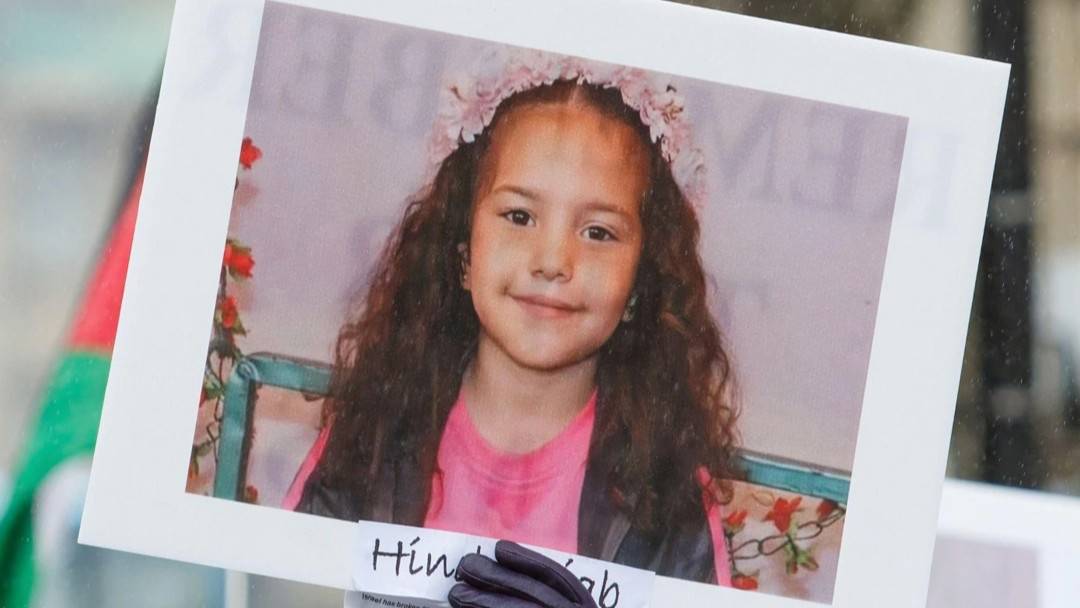
Hind Rajab Foundation
Palestinian Hind Rajab was killed while trapped in a vehicle, despite coordination by the Palestinian Red Crescent for safe passage, the necessary permissions having been obtained, and repeated appeals for help. The Hind Rajab Foundation, established in her memory, is pursuing legal action to hold Israel accountable for war crimes against Palestinians in international and national courts. Seeking to bring perpetrators and accomplices before the courts, the foundation turns the law into a tool of struggle against the continuing culture of impunity; it keeps alive the memory of those who lost their lives and carries the voices of Palestinians to the world.
Inuit women
In Greenland, Inuit women who were subjected to contraception without their consent during Denmark’s colonial rule have been fighting decades later to hold those responsible to account. Approximately 150 women who have shared their testimonies with the public are filing compensation claims, forcing Denmark to confront its colonial past.
Platform of Families Seeking Justice
In Turkey, families who lost relatives in the February 6 earthquakes are fighting, under the umbrella of the Platform of Families Seeking Justice, for everyone in the chain of responsibility from contractors and building inspection companies to public officials and ministry authorities to be prosecuted. They keep obstacles to justice, including conflicting expert reports, prolonged judicial proceedings, and defendants being tried without detention, on the public agenda through meetings with members of parliament, press statements, and actions in the field.
Oslo LGBTİ+ movement
In Oslo, following years of struggle for LGBTİ+ rights, the Church of Norway publicly apologized at the London Pub, the best-known LGBTİ+ venue, which was attacked in 2022. Church President Tveit acknowledged that the Church had excluded LGBTİ+ people for decades and had treated them unjustly, at one point describing homosexual people as “a global-scale social threat.”
U.S. immigrant protests
In the United States, following mass detentions of immigrants by federal authorities, a wave of resistance was organized across dozens of states and continued for weeks. In some areas, workplaces and schools closed for days, and protests reached the scale of general strikes. Beginning in immigrant neighborhoods, the protests quickly spread across the country with the participation of unions, students, religious communities, and civil society organizations, bringing tens of thousands of people into the streets. Despite the use of force by authorities against protesters, the resistance continued uninterrupted for months, and hundreds of people were detained. Protesters demanded that the operations be halted, that those in detention be released, and that immigration policy as a whole be reconsidered.
Delivery Worker Rights Association
Turkey’s Delivery Worker Rights Association is fighting against couriers’ precarious working conditions, workplace deaths, low wages, and deprivation of basic rights. It carries out rights-based advocacy, field research, and solidarity initiatives to secure humane and safe working conditions, fair wages, and legal protections for couriers. The association also fights discrimination experienced by women and migrant couriers, establishes solidarity networks during disasters, and builds alliances with courier organizations in Turkey and around the world.
Generation Z
In Bulgaria, Indonesia, Morocco, the Philippines, North Macedonia, Kenya, Madagascar, Nepal, Peru, Tanzania, Timor-Leste, and Togo, Generation Z led street protests against corruption, economic inequality, and anti-democratic governments. Although the spark that ignited each movement differed, their common demands were a fair economy, accessible public services, and accountable politics. By filling public squares and the areas outside parliaments, this generation emerged as a new face of the struggle for equal opportunities and democratic representation.


