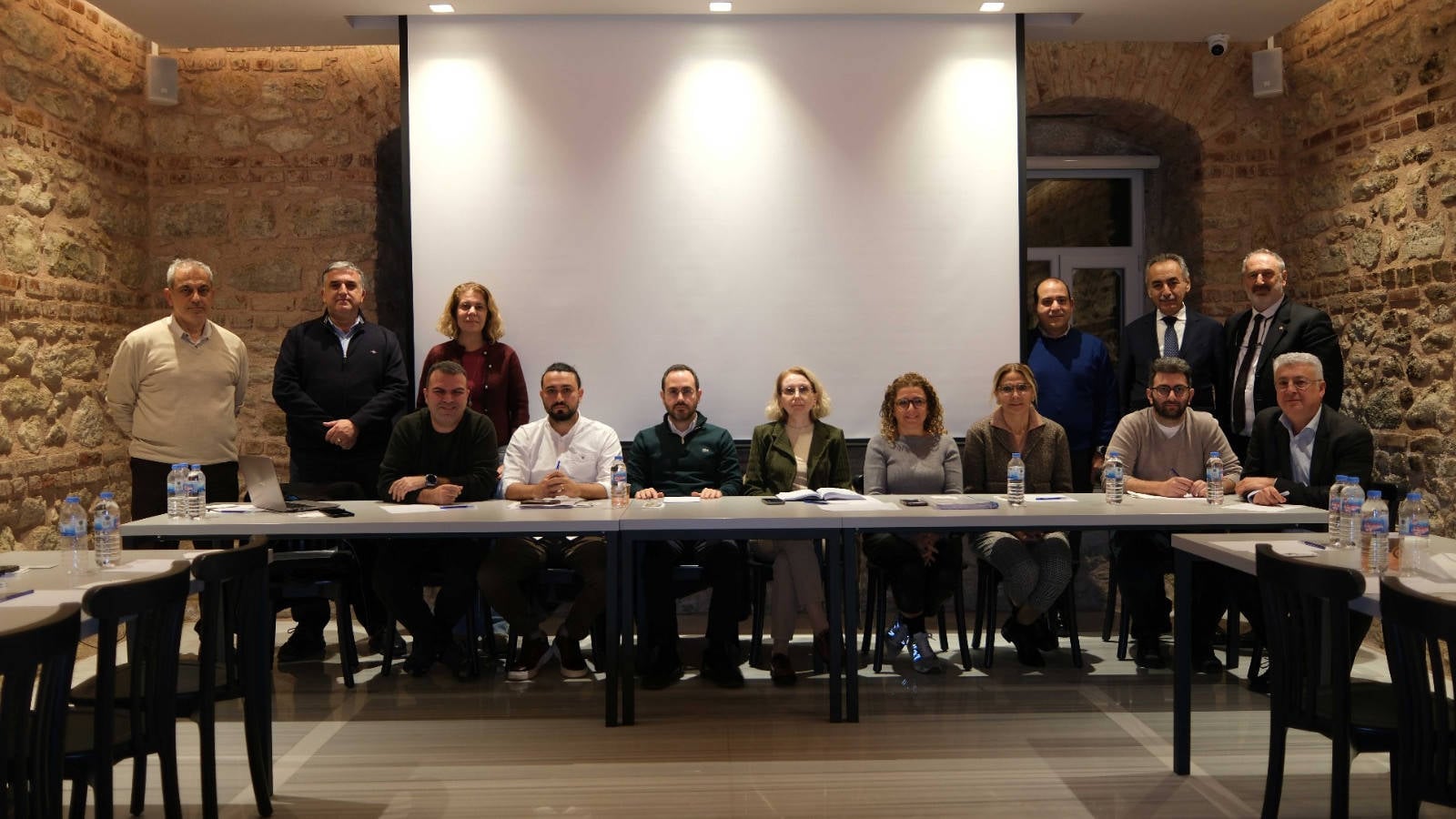

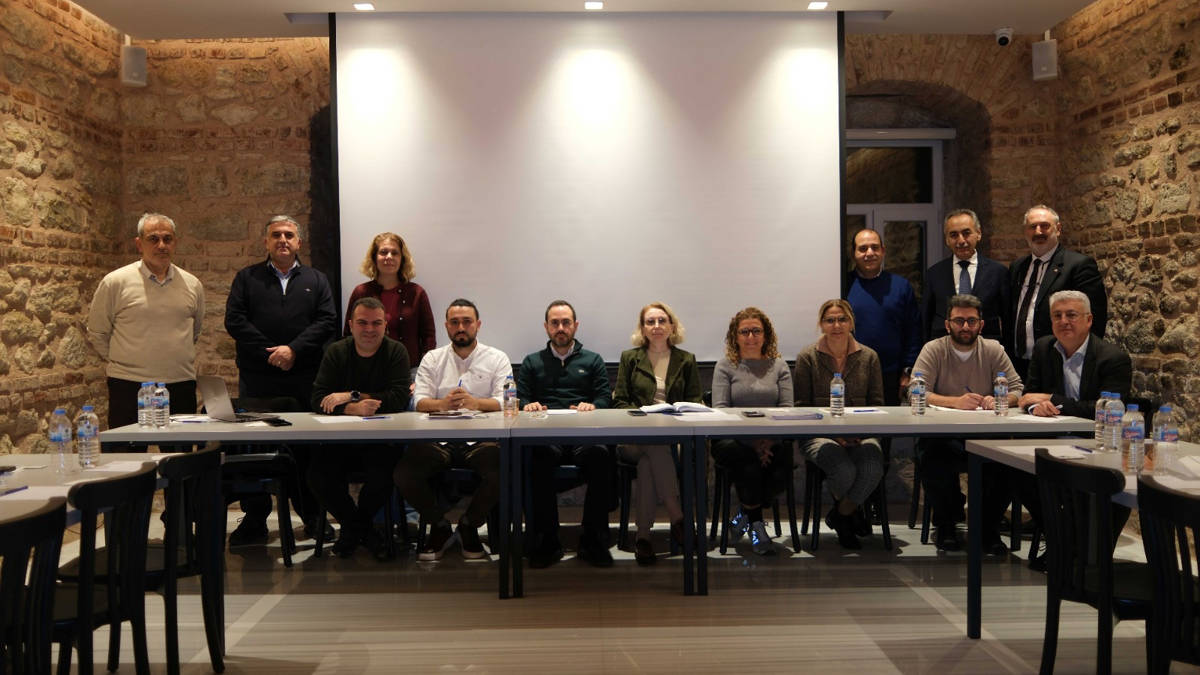
The meeting was held on Monday evening, November 16, in Gomidas Hall of Surp Pırgiç Armenian Hospital in Yedikule, under the chairmanship of Mari Yancı, head of the ERVAB Education Commission. Participants included the heads of foundations that operate schools, school founding representatives, Associate Professor Dr. Meri Taksi Deveciyan from the Platform of Armenian Academics in Turkey, Dr. Sevan Karabetoğlu, and lawyer Aren Dadıroğlu from the Holy Trinity (Üç Horan) Church Foundation.
Following the meeting, the commission issued a brief press statement in which they stated that they discussed the situation of related academic research, of students from Armenia, and curriculum developments. The statement reads:
“The ERVAB Education Commission held its regular monthly meeting in Gomidas Hall of Surp Pırgiç Armenian Hospital. The meeting addressed current issues concerning education in the Armenian community, evaluated some issues. The agenda primarily focused on developments concerning the educational status of students from Armenia. Representatives of the Platform of Armenian Academics in Turkey provided information about their ongoing academic research, explaining that they are reviewing both qualitative and quantitative data and will present their findings to the commission at the next meeting.
“Another item on the agenda was the curriculum development work being conducted for Armenian schools. Sevan Karabetoğlu provided commission members with a comprehensive briefing on the ongoing work.”
Possibility of official reprimands
According to information obtained by our newspaper, inspectors from the Ministry of National Education, who conducted investigations pertaining to the admission of students with foreign nationality as guest students into the Armenian schools, have prepared a report in which they proposed that a formal reprimand be issued to certain Armenian school principals. The reason for the proposed disciplinary action was reportedly the admission of students from Armenia to the Armenian schools in previous years.
These school principals will submit their written defenses to the District Directorates of National Education in response to the proposed disciplinary measures. The Disciplinary Commission will then review their defenses. Following this review, the principals may be subjected to disciplinary action. According to information we obtained, school principals have the right to appeal any disciplinary penalties imposed on them. If their appeals are unsuccessful, they will be able to take their cases to the administrative courts.
Last August, inspectors from the Ministry of National Education coming from Ankara conducted investigations about students from Armenia attending Armenian schools. During meetings with school principals, the inspectors stated that schools will no longer be allowed to accept guest students and that existing students will have to be transferred to public or private schools.
We learned that this policy was not directed exclusively at Armenian schools but also covered Greek and Jewish schools that enrolled guest students.
However, the inspectors' statements contradict the Regulation on Private Institutions of Education, published in the Official Gazette on March 20, 2012.
The regulation included the following provision:
“Guest students with foreign nationality may also study at schools, taking into account the institution's enrollment capacity. However, diplomas may not be issued to these students. Those leaving the school shall be provided with a document issued by the school administration indicating the courses they attended and the grades they received.”
For 14 years, students from Armenia had been attending Armenian schools under this provision, even though they were not eligible to receive diplomas.
Last year, approximately fifty students from Armenia were enrolled in Armenian schools. Following the Ministry of National Education's inspections, however, many Armenian schools were unable to accept new students from Armenia for the new academic year.
The Ministry's implementation of the policy was met with criticism from Armenian families and human rights advocates. The Association for Human Rights and Solidarity with the Oppressed (MAZLUMDER) issued a statement saying:
“The possibility for children who are citizens of Armenia to receive an education as guest students was established through an amendment to the Regulation on Private Institutions of Education in 2012. In fact, this arrangement served as an interim solution to the existing problem. Although the difficulties have continued since then, the situation was managed through a series of makeshift, temporary solutions.
“Now, when both we and the Armenian community expect this problem to be resolved once and for all, going back 14 years would be a major disappointment.
“As is well known, the right to education is a universal and inalienable right, regardless of a child's nationality, legal status, or their family's immigration status. The UN Convention on the Rights of the Child, to which Turkey is also a signatory, explicitly guarantees this right.
“For this reason, we regard the interruption of the education of children who are Armenian citizens on bureaucratic grounds as a clear violation of human rights.”
Religious culture and ethics curriculum approved
Meanwhile, at the November 16 meeting, it was announced that the draft curriculum for the Religious Culture and Ethics course, which had been submitted to the Board of Education and Discipline as part of the curriculum development process, had been approved. Work on the teaching materials to be used in schools is now set to begin. We learned that the technical details of the curriculum of Armenian language course are expected to be finalized in December and then submitted to the Ministry of National Education. If approved, the curriculum of Armenian language course is expected to be introduced in schools in the following academic year.