


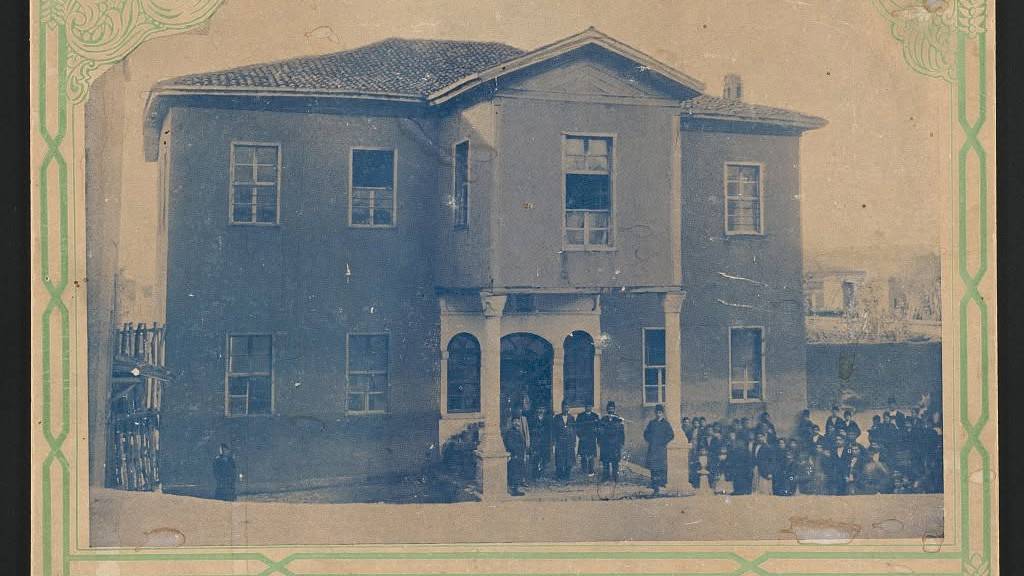
When you reach the end of that dim dead end street at No. 16 Çınaraltı Street in Elazığ’s Rüstempaşa neighborhood, you are greeted by a pale blue iron gate that seems almost to have turned its back on the world. Bureaucracy dismisses the property simply as Block 325, Parcel 13, while the official cultural heritage inventory lists it under the name Rüstempaşa Mansion (Registered: April 29, 2016, No. 3950). In reality, however, this was the Mezire Getronagan (Central) School, which rose here with expectations at the end of the nineteenth century.
Founded in 1898, the school was one of the region’s most important educational institutions, with 12 classrooms, four languages echoing through its halls, and nearly a thousand students each year. Nothing remains today of the magnificent façade visible in an old photograph taken before 1915, with its monumental triangular pediment and grand colonnade supporting the portico. Yet between two small ornamental columns above the blue iron gate, a marble Armenian inscription, carved with a rose motif beneath it, continues to withstand the passage of time:
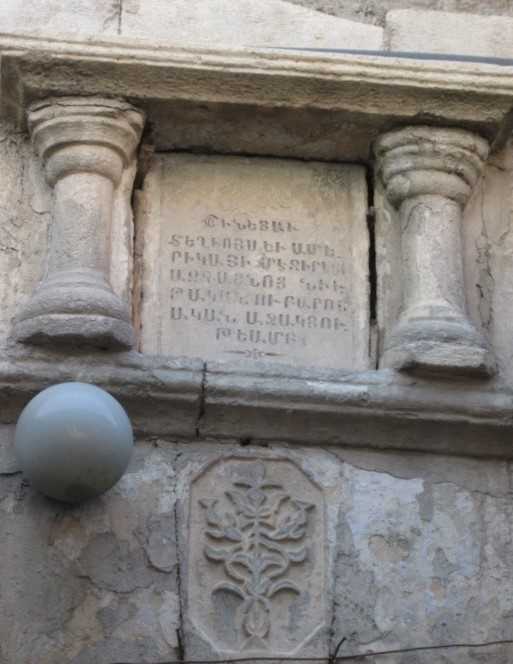
ՇԻՆԵՑԱՒ ՏԵՂՒՈՅՍ ԵՒ ԱՄԵՐԻԿԱՅԻ ՄԷԶԻՐԷՑԻ ԱԶԳԱՅՆՈՑ ՆԻՒԹԱԿԱՆ ՈՒ ԲԱՐՈՅԱԿԱՆ ԱՋԱԿՑՈՒԹԵԱՄԲ։
“Built with the material and moral support of the Mezire compatriots here and in America.”
Today the building is private property and its door is kept locked, making entry impossible. According to the official inventory report, the two-story structure, oriented north-south and rectangular in plan, is constructed of a mixture of cut stone and adobe. Its interiors have largely lost their original character because of concrete columns and additions installed later. The northern wall of the upper floor, which has 12 half-domed windows, has also been bricked up at a later date.
Over the broad courtyard where children once ran about joyfully, a green plastic canopy is now stretched. Marble slabs and a broken chair lie on the ground. This is no longer a schoolyard: its lower floor is used for washing wool, while the courtyard has become a cold marble workshop.
The sadness deepens when you look at a recent photograph of the building. The plaster has completely fallen away, the windows have been blinded with bricks, and deep cracks slice through the walls like knives. Ordinary words have been scrawled in spray paint on the wall beside the blue iron gate, while a makeshift wooden counter and plastic water containers have been placed directly in front of it. The monumental school that once looked proudly out over the city is now hemmed in by neighboring apartment buildings, reduced to an invisible rear façade.
The building, once enlivened by the footsteps of hundreds of children, may not have disappeared completely, but with every passing day it has grown a little smaller. In the official cultural inventory, its name is “mansion”; in collective memory, “church”; and on the inscription carved in stone, sacrifice is still written there. Today, among the ruins of this school at the end of that narrow dead end street, a small a blue evil eye amulet (nazar boncuğu) fastened directly above the historic arched doorway, and a flag planted atop the building stand like solitary sentinels guarding a vast history against time. All around them there is only profound silence and marble dust that catches in the throat.


