


It is possible to find different perspectives among Hemshin people on the history and identity of Hemshin people, some of which completely contradict one another. For many years, the school of historians such as Fahrettin Kırzıoğlu acknowledged the Christian past of the Hemshin people and tried to link them to various Turkic tribes that had adopted the Gregorian denomination. They tried to establish a basis for a Turkish past by claiming that the Amatuni people, the ancestors of the Hemshin, were actually Turkish. However, perhaps because of the ‘difficulty’ of finding Turkish origins for the Amatuni, in recent years some people who think that the Fahrettin Kırzıoğlu-style denial will not work have been trying to develop new approaches. According to this view, Hemshin people never had an Armenian past. They are Turks who came in place of the Armenians living in Hemshin after those Armenians migrated.
Hemshin language is under threat
Although not as fantastical as this, through ignoring the issue, emphasizing national identity or a supra-identity, and underscoring religious identity, many Hemshin people are trying to deny, belittle, or ignore their own identity and historical past. Of course, many other Hemshin people are increasingly trying to embrace their own language and identity. In particular, ‘Hamşentsnag’, or the Hemshin language, which is under threat of extinction, faces a serious threat due to the rapid decline in its use among younger generations in recent years. The fact that there are Hemshin people who give their children names in their own language and those who choose Hemshin words for the names and brands of their workplaces and companies also shows that there is a growing movement to embrace the Hemshin language. However, as a natural consequence of urbanization, the Hemshin language is losing ground to a serious degree. Considering that it is regarded as the most defining element of Hemshin identity, and at a time when efforts are being made to produce a new history for the Hemshin people through an artificial writing of history and, by this means, to Turkify them, the importance of preserving the language is therefore doubled.
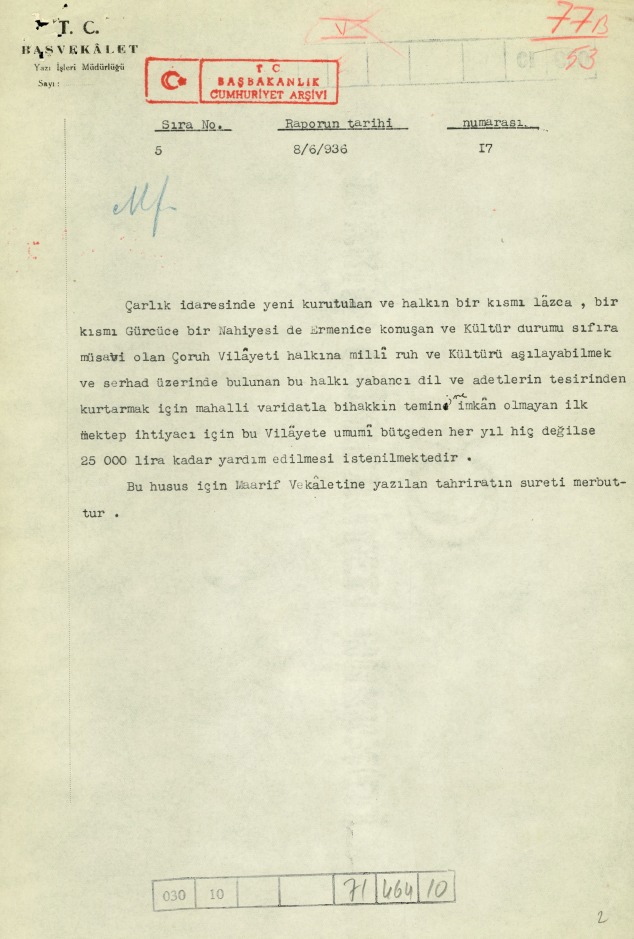
Apart from these debates within the Hemshin community itself, how the state and authorities define the Hemshin people also constitutes one of the most important topics in discussions about Hemshin history. There was previously an Ottoman document dated 1913 published in Agos. This document was a letter written by the Fourth Branch of the General Staff Department (Umum Erkan-ı Harbiye Dairesi) to the Ministry of the Interior (Dahiliye Nezâret-i Celîlesi). The letter, dated 25 Cemâziyelâhir [1]331 and 19 May [1]329 (June 1, 1913), reads as follows:
“The population of the villages of Zurpici (Yoldere), Arvala (Eşmekaya, Çimenli), Çavuşlu, Hayki, Zargina (Güneşli), and Gvarçı (Hendek), located within the area of the Hopa Border Company in the Hopa district of Trabzon Province, consists of Muslims who converted from Armenians known as Hemshin, while the entire population of the remainder of the district consists entirely of Muslim Laz people; a report belonging to the Hopa Company of the Russian Border Commissioner states that, because the Hemshin people are naive and ignorant, a missionary could operate successfully in this area, and that it is extremely important that our local government provide warnings and guidance to the Hemshin people for this reason; as this matter has been deemed noteworthy, we respectfully request that the necessary action be taken, sir.” (BOA, File: 116, Folder no.: 65, Fund code: DH.İD.- 1331. C. 28.)
Based on this document, the Ministry of the Interior sent a letter to Trabzon Province on 27 Cemâziyelâhir [1]331–21 May [1]329 (June 3, 1913), under document number 388:
“It has been reported to our Ministry of Defense, based on a letter from our commission on the Russian border, that the people of the villages of Zurpici (Yoldere), Arvala (Eşmekaya, Çimenli), Çavuşlu, Hayki, Zargina (Güneşli), and Gvarçı (Hendek), located on the Hopa Border Company side, who were originally Armenian but converted their religion and became known as Hemshin, are liable to fall prey to missionaries’ deceptions because of their naivety and ignorance, and that the people of the villages of Gvarçı (Hendek) openly and innocently state this; that the Hemshin people therefore need to be enlightened and shown the right path by the local government; the letter explaining the situation has been deemed noteworthy, and the necessary action should be taken.” (BOA, File: 116, Folder no.: 65, Fund code: DH.İD.- 1331. C. 28.)
How does the Republican era define Hemshin people?
This document showed that during the Ottoman period, Hemshin people were officially defined as a community that was originally Armenian and had converted to Islam. We now have documents concerning how the Republic defined Hemshin people. One of the documents found in the archives by researcher and writer İrfan Çağatay Aleksiva is an intelligence report whose confidentiality was lifted under approval dated July 10, 2025, no. 148317. The report, dated April 5, 1930, contains various assessments and findings concerning the districts of Trabzon, Rize, and Artvin. The report uses language that views the local population speaking only Turkish, alongside populations speaking Laz, Georgian, Greek, and Armenian, as a potential danger. For example, regarding the people of Trabzon, the document states, ‘although they do not know the Laz language, they certainly do not like Turks either.’ The people of Rize who did not know the language were described as follows: “They do not speak or know any language other than Turkish. This population, which regards its interests as superior to all national and patriotic sentiments, has not yet understood today’s regime.” An interesting detail in the document is that, regarding Of, where today very few people speak Greek, it states that ‘Greek language is predominant in Of.’
In the section about Atina (Pazar), the document states that “there are quite a number of Armenian converts among Hemshin people.” (Presidency of the Republic of Türkiye Directorate of State Archives, Fund Name: Prime Ministry General Directorate of Administrative Affairs, Fund Code: 30-10-0-0, Box No.: 112, File No.: 759, Folder No.: 14)
The wording in the document clearly indicates that during the Republican period, just as during the Ottoman period, the Hemshin people were officially defined as ‘Armenian converts.’
“Freeing them from the influence of foreign languages and customs”
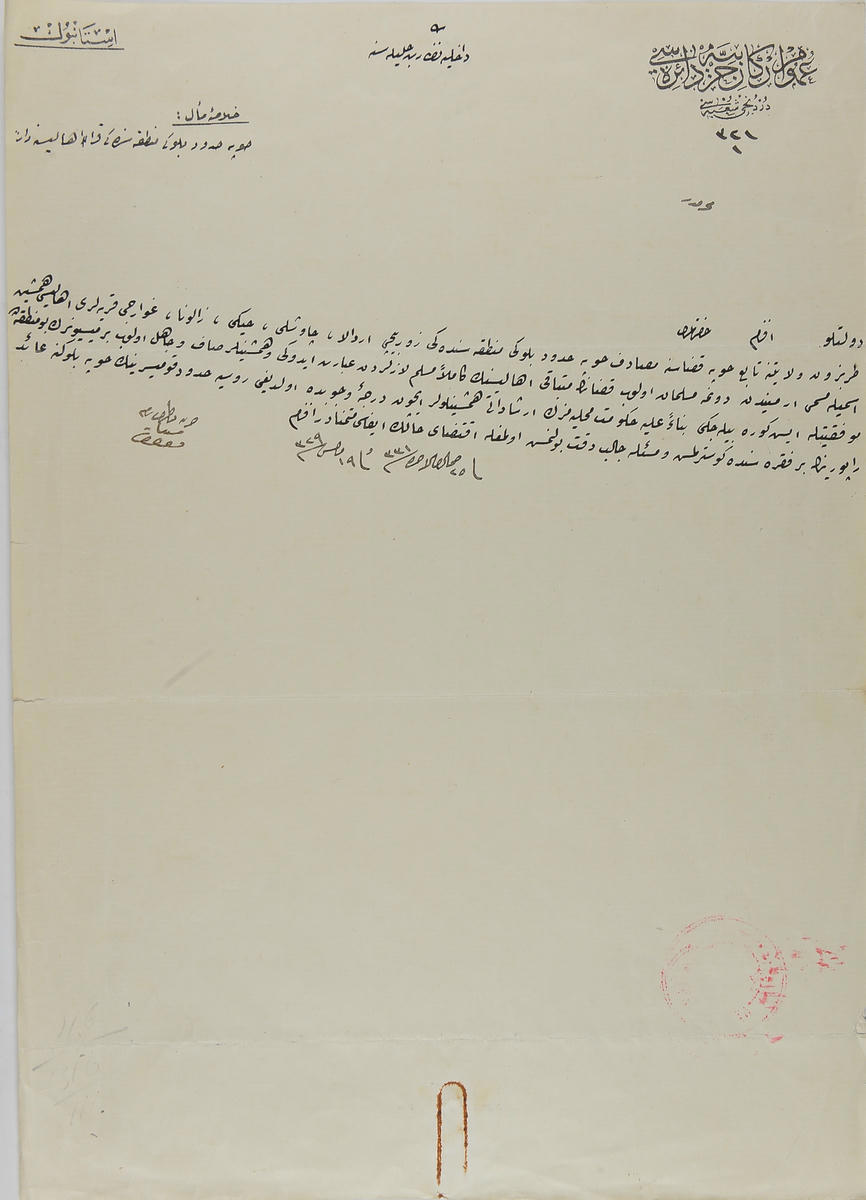
Another document, likewise declassified under approval dated July 10, 2025, no. 148317, is dated June 8, 1936. The document is a report submitted to the prime minister’s office under the title ‘Regarding the Cultural Condition of Çoruh Province, a beautiful part of the Homeland that remained under Tsarist rule for nearly half a century and is of great importance to the sensitivity and dignity of the Country and even the State.’
“In order to instill national spirit and culture in the people of Çoruh Province, who have only recently been liberated from Tsarist rule, some of whom speak Laz, some Georgian, and one district Armenian, and whose cultural condition is equal to zero, and to free these people living on the frontier from the influence of foreign languages and customs, it is requested that this province be provided from the general budget each year with an assistance of no less than 25,000 lira for the need for primary schools, which cannot be adequately met from local revenues.
A copy of the correspondence written to the Ministry of Education regarding this matter is attached.” (Presidency of the Republic of Türkiye Directorate of State Archives, Fund Name: Prime Ministry General Directorate of Administrative Affairs, Fund Code: 30-10-0-0, Box No.: 71, File No.: 464, Folder No.: 10)
It turns out there was a motivation to assimilate
For years, Artvin was regarded as one of the most educated and modern cities in Turkey and held up as an example. This document shows what motivation was behind the educational investments made in the region from the early years of the Republic onward. Apparently, behind the narrative of a contemporary, democratic and modern Artvin that many of us held up as an example for years, there was a motivation to ‘instill [Turkish] national spirit and culture’ in a population speaking Laz, Georgian and Armenian that was deemed to have ‘zero cultural status’, in other words, to assimilate them into Turkish identity. We thought we were becoming enlightened, but it turns out we were being assimilated! And sadly, we see that throughout the history of the Republic, ‘national spirit and culture’ was instilled in many people among the Hemshin Armenians, Laz and Georgians to the point of making them deny their culture, history, and identity.


