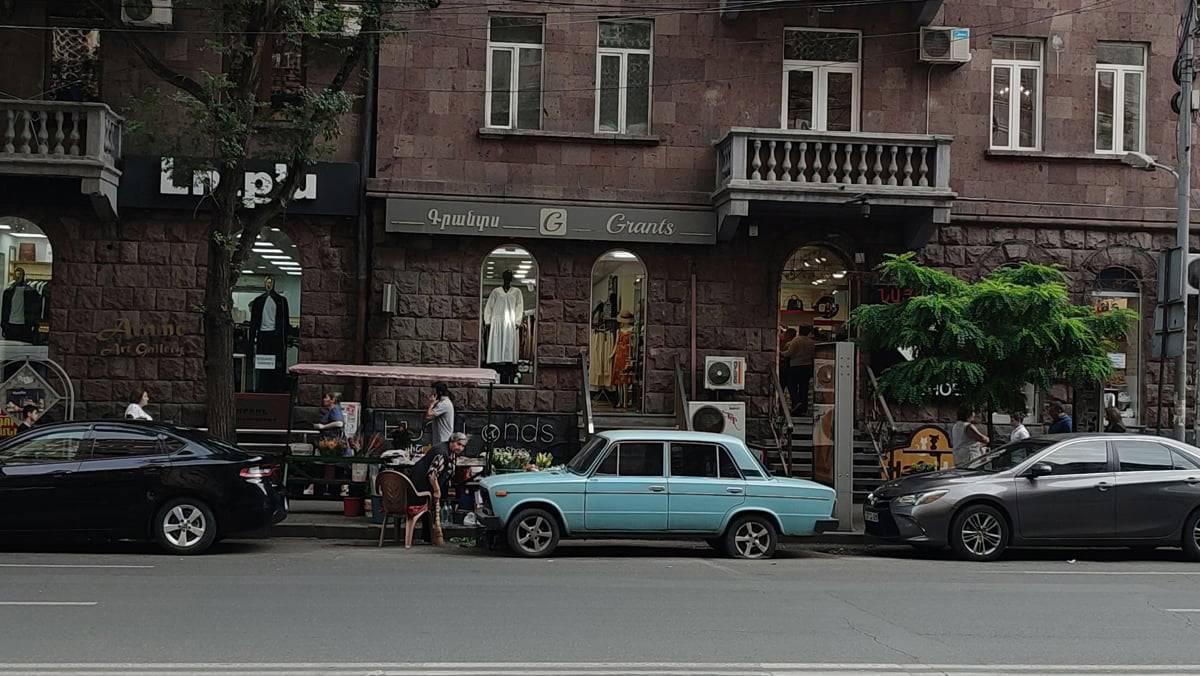


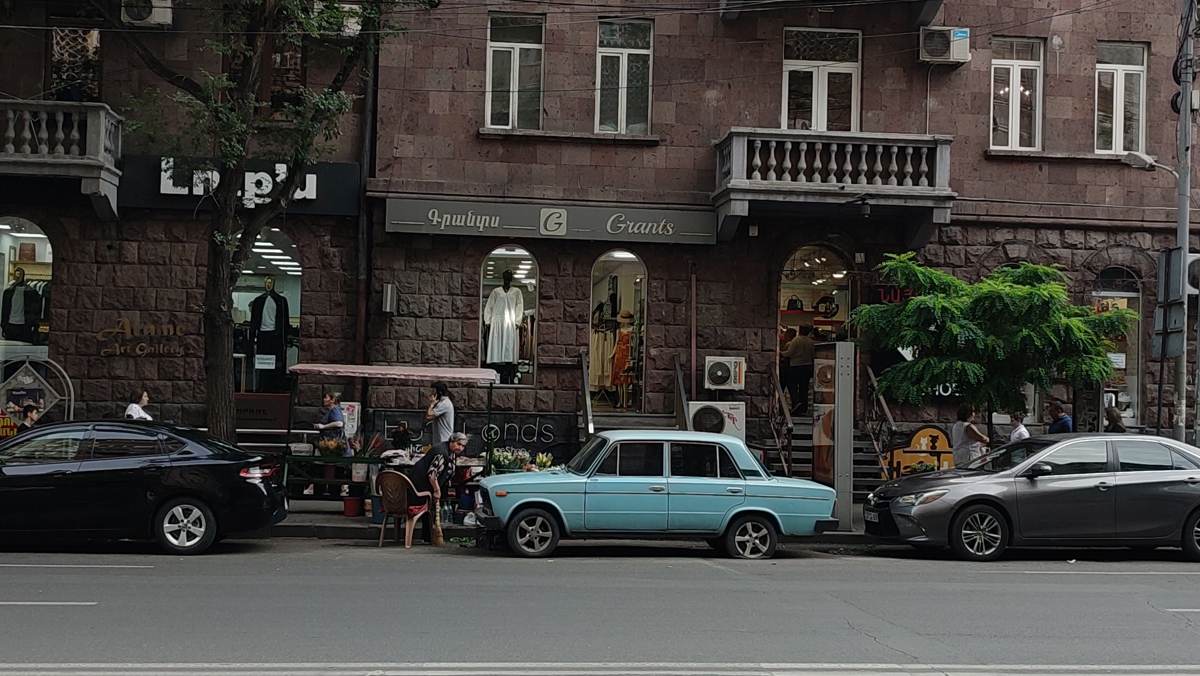
Homer's Odysseus fights for ten years, then spends another ten trying to return home. One of the oldest journeys in Western literature is, in fact, pursuing a single question: Where does one return? Is the place they return to really home? Odysseus' story tells us that return is not as simple as we imagine. Because his real question is not how to return home, but what home actually is. Long journeys do not only change a person; home changes as well.
Indeed, when Odysseus finally reaches Ithaca after twenty years, no one recognizes him except his old dog, Argos. He has become a stranger in his own home. Sometimes people reach the place they have longed for over the years, only to realize they do not belong there as much as they once believed.
A few days ago, when an Iranian friend told me, "You are diaspora too," I instinctively objected. "No," I said. "I am not diaspora." I tried to explain why I did not consider myself part of the diaspora. My father is from Malatya. My mother is from Sivas. I was born in Istanbul. My family has lived for centuries on lands that today lie within the borders of the Republic of Turkey. We did not migrate from somewhere else. That is why I have never defined myself as diaspora.
Returning to the homeland or embarking on a new journey?

There is a commonly used word in Armenia: hayrenatarts. One who returns to the land of their ancestors. It is a beautiful, deeply rooted word. Yet, despite living in Yerevan, I cannot find myself within it. Because in our language, hayrenik is the ancestral land, the homeland; the place where roots, ancestors, and memory are buried. If the land of my ancestors is Malatya and Sivas, then is coming to Yerevan a "return" for me, or an entirely new journey?
But if I absolutely had to give it a name, I would call Armenia my second home. Not the place where I was born, but the place where I built a life.
Armenia does not carry the same meaning for every Armenian. For some, it is the embodiment of the stories they have heard since childhood; for others, it is a safe harbor. Some were born and raised here and have never known another place; others are trying to rebuild their connection with this country after spending most of their lives elsewhere. For some it is home, for others longing, and for still others a question that has yet to be answered. Perhaps this is Armenia's most fascinating quality: its ability to hold different stories of belonging at the same time.
Two cities, two rearview mirrors
The paradox of belonging is best told through the rearview mirrors of two cities.
Whenever I get into a taxi in Istanbul, my accent sometimes gives me away, and that familiar question comes: "Where are you from?" Knowing the real curiosity beneath the question, I answer without beating around the bush: "My father is from Malatya, my mother is from Sivas, and I'm Armenian." The taxi driver is not satisfied; as if wanting to uproot my origins from those lands and attach them to another geography, he insists: "So where did your ancestors come to Malatya from? When did they arrive?"
I smile: "They came three thousand years ago. I don't know anything before that."
Despite all the othering they have endured, despite being treated as second-class citizens, and sometimes even becoming the targets of hatred, for Armenians of Turkey, Anatolia is the homeland itself. Even if a person is made to feel like a stranger in their own home, home is still home.
Then I get into a taxi in Yerevan.
"Where are you from?"
"An Armenian from Istanbul. My father is from Malatya, my mother from Sivas."
The driver turns around from the rearview mirror and asks:
"Are there still Armenians in Istanbul?"
And every single time, I find myself trying to prove my own existence. I begin explaining: we have our schools, our churches, our newspapers...
One person treats me as a newcomer in the land that has been my homeland for thousands of years and turns me into a stranger; another forgets my existence in the city where I was born and raised and assumes I belong to a history that disappeared long ago.
Perhaps this is what made me object to the word diaspora. Because that word always suggested to me being uprooted from one place and scattered to another. Yet my story was not a story of rupture. It was the story of learning to live between two different forms of belonging.
A new home and new neighbors
One of the things that living in Yerevan has taught me is this: being Armenian sometimes means living at the crossroads of lives scattered across the world.
In my first year here, I met a young woman from Beirut who shared my name. Later she returned to Lebanon. When the massive explosion at the Port of Beirut happened, I followed the news for days. I tried to reach her. That was the day I realized that living in a city sometimes means becoming connected not only to its people, but also to the worlds they have left behind.
A few weeks ago, another message arrived on my phone in the middle of the night. It was from my Iranian neighbor who lives in the same apartment complex.
"Maral, could you come downstairs? I'd like to take a walk with my daughter. My husband is in Iran. I haven't heard from him for three days."
I went downstairs. We walked side by side in the apartment garden. We didn't speak much.
Sometimes the world becomes very small. A war that appears hundreds of kilometers away on the map reaches your apartment garden in the middle of the night. Perhaps that is why Yerevan no longer feels like just a city to me. Here, the stories of people who come from different corners of the world meet again on the same streets. After a while, a disaster anywhere in the world ceases to be distant news.
Where does one return?
There may not be a single answer to this question.
Mythology tells us about Odysseus's arrival in Ithaca, but the story does not end there. According to the prophecy, his destiny is to one day shoulder his oar and set out once more, traveling until he finds people who know neither sea nor salt nor even the names of ships. For some journeys change a person so profoundly that return is no longer an ending, but a new beginning.
Perhaps the matter is never simply where we return. People carry the places they went, the people they loved, those they lost, and everything they learned with them along the way. Perhaps this is what we call return: learning to live with the homes that multiply throughout your journey.