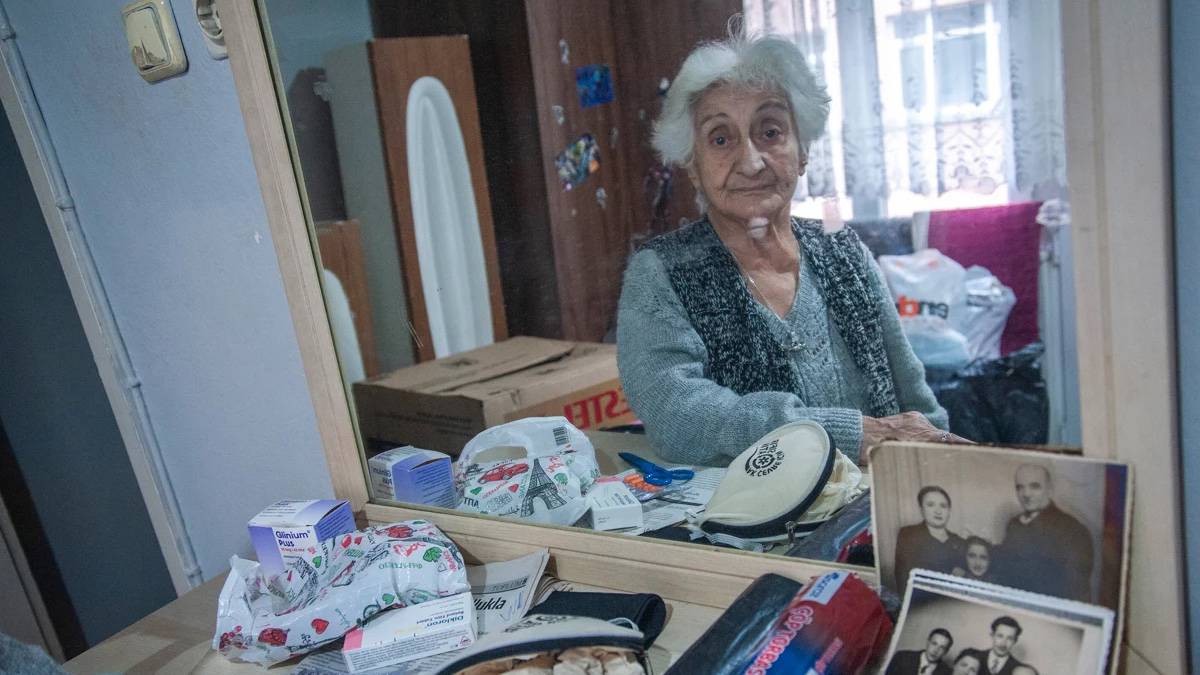


The severe loss of income and poverty experienced by a segment of the Armenian community in Turkey remains a priority on the agenda of institutions. The Social Aid Commission of the Patriarchate (PSYK), the poor relief branches of churches, and civil organizations like Mer Hayer are conducting work on this issue. Most recently, it was announced that a commission would be established within the Association of Armenian Foundations (ERVAB) to focus on this matter.
About two months ago, I interviewed five elderly women in Bakırköy experiencing financial difficulties. The most prominent issues were access to healthcare and rent assistance. At the time, these five women did not want to reveal their names to avoid feeling humiliated. However, one of them, Arşaluys Rita Kasapyan, is now on the verge of homelessness. Because "To be at the end of one's rope," she decided to share all her struggles with Agos and the community. We now listen to her story.
First, could you introduce yourself?
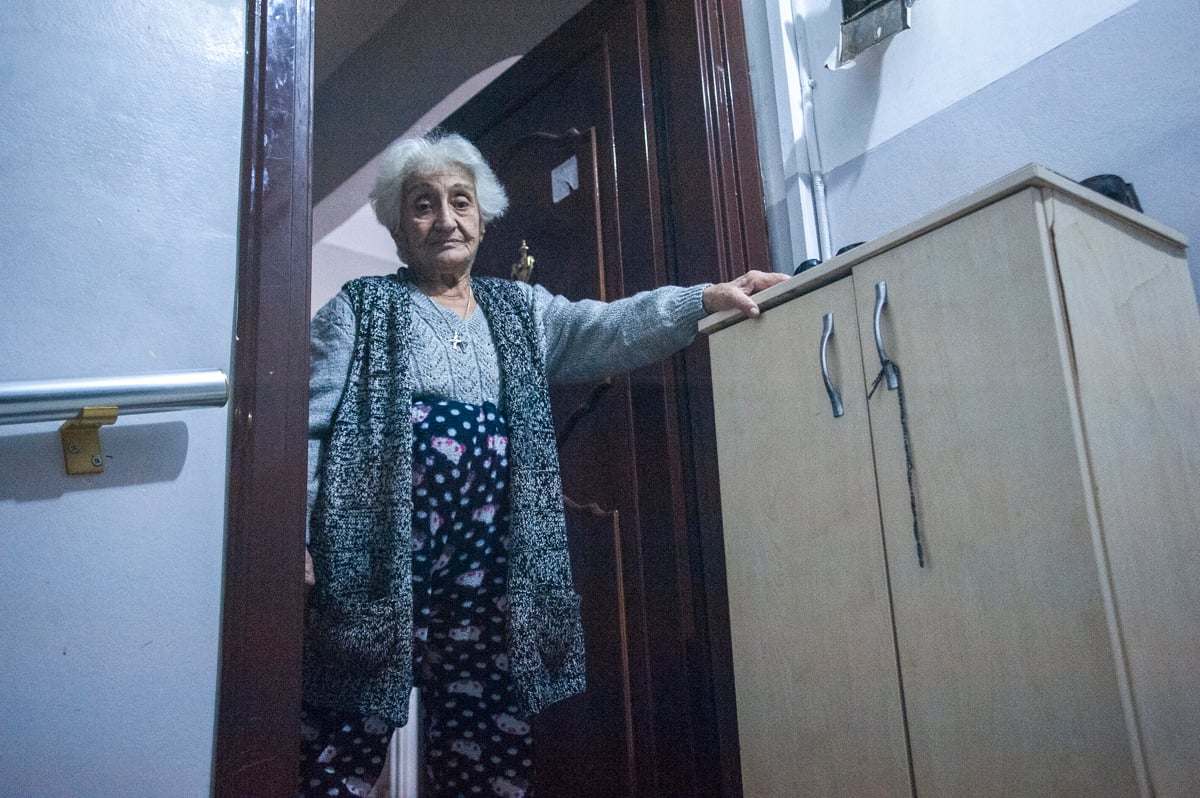
I am Arşaluys Rita Kasapyan. I was born in 1944; I am 82 years old. I am being evicted because I haven’t been able to pay my rent for about seven months. Because my son became unemployed, we couldn't afford the rent. Nothing like this had ever happened to me before. I have no debts for dues, no debts for electricity. Yesterday, the natural gas and electricity bills arrived—about 2,000 TL in total—and I’m just sitting here wondering how we will pay them.
Are you affiliated with the Bakırköy Church Poor Relief Branch?
Yes. I receive 600 TL per month. Additionally, twice a year during our holidays, a food parcel arrives. The parcel contains items like oil, legumes, and tomato paste.
How many children do you have?
I have four children: three sons and a daughter. One of my sons is in Antalya. We are not in contact. Very rarely, he calls and asks, "Mama, how are you?" I say "I’m fine" and hang up. He is also reportedly ill, has no financial means, and has had heart surgery.
I have two sons in Istanbul. One is 50 years old and works without insurance; the other is nearly 60. I live with the 60-year-old son. We don't know where he will stay the day we are thrown out. The place where my other son—the younger one—lives is very bad. It was a shop that they turned into a house. He lives there with his wife and children. Just yesterday, the ceiling collapsed entirely. There was an issue with the electrical current; you get shocked from everywhere. If I am evicted, I will stay there. But they are in no position to take care of me.
I used to live with my daughter. She has a house in Zeytinburnu. My son-in-law was working, and his health was good. Later, he fell ill and has been in a vegetative state for a long time, intubated. My daughter takes care of him at the hospital. My grandchildren had to both study and work. Until now, the children managed the household somehow, but they were told their building is dangerous and they must evacuate. Now they, too, are thinking with deep anxiety about how they will afford rent.
Why is your eldest son, who lives with you, unable to work?
He was actually married and has children. When business went bad, everything fell apart. My sons were well-liked workers in the Grand Bazaar. During the pandemic, the situation in the Bazaar deteriorated. Shops couldn't stay afloat. When his shop closed, he became unemployed. He is a jewelry setter (mıhlayıcı). If someone calls him, he goes and works for a daily wage. The Bazaar is in bad shape. Sometimes weeks go by without any work. Even when he was a permanent worker, he had no insurance. Once he became unemployed, he had no pension to rely on. Recently, he found a job as a waiter in a coffeehouse; he worked for a month, but they let him go because he seemed "too old" to them.
When we voice the calls for help from people in your situation, some comments say, "They have sons and a daughter, let them take care of them."
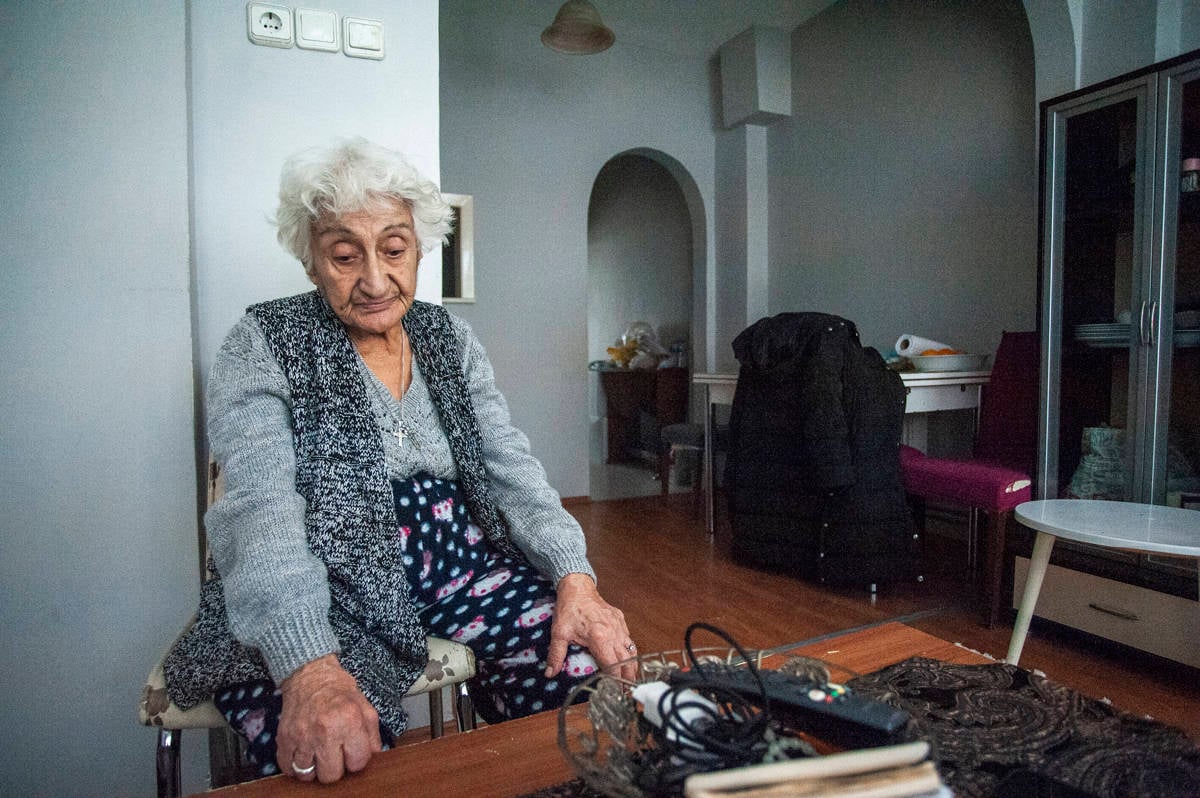
Oh, they think they know everything. They find it easy to judge. Our wealthy people, before they died, donated their houses and assets to foundations so that the poor and the destitute like me wouldn't be left on the streets—so they could be helped.
But what do the managers do? They polish up those houses and rent them out for 20, 30, or 50 thousand liras, leaving people like us on the streets. Yet, some of those managers grew up in very poor homes themselves. Living in a single room, desperate for a piece of bread. What has changed now? Why are they doing this?
I also served the churches as a volunteer for years. Why couldn't I have anything? When I needed something, I was met with a wall of silence. I told the poor relief branch, "They are throwing me out. For God’s sake, help me. I will come and sleep in the church. I have no place, just give me one room." They said, "We don't have one either, we can't find anything."
There was a house across from the mosque in Bakırköy. My daughter’s friend used to live there. It’s currently in ruins. I heard it was an Armenian foundation house but it's unusable; I wish such houses were repaired for us.
You have no income. You can't pay rent. How do you survive?
There is the 600 TL that comes in, and whatever my son earns, he brings home. If he works, he brings 300-400 liras. I try to manage with that and pay the bills; we cook food with 200 liras a week. But it’s not enough money. Look at my refrigerator. It’s empty.
I’m very curious. Did you never own a home?
When I was young, my family had a four-story house with a garden in Topkapı. I left that house as a bride. I was an only daughter. When my father passed away, the grocer in our neighborhood frightened my mother. To prevent harm to herself, me, and the family, she succumbed to threats and transferred the house to the man for a pittance without telling us. We found out years later that she had transferred it. With the money she had, we bought a two-story house in Yenimahalle, Bakırköy. We started living there. Without my knowledge, my husband deceived my mother and mortgaged the house for business. When the business failed, the house went up for sale. After we lost the house, my mother had a brain hemorrhage from the grief and died.
By when do you have to leave the house?
In fact, I should leave within a day or two. But I can't. Let them do whatever they want. If he throws me out, I’ll take refuge in my son’s dilapidated house. We will put my large furniture on the street. I’ve already bagged the rest. We’ll take them down to my son’s basement. My mother’s last words were always, "Will I end up on the streets? Will I end up on the streets?" Now, mine have become the same. Will I end up on the streets?
Honestly, I have no words to give you hope. I don’t know if our reporting helps with this. What is your expectation from the Armenian community of Turkey?
What I want from the community is a home. At the very least, a room. It doesn't matter if it's not in this neighborhood, as long as it's a foundation house or a church house. I am calling out to every foundation of my community! If you have a suitable house, please help me!!
Our conversation with Arşaluys Rita Kasapyan ended like this. I cannot predict whether she will still be in her home or homeless by the time this news is published. My only wish is that the problem of poverty in the community be addressed more urgently and that all institutions active in this field work in coordination. Rita Tantig (auntie Rita), I hope someone hears your voice.