
Kevork is a very nice man. He is one of the special peopleI had met in my first two years after I came to Istanbul. It is so far back that I can’t exactly pinpoint where and when I met him. But I have a strong feeling that it was the night another friend invited me to accompany him to a gathering of some Sasuni Armenians in Ferikoy. I was happy to meet him and I have always liked him because of his warmth and gentleness. Besides, whenever we happened to be at an event or a gathering, he always made the effort to greet me and talk with me like a friend, full of respect. He is still like that after so many years even though I rarely run into him nowadays.
One day when we were talking like that, he mentioned that he had just come back from Diyarbekir. I was curious as to why he had been there and was told that he had been teaching Armenian there and the term had just ended. It was through the sponsorship of the Sur municipality as a heritage program for islamasized Armenians who could not speak or write in Armenian. In those days, I was not contributing to Agos yet. As a photographer I was always in search of a story and hearing Kevork talk about these lessons in Diyarbekir, all of a sudden made me think that, had I known, this could have been a good story for me. It would have been maybe the beginning of a visual story on this little-known community of Diyarbekir Armenians. I felt a slight tinge of regret in my heart, for finding out too late. When I told him that I would have loved to photograph one of his classes, he said that there would be another term in the Spring and I was welcome to visit and take photographs. I was so happy because he would let me know when classes started again.
Well, the man kept his promise and one day he phoned telling me that the second term was about to start. So, off I went to Diyarbekir. It was a bit difficult for me because I was unemployed and short of money. I could only afford to stay a couple of nights in a cheap hotel. But I was very keen on doing a story about this special school. I had been to Diyarbekir before and had seen only the Ofis district aside from Sur. To go to the class though, I had to go through a very long route with buses and then walk quite a distance through a very different Diyarbekir full of big buildings, gas stations and a shopping centre that had non of the charm of Sur.
Kevork was waiting for me outside an office building where classes were being held. I was nervous because I did not know how the students would react to my intrusion on their lesson with my camera. I was wrong to have had such doubts because when I shyly entered the classroom, a very welcoming atmosphere put me at ease right away. The students, with a noticeable female majority, were very excited about an Armenian photographer, curious about their class, coming all the way from Istanbul to photograph their lesson. They were so sweet showing off with the few Armenian words and sentences they knew. They spoke Turkish and Kurdish mainly and myself, very little Turkish. But we understood each other through our mutual curiosity about each other and our excitement at such a meeting. They asked so many questions about my life and family roots. My Diyarbekir, and especially Lice/Hazro, family origins broke all the ice between us. They saw me as one of them and they showed this with great warmth. Kevork also did a lot of translation for us to ease up our question and answer session.
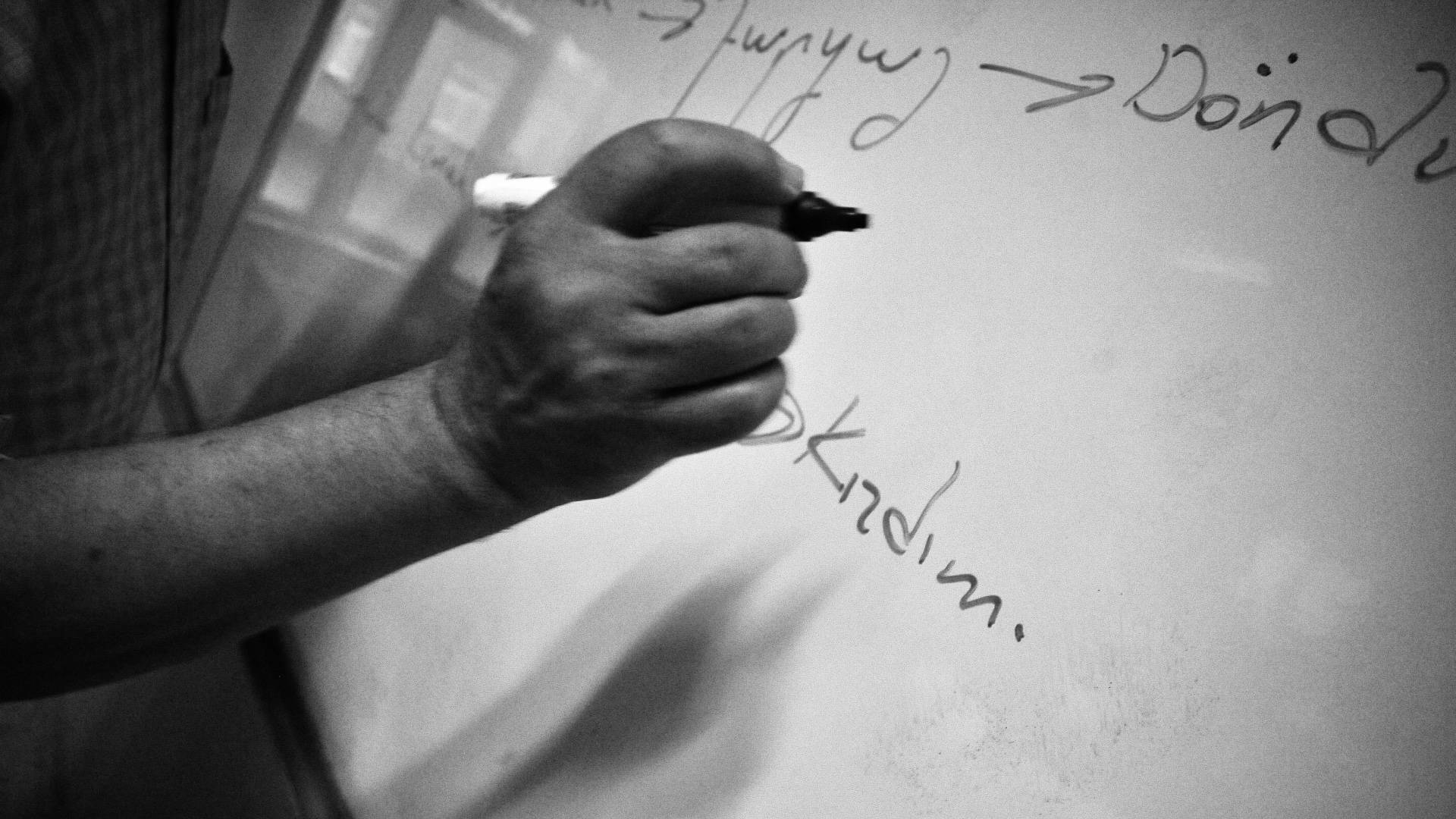
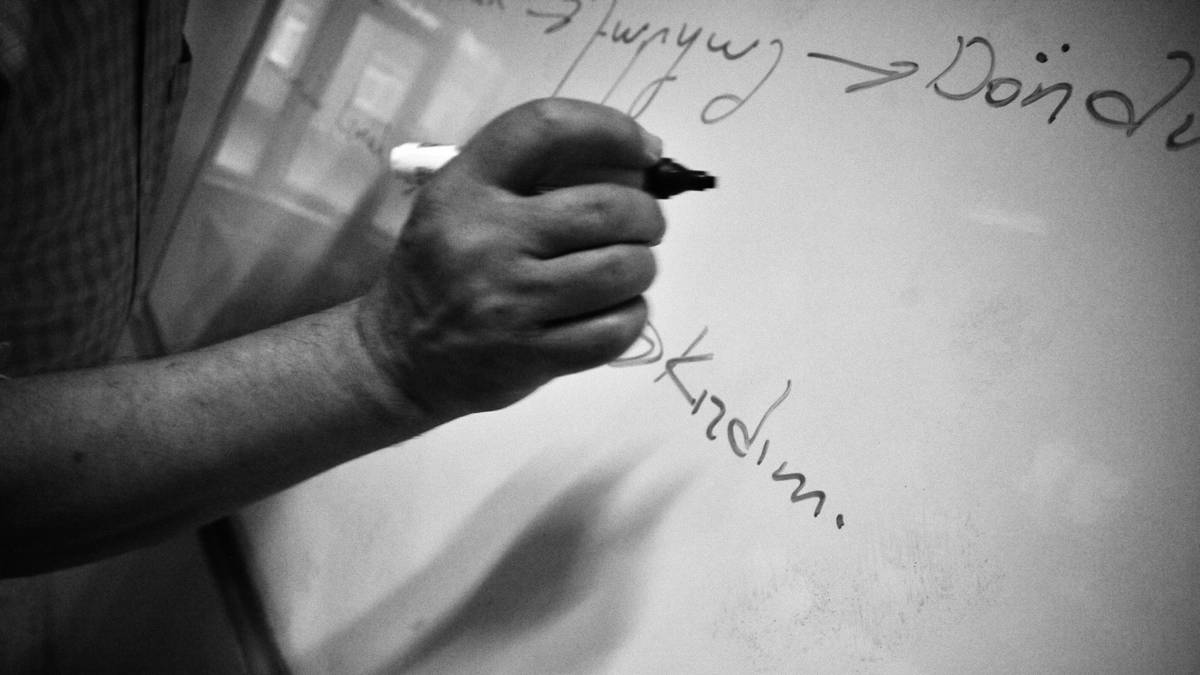
It was quite a long interruption to their lesson but everyone, including their teacher, was happy. Eventually they resumed their lesson and I began photographing. They all had textbooks: one was a Turkish-Armenian speaking manual and another for Armenian letters and writing. Kevork was teaching them about the past tense by showing them the different Armenian endings that made up the simple past tense on the white board. He was a very good instructor. And very kind and patient. He was like a friend to them rather than a teacher and made them laugh a lot. I took a lot of photos and tried to concentrate on details rather than faces. This photo is one that I like because it shows the nature of the lesson without being so graphic. That night I felt very much at home amongst these students and in the years that followed, I would run into many of them during my trips to Diyarbekir or their visits to the paper. And some of the photographs, even though the paper did not run them when I submitted them, were used many times accompanying articles about Islamasized Armenians. But that was later, after I had joined the paper.