ArtContact Hosted Artists from Armenia


The 6th International Contemporary Art Fair, ArtContact Istanbul, which took place in Istanbul from May 13–17, also welcomed visitors from Armenia. Held at the Yenikapı Kadir Topbaş Performance and Arts Center, the fair brought together artists from 40 countries and thousands of artworks.
“Arame Art Gallery,” representing Armenia as a gallery, was one of the focal points for visitors. At the fair, we met with Aram Sarksyan, the founder of Arame Art Gallery, and painter Tigran Matulyan.
Mr. Aram Sarksyan, as the founder of “Arame Art Gallery,” I’d like to start by asking you a few questions. Could you tell us about your gallery? How many branches do you have?
Aram Sarksyan: “Arame Art Gallery” was founded in Armenia in 2003. We have two galleries in Yerevan; both are located right in the city center. Our gallery in Lebanon also has two branches. Our gallery’s primary goal is to bring Armenian artists to an international platform, to an international stage. Everyone in Armenia knows the artists whose works are exhibited here; however, the issue is that we want these talented artists to be recognized outside of Armenia as well. For this reason, we participate in festivals and international exhibitions around the world.
Is this your first time in Istanbul?
A.S: I had previously visited Istanbul twice to get to know the city, explore the art scene, and understand its unique qualities through “Contemporary Istanbul.” This is my third visit to Istanbul, and we are now participating in “ArtContact Istanbul,” the 6th International Contemporary Art Fair. I should mention that we also participated in the fair held at “Art Ankara” two months ago.
How did Istanbul make you feel?
A.S: Istanbul is a city with a rich history. It has a community. Seeing that Armenians live and work here moved us deeply. We visited the Surp Pırgiç Armenian Hospital; it was beautiful. All of this feels very close to us. We take pride in the fact that such a history exists in Istanbul.
How did you come to participate in “Art Ankara”?
A.S: At the beginning of the year, we participated in “Art Cairo” as “Arame Art Gallery.” There, a very distinguished gentleman approached us; Bilgin Aygül. We realized this person was the founder of “Art Ankara,” and he was deeply moved by our art. He spoke very highly of our artists’ works and invited us to participate in “Art Ankara.”
How many artists’ works did you take to Ankara, and how many artists’ works did you bring to Istanbul?
A.S: We took the works of nine artists to Ankara. We also brought 44 works by nine artists to Istanbul. Today, works by Ruben Grigoryan, Vahagn Harutyunyan, Arthur Sarafyan, Tigran Matulyan, Igor Pron, Avetis Khachaturyan, Aram Hakobyan, Marat Markarian, and Sarkis Hamalbashyan were exhibited in Istanbul. However, as “Arame Art Gallery,” we work with approximately 40 artists. In this exhibition, we presented figurative art. Tigran Matulyan is a veteran painter and an artist whose works are exhibited at the Armenian Museum of Contemporary Art.
Lebanon is going through tough times. You opened an exhibition there right in the midst of this.
A.S. I’ve been traveling to Beirut for 30 years; I’m used to the bombs by now. The bombs didn’t stop, but we opened the gallery anyway. There are 70 galleries in Beirut, but we’re the only one open. We wanted to showcase an artist; it was Albert Hakobyan’s solo exhibition, and it went well.
Did your gallery sustain damage in the major explosion in Lebanon?
A.S. Yes, there was significant damage. About 40 paintings were damaged. I think God is looking favorably upon Matulyan; his paintings weren’t damaged.
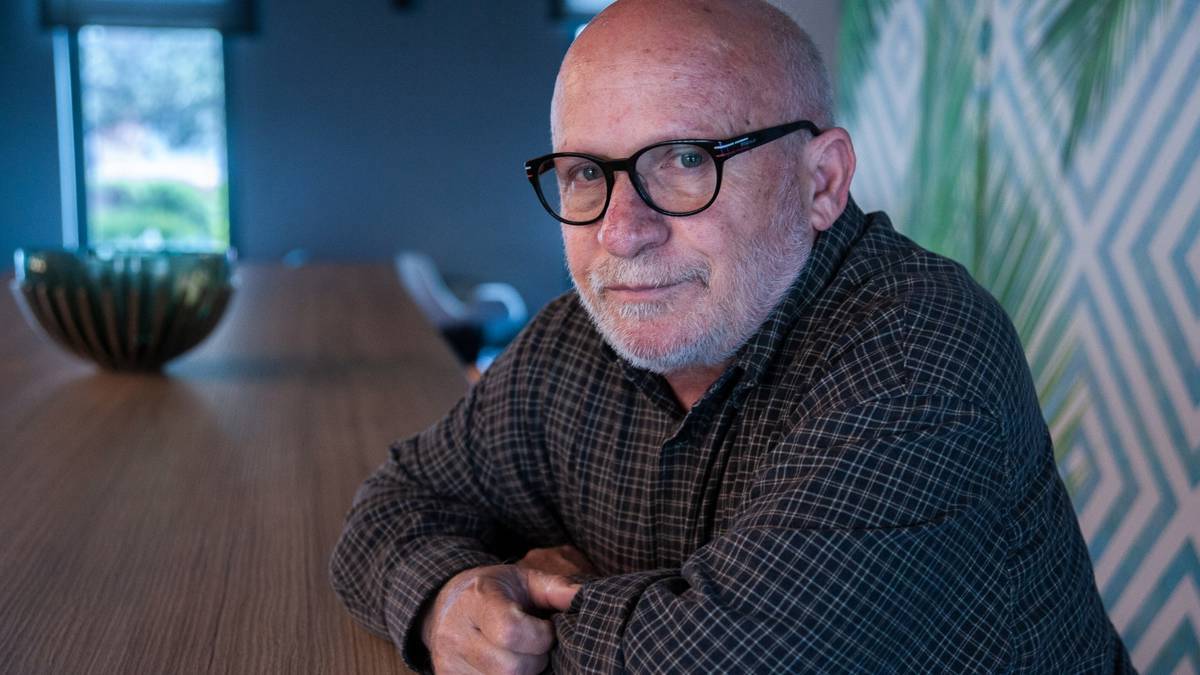
Mr. Matulyan, how did you prepare for the exhibition?
T.M: I participated in “ArtContact Istanbul” with six of my works. To finish my last two pieces in time for this exhibition, I worked day and night for a month and a half. I spent about 15 hours a day painting. Some truly beautiful works emerged. I could say I created the best works of the past six months specifically to bring them to Istanbul. The reason was that I really wanted to see all of you.
We find ourselves immersed in a world of color in your paintings. What can you tell us about these colorful, multi-layered works?
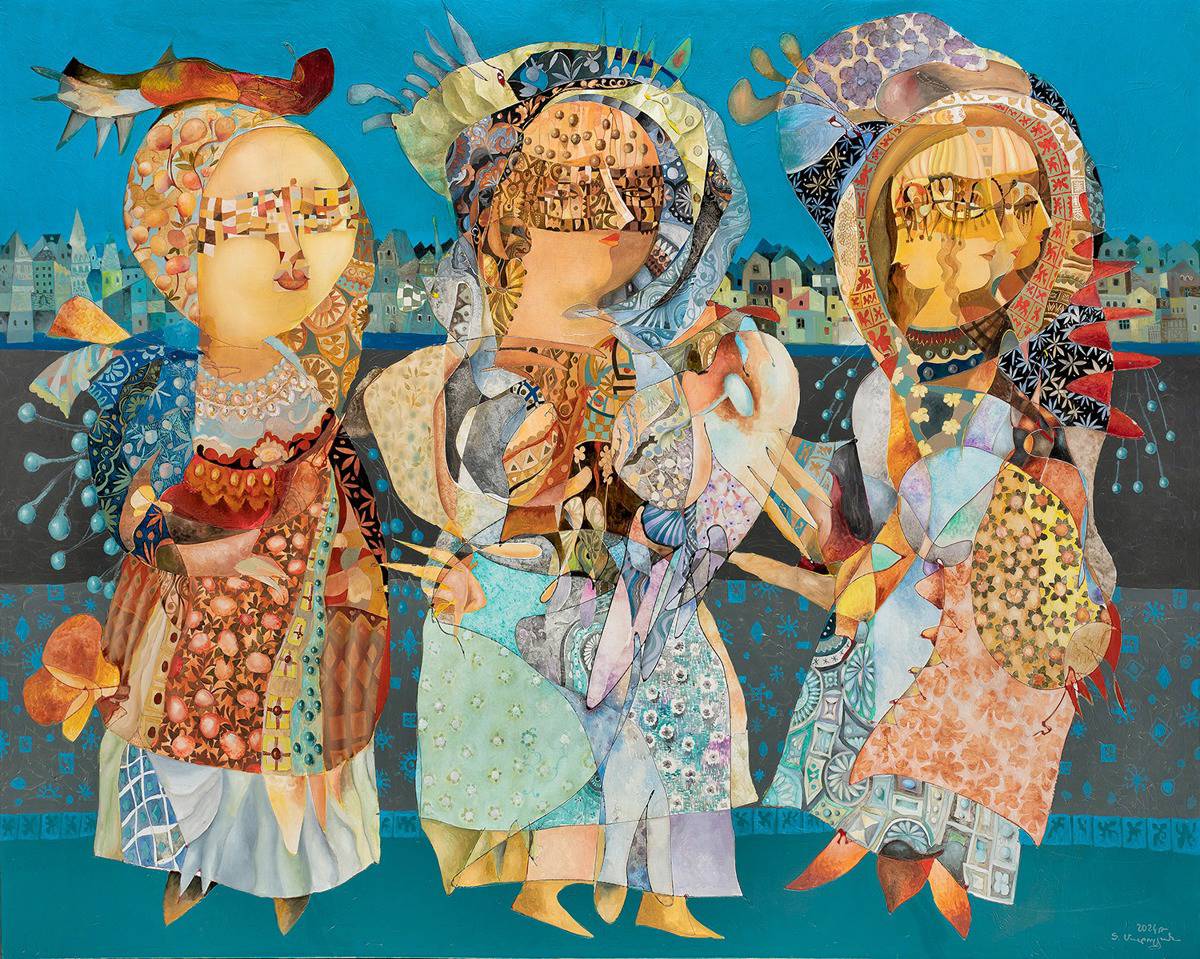
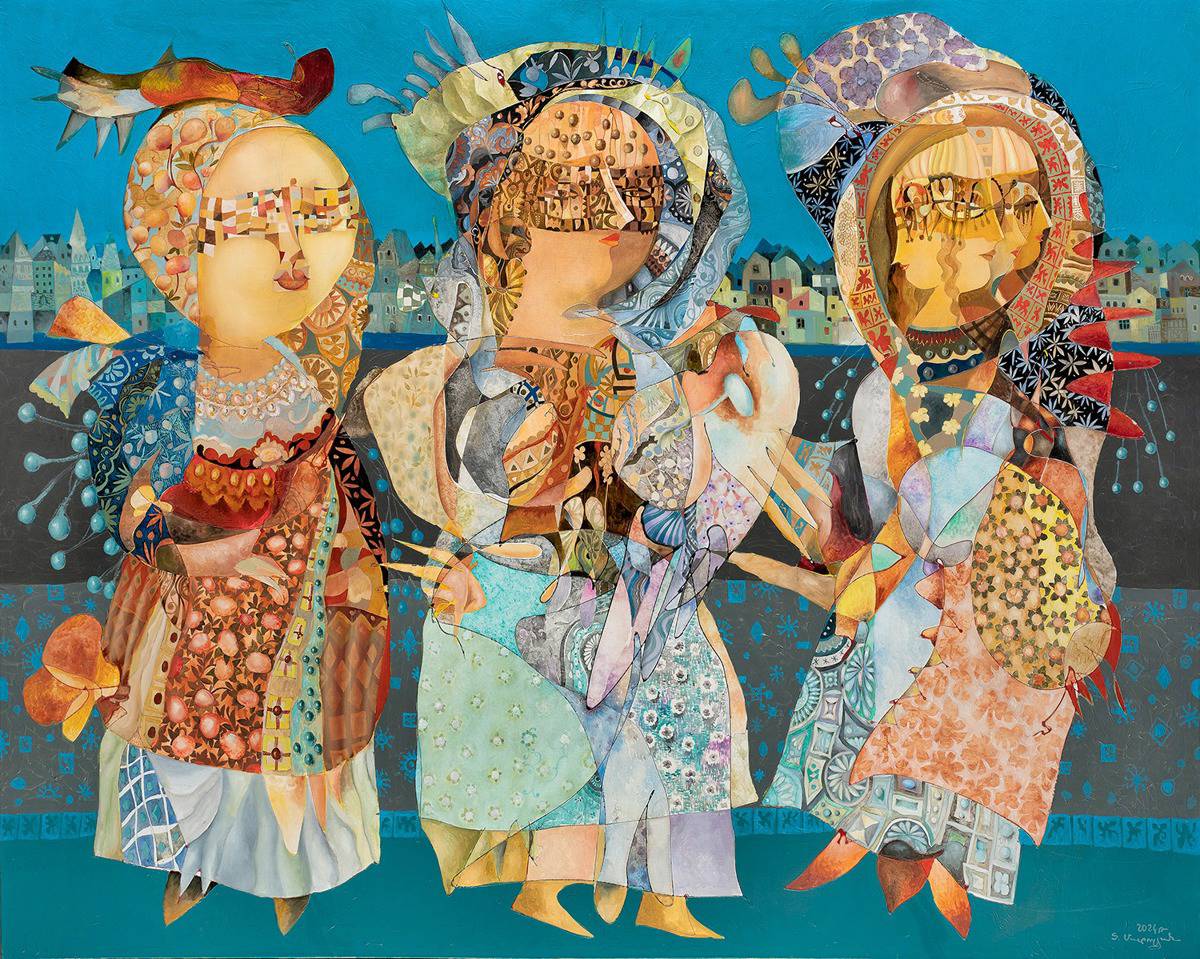
T.M: I can use a lot of colors, but only a few may be visible. This is called “color scheme” in painting; it’s purely a technical matter. That’s not important. What matters is this: We hung the painting, everyone came and stared at my painting for hours. My paintings are layered, and completely different things have been drawn underneath. Hieroglyphs have been drawn—you search for them within the painting so you can find them. I’ve done mosaic works.
The women in your paintings—how should I put it—are always a bit plump. Why is that?
T.M: I’m multiplying beauty. The women in my paintings aren’t real people. They’re drawn within an ornamental world. I held an exhibition in Yerevan titled “Ornamental Dream.” Let me give a concrete example: when you go to the riverbank, there are small pebbles, but no one says, “These are beautiful.” But if we suddenly see an ornament, a decorative motif on them, that stone immediately goes to a museum. Do you know why? Because it’s now history. Ornament—that is, decoration—is a symbol of goodness and beauty.