


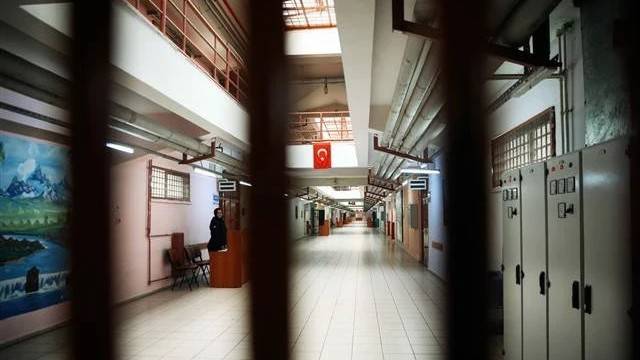
On July 16, the Civil Society in the Penal System Association (Ceza İnfaz Sisteminde Sivil Toplum Derneği, CİSST) hosted an online webinar titled “Being a Female Prisoner from Mexico to Turkey,” initiating a discussion on the violations of rights faced by female prisoners, their rendered invisible needs, and gender dynamics in prisons.
While Özge Akyüz, a lawyer of CİSST, shared current statistics from Turkey and around the world; Dr. Herlinda Enriquez Rubio Hernández, faculty member at the Autonomous University of San Carlos in Mexico (UACM) and author of the book Prison and Gender: The Law and Unwritten Rules of Women's Prisons, offered participants insights into the “invisible” world of women's prisons based on years of fieldwork. Interpreter Banu Karakaş bridged the language barrier between participants and Dr. Hernández through consecutive interpretation during the event.
The reality of female prisoners in numbers
Opening the webinar, lawyer Özge Akyüz stated that penal systems are designed with men as the baseline, noting: "Women have been rendered invisible both because of their smaller numbers and patriarchal policies. Yet, women’s prison experience differs from men's in many ways and entails unique needs."
The data shared by Akyüz highlights an increase at both the global and local levels. Worldwide, more than 740,000 women and girls are in prison. Approximately 19,000 children are growing up in prison environments with their mothers. Since 2020, the growth rate in the number of female prisoners has reached nearly three times that of male prisoners.
According to Akyüz, there are over 20,000 women in Turkish prisons, making up roughly 5 percent of the total inmate population. Over the past 25 years, the number of female prisoners in Turkey has surged by 411 percent, positioning Turkey as one of the countries with the fastest-growing female inmate population.
Akyüz emphasized that women's specific needs must be taken into consideration and alternative sentencing methods to imprisonment should be developed, particularly for non-violent offenses.
Differences between female and male prisoners
Dr. Herlinda Enriquez Rubio Hernández shared that before beginning her research, she had assumed male and female prisoners lived under similar conditions, but the reality in the field was completely different. According to Dr. Hernández’s observations, key distinctions exist between women's and men's prisons, including caretaking responsibilities, the economic burden, and internal punishment systems among inmates.
Women remain caregivers even in prison
According to Dr. Hernández's observations, female relatives (mothers, wives, partners) visiting male prisoners take full care of them by bringing food and laundry; however, the situation is the exact opposite for female prisoners. Women remain in the role of caregivers even while behind bars. By sending the work they produce inside to the outside, they try to support their families and maintain their caregiving relationships.
The economic burden falls on women's shoulders
While prisons are among the most expensive living environments in the world, the economic burden also rests on women's shoulders. Women give the money they earn from working inside to relatives who visit them. Dr. Hernández states that the underlying reason for this is the fear that "If I don't give them this money, they will stop visiting me." For male prisoners, by contrast, visitors provide financial support to the inmates
Three different systems of rules in Mexican prisons
Stating that the order in women's prisons cannot be explained solely by official regulations, Dr. Hernández identified three concurrently operating systems inside. First, the official rules established by the state; second, the unofficial de facto rules created by guards through their practices; and third, the unwritten rules developed among female prisoners to preserve their autonomy.
Hernández explains this third system of moral values developed by women through Carol Gilligan's "ethics of care" framework: in women's moral orientation, protecting and nurturing life, as well as sustaining relationships of care, are always top priority.
According to Dr. Hernández's account, in the inmate-led system established among female prisoners in Mexico, the harshest punishments are imposed for actions that breach trust, such as deceit, betrayal, and child abuse. Among male prisoners, however, the most severe sanctions revolve around financial and economic transactions. Furthermore, while the code of conduct in women's prisons excludes capital punishment/execution, extrajudicial executions still occur in male prisons despite being prohibited.
Slavery-level labor
Stating that the legal framework in Mexico offers highly impressive rights on paper, Dr. Hernández noted that in practice, however, there is severe labor exploitation, describing it with these words:
"During my research, I asked a female prisoner working in cleaning about her pay. She told me she received 80 pesos per month. With that amount, you can only buy a single beverage in Mexico today. Even though women know this is exploitation at a slavery level, they continue to work under these harsh conditions simply so that a record stating ‘worked while imprisoned’ is entered into their files, hoping it will provide an advantage after release."
Education: A small space of freedom
Dr. Hernández noted, "University studies conducted inside the prison create a small space of freedom for inmates. In that environment, they do not feel like prisoners. And we are present there not as authority figures, but simply as educators."
During the question and answer section of the event, where the relationship between formal law and unwritten codes was examined through the dynamics of women's prisons in Mexico, participants discussed the points where these experiences intersect with the accounts of female prisoners in Turkey.
Women are erased by the family before society
Noting that women imprisoned in Turkey—especially for ordinary crimes—are abruptly abandoned by those closest to them, a former female political prisoner highlighted how these women are already excluded by society, stating: "After she enters prison, the information her family gives to those around them is usually along the lines of 'she went to the village' or 'she went to Germany.' Women are erased by their families long before society erases them."
Dr. Hernández concurred with this observation, pointing out that the situation takes the exact opposite trajectory for male prisoners. It was emphasized that when women speak about their prison experiences after release, it is disapproved of because it clashes with the "obedient woman," "good mother," and "good wife" figures imposed on them by society.
AGOS asked:
Are there cases covered up like the Garibe Gezer case?
Answering AGOS's question in the question and answer session, "Are there cases in Mexico covered up like the Garibe Gezer case?", Dr. Hernández stated, "There was such a case, but following subsequent investigations, the guards were found guilty."
Garibe Gezer, held as a political prisoner in Kandıra No. 1 F-Type High Security Prison, was reported by the prison management to have committed suicide in her solitary cell on the night of December 9, 2021. However, in letters written to bianet and JinNews, Gezer detailed that she had been subjected to sexual assault and systematic torture by guards.
Having her family visitation rights blocked for bringing these incidents to light, Gezer was first placed in a padded cell and later moved to solitary cell. Video footage released subsequently corroborated her statements.
Gezer's attorney and Human Rights Association (İHD) Co-Chair Eren Keskin made repeated public statements to draw attention to Garibe's plight, demanding legal action against the prison staff. Members of Parliament from the Peoples' Democratic Party (HDP) also brought the matter to the parliamentary agenda with 22 separate motions. Following Garibe Gezer's death, her attorneys' request to attend the autopsy was rejected. Attorney Keskin announced in January 2022 that a "decision of non-prosecution" was issued for the case regarding systematic torture and rape against Garibe Gezer.


