


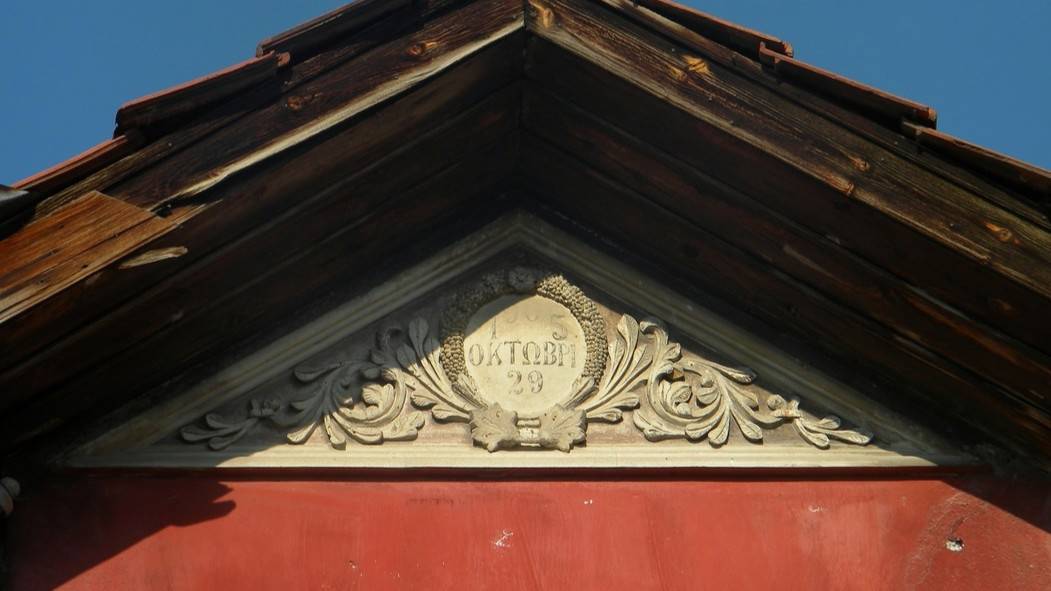
We all know of the Armenian communities across eastern and southern provinces of the Ottoman Empire and Anatolia, as well as those in western Asia Minor. Having the privilege of possessing large numbers, the knowledge and memory of these communities, even if attenuated by the passage of time, survives. There are some communities, however, who suffer the double misfortune of obscurity: at best, remembered in passing, or at worst, forgotten entirely.
I began my journey to learn of these forgotten communities some 7 years ago, prompted by a volley of questions I posed to my great-aunt concerning my father’s maternal lineage. Entirely unaware of the impact of her reply, my great-aunt remarked, without sentiment, that my great-grandmother was from Burdur.
I knew the canonical Armenian geography - Sivas, Adana, Diyarbekir, Elazığ, Van, Bursa, Izmit, and so on - but Burdur? The name struck me at once as faintly comic and wholly unfamiliar.
Vanished Communities
Upon returning home, I turned immediately to research and learned that Burdur was a rather modest town in southwestern Anatolia. Yet across the many sources I encountered, there was either no mention at all of an Armenian presence, or else a brief, perfunctory string of words acknowledging that such a community had once existed. Dissatisfied, and increasingly determined, I began my search for traces of this Armenian life that might lead me, however indirectly, back to my great-grandmother.
In time, I came to understand that there existed entire communities that have slipped almost entirely from our memory. Who today remembers the Armenians of Burdur, Isparta, Dinar, Ereğli, or Ödemiş? Among those who do remember, how much can they truly recount? The honest answer is likely very little, little enough to be almost nothing. Had my great-aunt never spoken that single, unremarkable word, Burdur’s Armenians would’ve remained invisible to me, and I, like so many, would’ve remained unknowingly burdened by this ignorance.
Who were these Armenians of Burdur?
Armenians first settled in Burdur sometime between 1604 and 1610, when several families emigrated from Persia into the Ottoman Empire during the deportations ordered by Shah Abbas. According to Filibos Arakelian, a native of Burdur who later settled in Beirut following the genocide, it was commonly held in Burdur Armenian oral tradition that their ancestors arrived with special permission - ferman, an imperial decree - granted in the aftermath of the Second Great Famine and the forced deportations. For this reason, they were known locally as Acemler, and their quarter was referred to as the Acemhane.
The Burdur dialect originated principally from the Karabakh dialect spoken in northern Iran. Yet after three centuries of isolation from its dialectical homeland, the Burdur dialect evolved to be a peculiar amalgamation of Karabakh Armenian, Western Armenian, and Turkish. Despite nearly a decade of research, I’ve encountered only one substantive work on this dialect, a linguistic analysis published in 1971 by Nerses Mkrtchyan in Yerevan, made possible through the testimony of Burdur natives who settled there. The dialect abounds in quirks and curiosities far too numerous to recount here. Nevertheless, I’ve included a sample text in the hopes of animating, however faintly, the spirit of these Armenians. The story, entitled Äraz (Yeraz) was recounted by Anna Karagözian to Mkrtchyan for his study:
Ärazumıs hakırıs yegav asets, “Anna mannet mıdanin hane!”
Şepat kışer er. Mıdanin hanets darav.
Yorrgu sahat yedkı, hakırıs kyinä yegav asets, “Mıdanin yed madıt tir!”
Girogor sabalan isgisorıs asets, “Min pen anenk, knank zhamı mı mum irink.”
Nätsink mum irili. Momerı iretsin dun yegank, desnink martıs meg kyir a ğargel. Kyirel er ki “Anna, yolumı çetenin intz pırrnetsin, parekıs el, şorerıs el mir kalan. Himig el dığlor em, şor ğarkek vor kyam.”
Yes ıntonts asetsi, “Parenis arrek, ama şorerıs vır çınık, dığlorutenı ayip pen a,” ama lısetsin voç.
İsgisurıs asets, “kışen, ärazıt tüs elav.”
Şor ğarketsink, martıs sağ selamet dun yegav. Yes ıntonts asi “Te vor ärazumıs hakırıs mıdının madıs tirel çer, ho im martıs sağ selamet dun hasnıl çer, himig el ğarşuvumıs heket çer anıl.”
Translation:
In my dream, my aunt came and said, “Anna, take the ring off your finger.”
It was Saturday night. She took the ring and carried it away.
Two hours later, my aunt came back again and said, “Put the ring back on your finger.”
On Sunday morning, my mother-in-law said, “Let's do something. Let's go to church and light a candle.”
We went to light the candle. We lit the candles and came home, only to find that my husband had sent a letter. He wrote “Anna, on the road, gangs caught me; they took my money and my clothes. Now I am naked; give me clothes so I can get dressed.”
I said to him, “Take my money, but don't take my clothes; being naked is a shameful thing.” But they didn't listen.
My mother-in-law said, “See, your dream came true.” We gave him clothes; my husband came home safe and sound. Then I said, “If my aunt had not returned the ring to my finger in my dream, my husband would not have reached home safe and sound, and my story would not have ended like this.”
The dialect’s mixed parentage is quite evident. Words like ğarşu (karşı), yol, ayip, çeti (çete), sahat (saat), para, şağ selamet, and ki are supplied by Turkish. Western Armenian influences are seen in words like yedk, pen (pan), yegav, elav, the imperative hane and tir, and dun, while the fundamental grammar, such as lısetsin voç and tirel çer, is based in Karabakh Armenian. For those who read Mkrtchyan’s study or encountered the dialect elsewhere, it’s obvious that the dialect borrowed freely and obeyed its own rules.
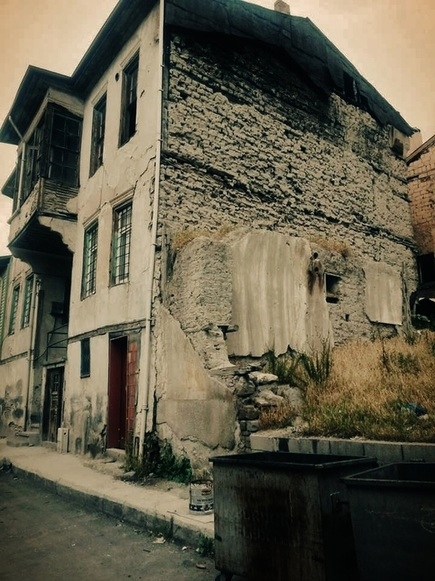
200-250 Armenian Households
Burdur was then, as it remains today, a modest town with no great appetite for spectacle. Estimates from various sources place its Ottoman population at approximately 12,000 people, with 350 Rum (Greek) households and 200-250 Armenian households, amounting to roughly 1,500-2,500 people.
The Armenians of Burdur practiced their faith with seriousness and discipline. An 1897 issue of Avedaper mentions that “When it comes to religiosity, they are people of great piety. I can say that in every single household, there is more than one Holy Scripture as well as other beneficial books. Moreover, they expend great effort and diligence, most especially in the reading and study of the Holy Bible.” They worshipped at a single church, Surp Asdvadzadzin, and educated their children in literary Western Armenian at Khorenian School, divided into separate schools for boys and girls. This religiosity fostered a remarkable literacy, as Burdur’s Armenians followed closely and engaged actively with Istanbul-based and wider Western Armenian press. It’s no surprise, then, that the Armenian townsfolk were trilingual, speaking the Burdur dialect, Western Armenian, and Turkish.
Weaving and Carpet-Making
By the late 19th century, Burdur underwent a period of social and economic growth. Reforms introduced under Mahmut Nedim Paşa stimulated local industry and led to Burdur’s recognition as a city in administrative terms. There’s no doubt Armenians played a central role in this development. They worked in leather tanneries, mills, rose oil production, medicine, law, and much more.
They became particularly prominent in weaving and carpet-making. The Burdur dialect reveals as much. The Armenian verb tzerrakordzel (to do handiwork) became “kharç ınil,” a compound formed from the Turkish word harç (tax) and ınil (etmek/yapmak). Local authorities frequently collected women’s carpets, fine fabrics, and lace as tax payments, and over time the word associated with the levy came to describe the act of producing the handiwork itself. According to oral accounts I’ve collected, Burdur Armenian women’s carpets reached such a level of refinement that Armenian merchants traveled as far as Adana to sell them.
Harutiun Hagopian, a prominent Burdur Protestant writing for Avedaper in 1904, praised the relations between Burdur’s Muslims and Christians: “The affection and sincere friendship shown by the city’s Muslim and Christian residents toward one another are truly commendable.” Unfortunately, such coexistence and affection, however genuine, did not shield the Armenians from their fate.
The Deportations
The deportations began around August 1915 and forced at least 1,000 Armenians from this town onto the death marches, which led first to Konya, then through Rakka and Ras al-Ayn, and finally to Der ez-Zor. The historian Raymond Kevorkian reports that only seven families survived out of the original thousand or so deportees, though a specific number is not provided. Some Armenians escaped to Izmir, either directly from Burdur or after reaching Aleppo. Others, primarily women and children, attempted to return following the Armistice of 1919, but political instability and the Italian occupation made permanent return impossible, and they fled once again to Izmir. The final displacement occurred in 1922, when the Great Fire of Smyrna forced the remaining Armenians into exile. From there, survivors settled in the US, Greece, France, Argentina, Brazil, Syria, Lebanon, Iraq, and Armenia.
After years of searching, I’ve gathered fragments of information, stories, and of the lives once lived; but still, all this painstakingly amassed knowledge doesn’t suffice. No accumulation of information could ever truly satisfy. Still, we may grant this community one small mercy: that we won’t subject them to history’s final, most merciless cruelty of being forgotten.
Natalie Zakar: She resides in the United States and holds a Master’s degree in Security Studies (International Relations) from Georgetown University. She currently works as a geography teacher and conducts independent research on the Armenian history of Burdur.
The Turkish translation of this article would not have been possible without the suggestions of Başak Yağmur Karacaand Sıla.


