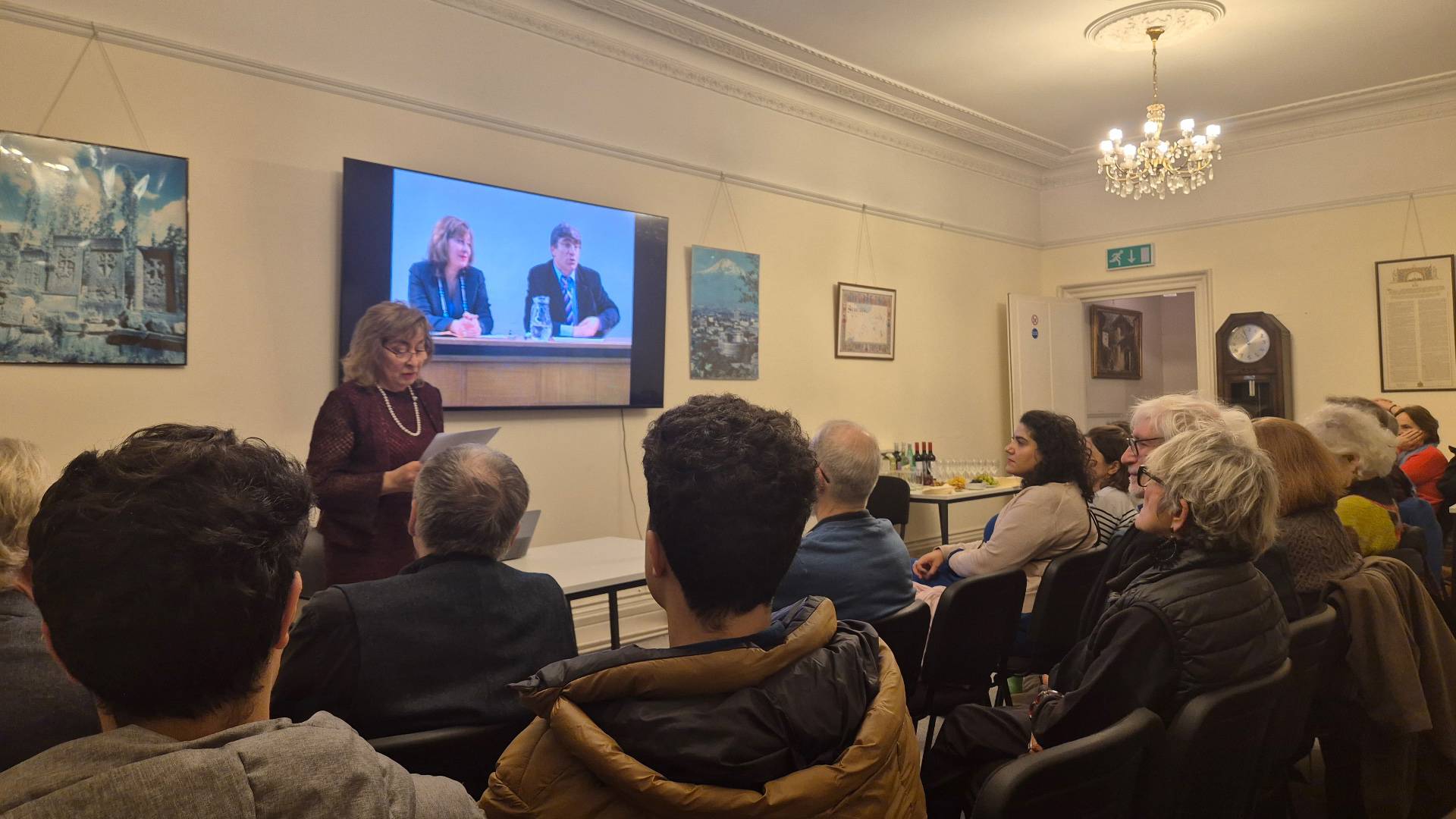

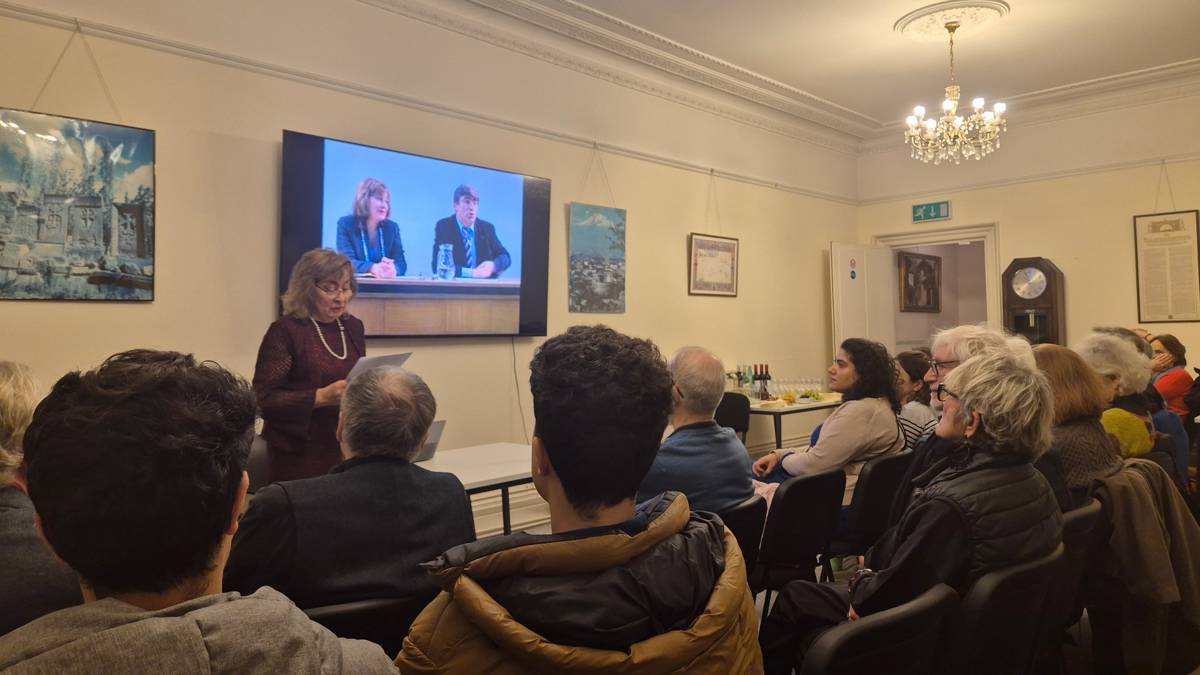
On January 19, 2026, the Armenian Institute convened its 19th annual memorial event to honor the life and legacy of Hrant Dink, the Turkish-Armenian journalist who was assassinated in Istanbul in 2007. Held in a packed lecture hall in London’s Kensington, the event featured a keynote address by the internationally acclaimed authority on genocide and human rights, Professor William Schabas.
A Preeminent Voice in International Law
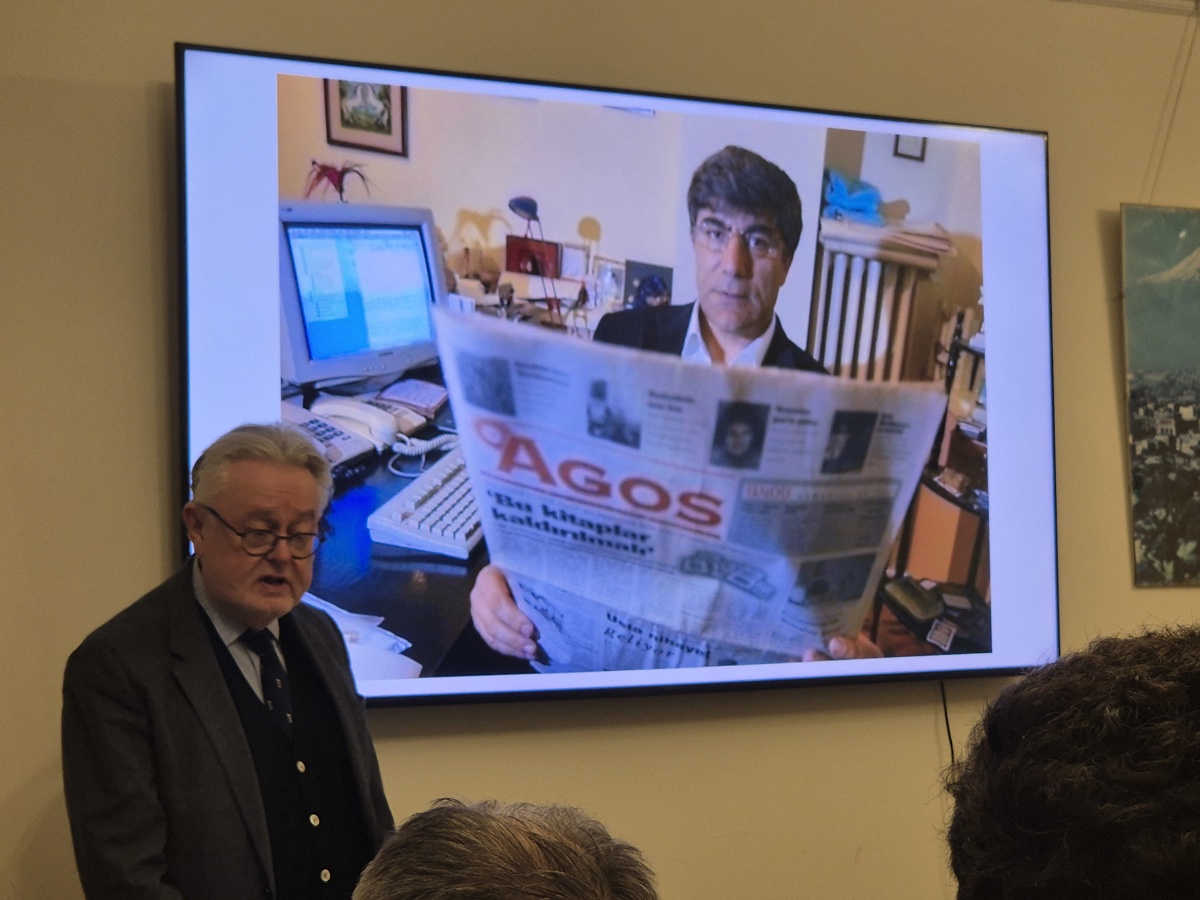
Photo:Ari K. Demircioğlu
The event, organized in collaboration with Middlesex University, drew a diverse audience of all ages and nationalities. Professor Schabas, a Canadian academic and international human rights lawyer, is widely considered a foremost authority on genocide law, capital punishment, and international law.
Currently a professor of international law at Middlesex University, the University of Leiden, and Galway, Schabas is also a scholar at the Paris School of International Affairs. His distinguished career includes appearing as counsel before the International Court of Justice (ICJ) and the European Court of Human Rights (ECHR). An Officer of the Order of Canada and a member of the Royal Irish Academy, Schabas has authored over twenty books, including the 2025 third edition of the seminal work, ‘Genocide in International Law’.
From Musa Dagh to the 1948 Convention
Opening his address, Professor Schabas highlighted one of his favorite literary works, 40 Days of Musa Dagh by Franz Werfel, to set the historical context. He proceeded to introduce the pivotal work of Raphael Lemkin, the lawyer who coined the term "genocide" in 1945.
Schabas detailed how Lemkin’s definition "acts committed with intent to destroy, in whole or in part, a national, ethnic, racial or religious group" became the foundation for the 1948 Genocide Convention. This treaty was the first legal instrument to codify genocide as a crime and the first human rights treaty unanimously adopted by the United Nations General Assembly.
The Professor further outlined the evolving nature of genocide law, referencing contemporary cases at the ICJ where states charge others with breaching international law, such as the ongoing legal proceedings regarding South Africa and Gaza.
A significant portion of the lecture focused on the legal battle Dink v. Turkey. Professor Schabas revisited the charges brought by Hrant Dink himself shortly before his death. Tragically, Dink was shot just eight days after initiating his legal charge. Following the assassination, his family courageously continued the pursuit of justice.
In a landmark ruling on September 14, 2010, the European Court of Human Rights (ECHR) unanimously ruled against Turkey. Judge Françoise Tulkens, who presided over the Chamber, has since recalled this case as one of the most significant of her career, marking a profound instance where a state failed to protect the life of one of its citizens. The court found that Turkey had violated Dink’s freedom of expression and failed in its obligation to safeguard his life.
The State’s Obligation to Protect Debate
To conclude the memorial, Professor Schabas read directly from the court proceedings, emphasizing the state's duty to protect those who engage in public discourse:
“The positive obligations under Article 10 of the Convention require States to create, while establishing an effective system of protection of journalists, a favourable environment for participation in public debate by all the persons concerned, enabling them to express their opinions and ideas without fear, even if they run counter to those defended by the official authorities or by a significant part of public opinion, or even irritating or shocking to the latter.”
The 19th annual memorial served as a poignant reminder of Hrant Dink’s courage and the ongoing necessity for international law to protect freedom of speech and the safety of journalists worldwide.