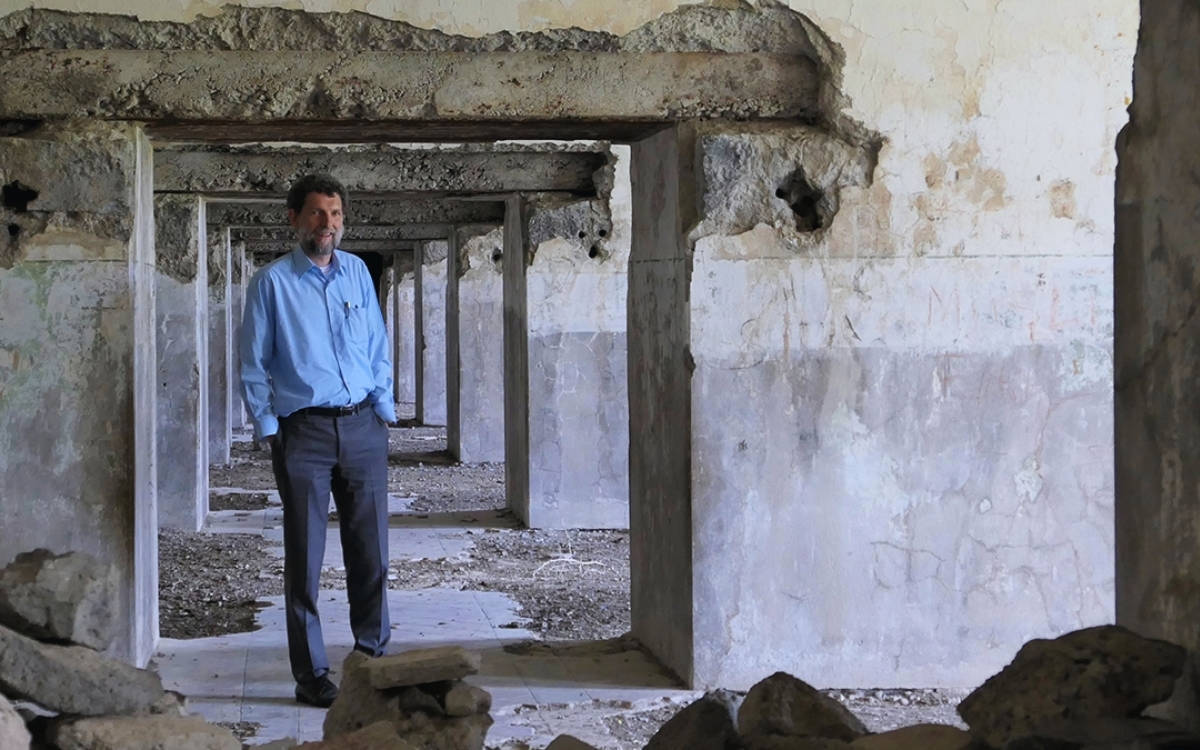

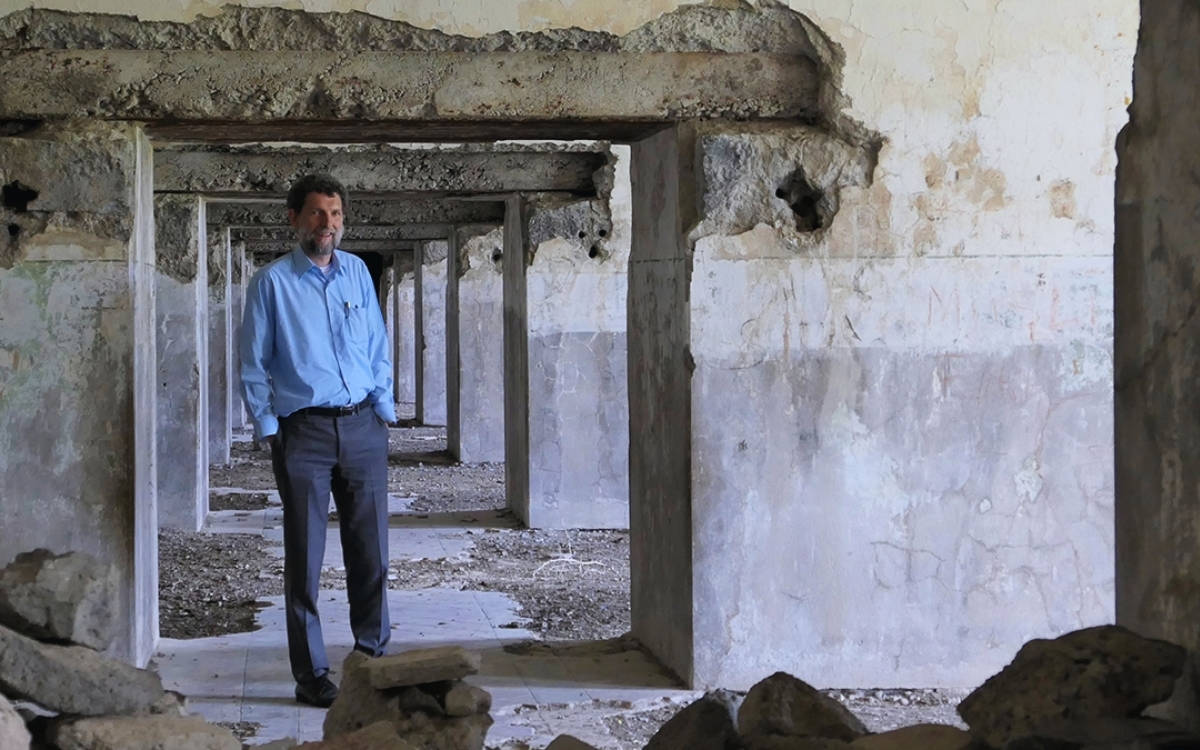
The European Court of Human Rights (ECHR) is convening once again for businessman Osman Kavala, who was sentenced to aggravated life imprisonment in the Gezi Park case.
A hearing is being held in the 17-judge Grand Chamber, which serves as the appellate body of the ECHR, to consider Kavala's second application.
The Grand Chamber is not expected to announce a decision immediately following the hearing. However, the ECHR has prioritized the evaluation of Kavala's second application. The final ruling is expected to be announced without delay in the upcoming months.
Osman Kavala, a businessman known for his work in the field of civil society, was detained on October 18, 2017, and arrested on November 1, 2017. At the heart of the arrest were the 2013 Gezi Park protests.
Kavala was acquitted in this case in 2020, and a release order was issued. On the same day, Kavala was re-detained and arrested as part of an ongoing case on charges of "attempting to overthrow the constitutional order."
Under this case, Kavala faces an aggravated life sentence—upheld by the Court of Cassation—on the charge of "attempting to overthrow the Government of the Republic of Turkey or prevent it from performing its duties."
Kavala, for his part, denies the accusations and states that he has "undergone a trial process in which the presumption of innocence was violated, and groundless allegations and false statements were used."
The first decision was announced in 2019
The judicial process regarding Kavala has held a significant place on the ECHR's agenda from the beginning.
The ECHR announced its first decision regarding Kavala on December 10, 2019. This decision concerned the arrest and the period of pre-trial detention.
In its judgment, the Court ruled that Turkey violated Article 5 of the European Convention on Human Rights (ECHR), which regulates the right to liberty and security, and Article 18, regarding the limitation on the use of restrictions on rights.
The ECHR ruling stated that "the judicial authorities, while issuing the arrest warrant, did not justify the alleged suspicion with concrete evidence and used existing laws for the purpose of silencing Osman Kavala and deterring other human rights defenders."
In the same decision, in the context of Article 46 concerning the binding force and execution of judgments, it was also ruled that Turkey must take all necessary measures to end Kavala's detention and ensure his immediate release.
In the first case filed by Kavala, the Court concluded that Kavala was unlawfully and arbitrarily deprived of his liberty due to an unreasonable interpretation and application of the relevant legislation, and demanded his immediate release.
Following Turkey's failure to fulfill the requirements of the ECHR decision, the Committee of Ministers of the Council of Europe referred the matter back to the Court for a formal determination of this situation.
In its decision on July 11, 2022, the ECHR ruled that Article 46, paragraph 1 of the Convention—which states, "The High Contracting Parties undertake to abide by the final judgment of the Court in any case to which they are parties"—had been violated.
Kavala's second application
In his second application made on January 18, 2024, Kavala brought all measures taken against him following the December 10, 2019 decision before the ECHR. In this context, the argument is presented that Turkey has violated seven articles of the Convention.
The articles of the Convention subject to the application and alleged to have been violated are as follows:
Article 3: Prohibition of inhuman or degrading treatment.
Article 5: Right to liberty and security.
Article 6: Right to a fair trial.
Article 7: No punishment without law.
Article 10: Freedom of expression.
Article 11: Freedom of assembly and association.
Article 18: Limitation on use of restrictions on rights.
Normally, this application, also referred to as "Kavala 2," was expected to be evaluated and decided upon by a chamber of the ECHR consisting of seven judges. Although the process began this way, the relevant chamber relinquished its jurisdiction in favor of the Grand Chamber on December 16, 2025.
10 questions sent to the parties
On January 19, 2026, the ECHR sent 10 questions to the parties. Among the questions are whether the applicant has exhausted domestic remedies, whether his detention after the 2019 decision can be considered an arbitrary restriction of liberty, whether the trial process provided a fair opportunity for the determination of the criminal charges brought against the applicant, and whether the principle of the presumption of innocence was upheld. The hearing regarding the application will generally proceed based on the answers to these questions.
Compliance with ECHR decisions is mandatory
Pursuant to Article 46 of the Convention, ECHR judgments are binding for the states that are party to the convention. Turkey signed the ECHR in 1950 and ratified it in 1954. Having recognized the right to individual application in 1987, Turkey has recognized the compulsory jurisdiction of the ECHR since 1989.
The implementation of ECHR decisions is carried out through individual or general measures. Individual measures aim to eliminate the causes leading to the violation of the applicant's rights, while general measures consist of steps to eliminate the violation subject to the application for everyone and thus prevent the recurrence of the violation.
The monitoring of the implementation of ECHR decisions is conducted by the Committee of Ministers of the Council of Europe. Turkey's level of compliance with decisions announced by the ECHR is generally quite high. It is noteworthy that in critical cases, such as those of Osman Kavala and Selahattin Demirtaş, this compliance rate follows a lower course.
In 2021, President Tayyip Erdoğan stated: "We do not recognize the decisions taken by the European Union regarding Kavala, Demirtaş, this one, or that one. It is that simple. We consider them non-existent. In our view, these are null and void."