


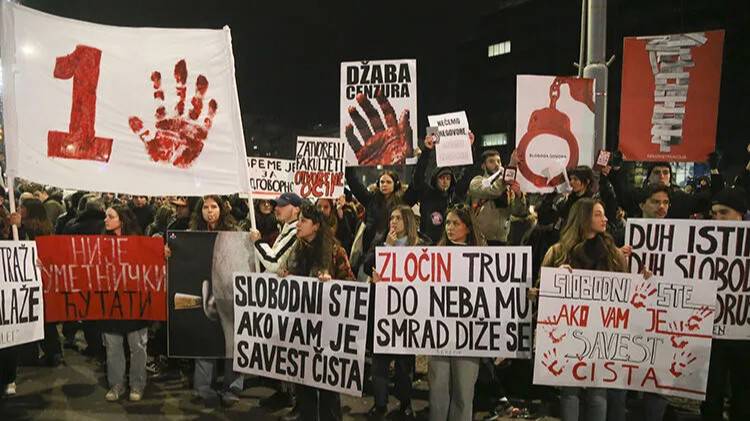
On Sunday, 25 October 2026, Serbian citizens will vote in early parliamentary elections that could mark a turning point in the country's recent political history. Nearly two years after the collapse of a railway station canopy in Novi Sad, which killed 16 people and triggered an unprecedented student-led protest movement, Serbia faces an electoral contest that goes far beyond a competition between political parties.
The elections represent a major challenge to the Serbian Progressive Party (SNS), which has dominated the country's political landscape since 2012 under Aleksandar Vučić. Following his resignation as president in September 2026, Vučić is seeking to return to his former position of prime minister, while a student-backed electoral list seeks to transform widespread public dissatisfaction into institutional political change.
However, the elections are taking place in an environment marked by serious concerns over democratic standards, political intimidation, restrictions on fundamental freedoms and allegations of systematic abuse of state resources. The question is not simply who will win, but whether the elections can take place under conditions that allow citizens to express their political will freely.
A decade of protest and the emergence of the student movement
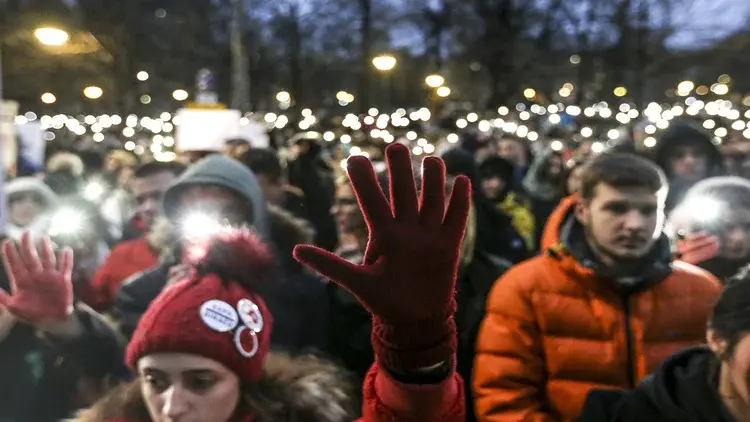
Although the Novi Sad tragedy in November 2024 marked the beginning of the current political crisis, Serbia's civic resistance did not emerge overnight. Since 2016, the country has experienced successive waves of public mobilization over corruption, urban development, environmental protection, electoral irregularities, political violence and democratic accountability.
These movements differed in their immediate demands and size, but increasingly reflected a common frustration with corruption, weak institutional accountability and the concentration of political power. Successive waves of mobilization demonstrated that public dissatisfaction was neither temporary nor confined to established opposition parties.
The collapse of the newly renovated railway station canopy in Novi Sad transformed this accumulated dissatisfaction into a nationwide movement. What began as demands for transparency, publication of reconstruction documents and accountability for those responsible soon developed into a broader challenge to the political system.
University students emerged as the movement's central organizing force. Through university blockades, public assemblies, marches and demonstrations across Serbia, they mobilized citizens far beyond the traditional opposition electorate. Their insistence on institutional accountability, rather than allegiance to established political parties, helped generate broad public support.
As the crisis continued and their original demands remained unresolved, students increasingly concluded that meaningful institutional change would require a change in political leadership. The movement consequently shifted towards demanding early parliamentary elections, eventually establishing the electoral platform Student List – Students Win.
This transition from civic mobilization to electoral participation is the most significant political development in Serbia in recent years.
An election that challenges the established political order
These elections are distinctive because the main challenge to the governing authorities does not originate primarily from Serbia's traditional political opposition.
A significant number of established opposition actors have decided not to contest the parliamentary elections independently, instead directing their political support, organizational resources and voter mobilization towards the student-backed list.
This withdrawal represents a strategic attempt to avoid fragmentation of the anti-government vote and consolidate support around a movement with broader public legitimacy.
Nevertheless, the electoral landscape remains complicated. Apart from genuine opposition parties, independent observers have raised concerns about electoral lists of questionable authenticity, including so-called proxy lists and nine minority lists (out of eighteen lists in total).
According to CRTA's assessment of the electoral process, there are grounds to question the authenticity of at least five candidate lists. The concerns relate to whether certain lists represent genuine political actors or have been established primarily for electoral purposes, potentially misleading voters, fragmenting political competition or facilitating influence over electoral administration.
Similar practices have been documented during previous elections. In its assessment of the March 2026 local elections, CRTA identified 19 electoral lists whose authenticity was questionable, representing 38% of all proclaimed lists in the municipalities observed.
These findings do not establish that every disputed electoral actor is controlled by the authorities. They nevertheless raise serious questions about political transparency and the integrity of democratic competition.
The stakes are particularly high for Vučić, whose political dominance has shaped Serbian governance for more than a decade. His resignation from the presidency and return to parliamentary politics demonstrate an effort to preserve his central role in the country's political system, even as the student movement challenges the legitimacy of that system.
Electoral competition under pressure
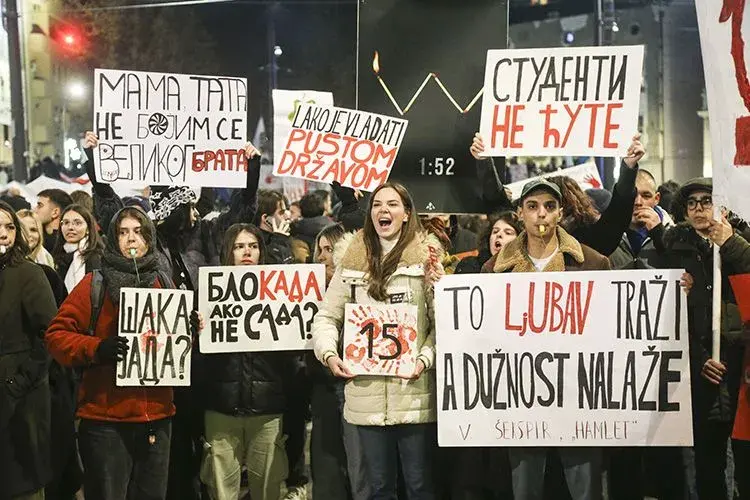
Serbia's elections will be held against a background of longstanding concerns regarding the separation of state and party, unequal media access, voter intimidation and misuse of public resources.
Independent election observers have repeatedly documented these problems during previous electoral cycles. The OSCE Office for Democratic Institutions and Human Rights (ODIHR) has deployed an observation mission for the upcoming elections, assessing compliance with international democratic standards and commitments.
The findings published so far suggest that the situation remains deeply concerning.
According to CRTA's first interim election observation report, published on 8 October, 49 incidents involving threats, intimidation or violence were recorded during the first three weeks of the campaign. The organization also documented suspicions of unlawful surveillance, pressure on voters, abuse of public resources and serious irregularities involving the collection and certification of signatures supporting electoral lists.
The report further warned that approximately 22.000 voters abroad could effectively be deprived of their right to vote because polling stations were not opened in all countries where sufficient numbers of Serbian citizens had registered. In addition to that, all of Serbia’s diaspora will have to vote in Serbia’s time zone – including people from the US, Australia and alike.
Media inequality is another major concern. CRTA's monitoring found that representatives of the governing majority received approximately three-quarters of political airtime on monitored television channels during one week of the campaign, while opposition actors received significantly less coverage and were frequently portrayed negatively.
These findings are particularly important in a political environment where the distinction between public institutions and the governing party has become increasingly blurred.
A disturbing illustration of alleged informal mechanisms of political pressure emerged in a BIRN investigation published on 14 October. The investigation presents testimony from a former ruling-party activist alleging that organized groups were recruited and paid to intimidate political opponents, confront protesters and participate in activities intended to protect the governing party's interests.
His account also raises allegations concerning the involvement of public companies, substantial cash payments and the organization of groups deployed during protests. These claims require independent investigation and must not be treated as judicially established facts. Nevertheless, they raise serious questions about potential connections between political structures, public resources and organized intimidation.
Such allegations are particularly alarming because they suggest that threats to electoral integrity may extend beyond conventional campaign irregularities to include informal structures of coercion operating alongside formal political institutions.
Human rights defenders and civil society under increasing pressure
The deterioration of Serbia's democratic environment has been accompanied by increasing pressure on those working to document abuses, defend fundamental rights and hold institutions accountable.
Human rights defenders, independent journalists, civil society organizations, student activists and election observers have faced smear campaigns, threats, physical attacks, arbitrary detention and surveillance.
In its World Report 2026, Human Rights Watch documented excessive police force against protesters, arbitrary arrests and restrictions on civil society. The report also highlighted attacks against journalists, including incidents in which police officers used force against clearly identified media workers.
The Independent Journalists' Association of Serbia recorded 84 physical attacks and 113 threats against journalists between January and September 2025, demonstrating the extent to which media freedom has come under pressure.
Digital surveillance presents an additional threat. In December 2024, Amnesty International published a report entitled as “A Digital Prison”, documenting the misuse of surveillance technologies against journalists and civil society activists in Serbia. Subsequent investigations in March 2025 revealed that two BIRN journalists had been targeted with Pegasus spyware.
These developments have a chilling effect extending beyond the individuals directly targeted. When journalists investigating corruption, lawyers providing legal assistance and organizations documenting human rights violations face intimidation, the capacity of society to scrutinize those in power becomes significantly weaker.
The European Commission's 2025 Serbia Report also highlighted concerns regarding pressure on civil society, the independence of institutions and the functioning of democratic checks and balances.
These pressures have continued into the electoral campaign itself. In an October statement, CRTA warned about increasing political violence and threats directed at independent election observers. The organization expressed particular concern about the safety of its monitoring teams, noting that previous attacks against observers had gone unpunished.
Civil society organizations nevertheless remain essential to Serbia's democratic resilience. Throughout the protest movement, they have provided legal assistance to detained activists, documented human rights violations, supported victims of institutional abuse, monitored elections and maintained access to independent information.
Their role becomes even more important during elections, when the credibility of the process depends not only on electoral institutions but also on the ability of independent actors to observe, investigate and publicly report irregularities without fear of retaliation.
What happens after 25 October?
Regardless of the election result, Serbia is unlikely to return immediately to political stability.
A victory for the governing SNS could preserve the existing political order and enable Vučić to return as prime minister. However, an electoral victory would not resolve the underlying grievances that have sustained nearly two years of student-led mobilization, particularly demands for accountability, institutional independence and an end to deeply rooted corruption.
A breakthrough by the student-backed list could open the possibility of substantial political change. Yet translating a decentralized civic movement into effective parliamentary governance would present considerable challenges, including the formation of a stable governing majority and the restoration of public trust in institutions, as well as rebuilding them.
A close or disputed result could produce the most unpredictable scenario. With public confidence in electoral institutions already weakened, allegations of irregularities, intimidation or manipulation could trigger renewed demonstrations and further political confrontation.
The conduct of the police, prosecutors, courts and electoral authorities would therefore be critical not only on election day but also during the counting of votes, adjudication of complaints and formation of a new government.
Serbia also faces an early presidential election following Vučić's resignation, potentially extending political uncertainty through the end of 2026. The early presidential elections must take place before 27 December 2026.
For the European Union, the elections will represent another important test of Serbia's democratic trajectory. Yet, reducing the country's political future to relations with Brussels, Moscow or Beijing would overlook the central issue driving the present crisis: the demand by Serbian citizens for accountable institutions and meaningful democratic representation.
The strength and endurance of Serbia's civic mobilization demonstrate that, despite significant pressure, the country's democratic aspirations remain alive.
Civil Rights Defenders will continue monitoring and reporting on developments throughout the pre-election period, on election day and in the period following the vote, with particular attention to threats against human rights defenders, journalists, civil society organizations, activists and election observers.
We call on the Serbian authorities to guarantee the rights to freedom of expression, peaceful assembly and association; protect the right of every citizen to vote freely and without intimidation; ensure independent election observation and unhindered journalistic reporting; and prevent the misuse of public institutions and security forces for political purposes. All allegations of politically motivated violence, intimidation and electoral abuse must be promptly, independently and effectively investigated, with those responsible held accountable.
Above all, the electoral process and its aftermath must remain free from violence. State institutions have a responsibility to protect all citizens, regardless of their political affiliation, and to ensure that the freely expressed will of voters is respected.
Ultimately, the true test of Serbia's democracy will not simply be whether elections take place on 25 October, but whether citizens can freely determine the country's political future – and whether its institutions respect that decision.


