


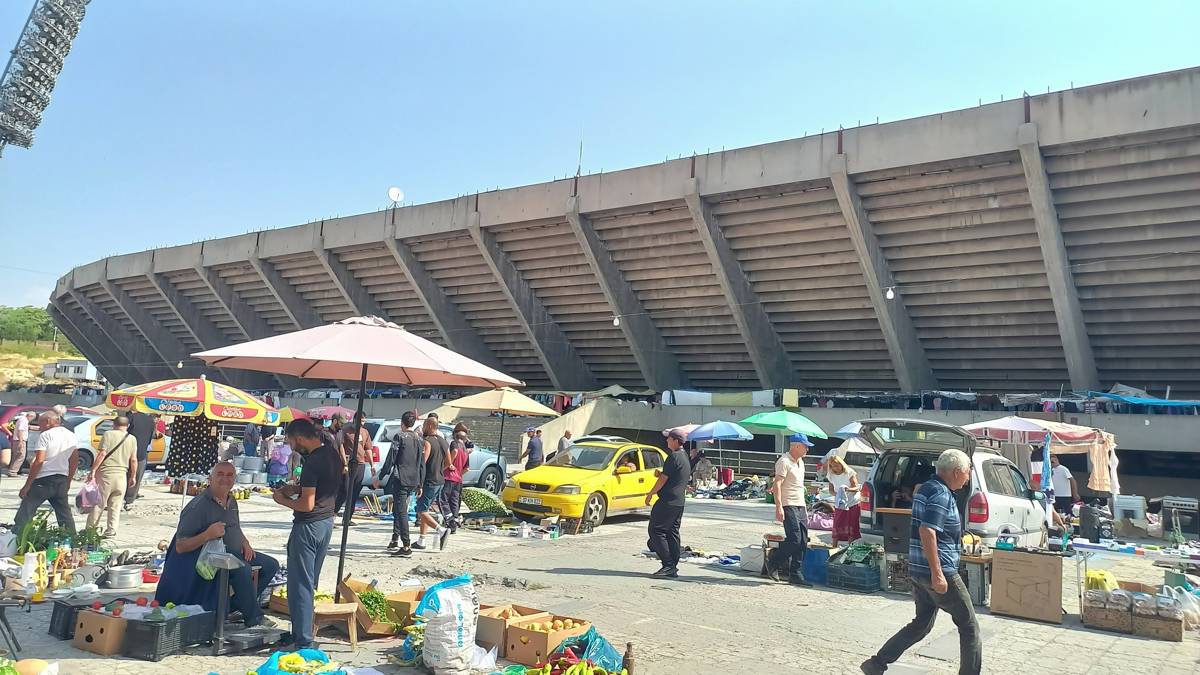
Rising from the steep slopes of the Hrazdan River gorge near the capital Yerevan, Hrazdan Stadium is a brutalist monument of raw concrete, designed by architects Koryun Hakobyan and Gurgen Musheghyan, together with engineer Eduard Tosunyan. Construction began in 1969. Opened on May 19, 1971, and once a stage for the victories of Ararat Yerevan, this engineering marvel is today completely closed to official sporting events because, according to reports by the Football Federation of Armenia and technical experts, it fails to meet international safety standards and poses serious structural and evacuation risks.
The enormous concrete structure hosted its final professional football match on August 2, 2015, when Ararat Yerevan faced Ulisses Yerevan. Now far removed from its former glory days, it breaks its silence only occasionally with large outdoor concerts and limited cultural events. Although a new glimmer of hope has appeared for the stadium’s future—with plans for a major infrastructure and renovation project as part of the Francophonie Games scheduled for 2027—Qrchi Bazaar continues to come alive every Sunday in the shadow of its current abandoned and neglected state.
From the green field to the red carpet: “Football diplomacy”
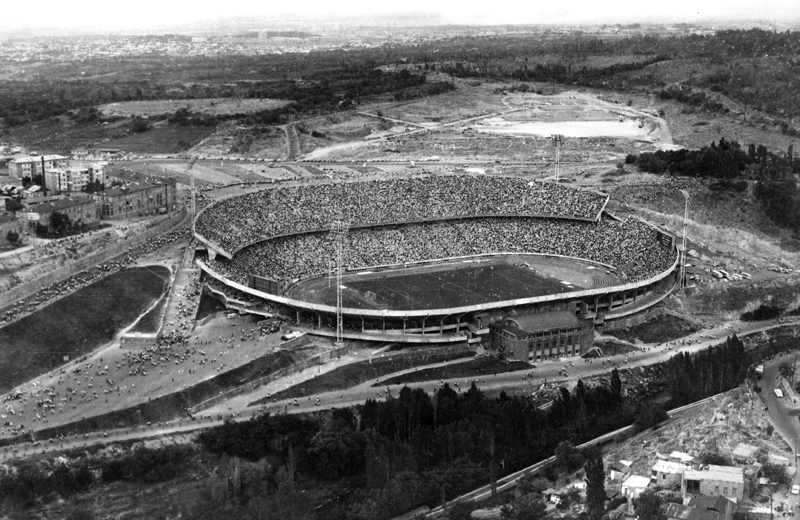
In addition to witnessing the triumphs of Soviet football, the stadium also played host to one of the most significant diplomatic initiatives in modern Turkish-Armenian history. Following an extensive renovation between 2005 and 2008, it hosted the Armenia–Turkey World Cup qualifying match on September 6, 2008. Watched side by side by Armenian President Serzh Sargsyan and Turkish President Abdullah Gül, the match entered the political lexicon as “Football Diplomacy.” Among the 30,000 enthusiastic spectators filling the stadium were Armenians from Istanbul and Turkish citizens who had traveled from Turkey to witness the historic moment.
Yet nearly 20 years later, the anticipated peace never came; the promises remained suspended amid Turkey’s silence over Armenia’s preparations to open its border crossings. The stadium, which that day had overflowed with hopes for peace, now finds itself far removed from those diplomatic winds, living through the silence of a geopolitical impasse and profound resignation.
The survival legacy of the dark years
The contrast between the stadium’s gray concrete columns and the disorderly, colorful piles of clothing spread beneath them reflects the very reason the market exists. Although it has no official record, the flea market’s roots lie in the “Dark and Cold Years” of 1993–1994, when Armenia was engulfed by war, isolation, and an energy crisis following the dissolution of the Soviet Union.
During that severe period of crisis, the people of Yerevan, desperately trying to obtain basic food and survive, began laying out and selling their household possessions, dowries, and memories on the streets. Even after the crisis eased, this sorrowful commerce evolved into a kind of social refuge, eventually settling in the shadow of Hrazdan Stadium.
Among the crowds spilling outside the stadium is also a group of opportunistic vendors trying to capitalize on the market’s appeal by selling cheap, mass-produced Chinese textiles, plastic toys, and low-quality cosmetics. Yet these soulless consumer goods offered by the modern world find almost no customers in Hrazdan’s mystical atmosphere and seem almost to be rejected by the fabric of the market itself. For the true purpose of Qrchi Bazaar is not modern shopping, but the exchange of lived experiences, broken dreams, and belongings.
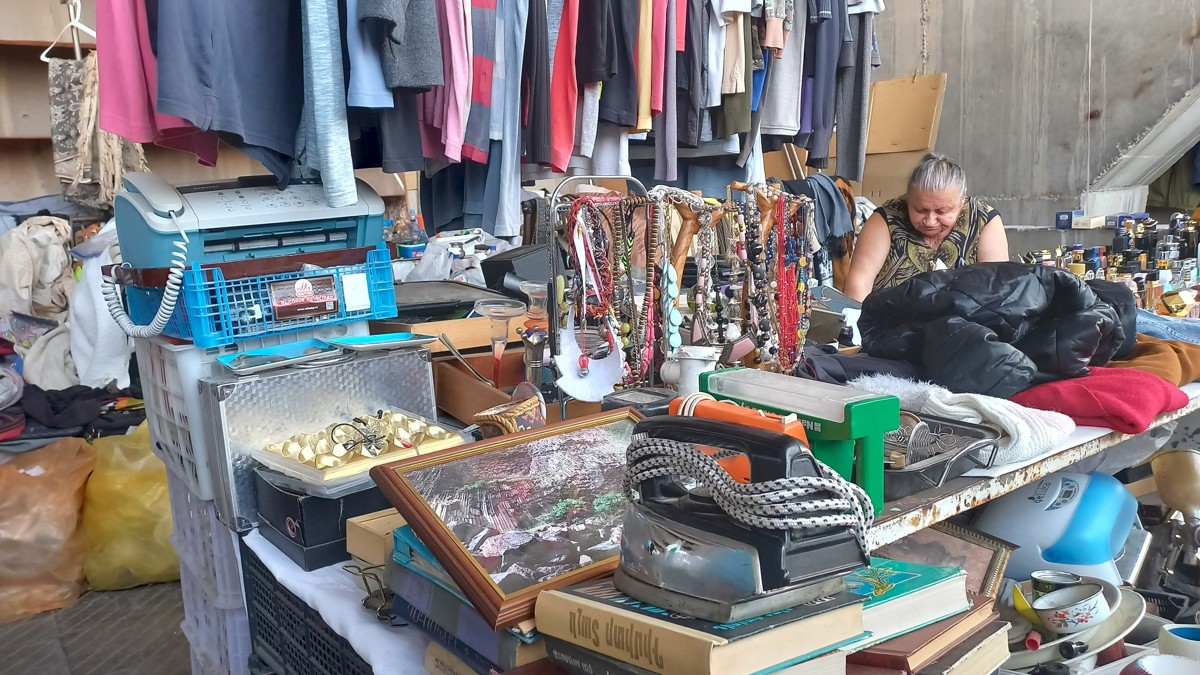
As you proceed deeper into the market, beneath the concrete shadows, plastic gives way to an absurd inventory in which real human lives are put on display. On one side are the red Communist Party membership cards of former party members, emblazoned with the hammer and sickle; immediately beside them are sparkling Czechoslovakian crystal pieces that once adorned household display cabinets, along with heavy glassware from the Soviet era, when the factories that produced them were still standing.
The melancholy contrasts of the stalls do not end there. Imposing fur hats that look as though they have just been taken from storage chests sit cheek by jowl with spare parts for old radios and televisions. From the most intimate personal mementos to a rusty nut and bolt, and from these to enormous industrial compressors, this jumble of objects reveals not only the contents of people’s homes but also the remains of a collapsed industrial system, laid bare in the dust beneath our feet.
A Parajanov collage
At the very heart of this nostalgic chaos, immediately to the right of the stadium’s enormous entrance gate, lies the market’s most unexpected and absurd layer. The sounds rising from wire cages, from delicate canaries to chickens and roosters with their feet tied, along the walls create the uproar of a village square and disperse the cold silence of the concrete. The cigarette smoke of the bird sellers, heated bargaining, and chicken feathers drifting through the air amid rusty Soviet scrap transform the market’s chaotic spirit into a living art installation.
At precisely this point, if you raise your head and look toward the steep slope on the opposite bank of the Hrazdan River, you can see the House-Museum of the brilliant and unconventional director Sergei Parajanov, who died in Yerevan in 1990.
Throughout his life, Parajanov created surreal collages by bringing together discarded objects, furs, and antiques, while using birds as recurring imagery in his films. This market would have been an inexhaustible source of inspiration for him. Every Sunday, Qrchi Bazaar recreates its own living, absurd, cinematic Parajanov collage beneath the cold concrete, offering a salute to the great artist whose spirit lingers on the opposite bank of the river.

Behind this chaotic scene of flying chicken feathers emerge the hardworking women and men who carry the true spirit of the market. Their clothing seems to have frozen in the fashions and textures of the era before Armenia’s independence in September 1991. In their faded wool jackets and old Soviet-style overcoats, they are inhabitants of a time capsule in which the calendar stopped more than 30 years ago.
Yet these white-haired old trees of Yerevan carry within them an ancient gentleness that economic hardship has failed to extinguish. Haggling with these people, who carefully guard a crystal glass brought from their home display cabinet or a watch inherited from their father, is really an excuse to exchange a few words about the past.
In this market, the ruthless rules of capitalism simply do not work. One of the market’s most moving moments comes when you admire an object on a stall but tell the seller that you cannot afford it. One of the elderly vendors may then defy his advanced age, run after you across the concrete floor, and insist on placing the object in your hands. Refusing money and placing hospitality above profit, this naïve gesture of the old Soviet-Armenian generation transforms Qrchi Bazaar from a commercial marketplace into the final rite of a disappearing human civilization.


