

Those who are around my age or older, when they read this title, will probably remember the 1989 film My Left Foot: The Story of Christy Brown, adapted from the autobiographical book of the Irish writer Christy Brown. Daniel Day-Lewis, who portrayed Christy Brown, won the Academy Award for Best Actor for his performance.
This article is neither about the Taurus Mountains nor about the well-known automobile model produced in Turkey. Today I want to tell a story about us—or rather, about this land.
Toros (Թորոս) is a very common male name among Armenians in Turkey. Contrary to popular belief, the name has no connection with the Taurus Mountains.
According to linguist and etymologist Sevan Nişanyan, the Armenian name Toros does not derive from the mythological or geographical Taurus, but from the Greek name Theodoros. Formed from the words theos (God) and doron (gift), the name means “God’s gift.” Over time, it was adapted into Armenian as Toros.
The well-known legend of Saint Theodoros among Armenians in Turkey is also associated with this name. It is based on the story of the son of a local lord in the Tercan region who converted to Christianity and was killed by his own father.
To explain it more simply, it is similar to how the Arabic name Muhammad became Mehmet in Turkish.
From Sivas to Burunkışla, from Tavlıyan to Alcan
Now let me tell you the story of our Toroses...
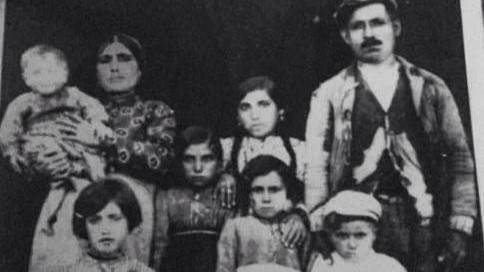
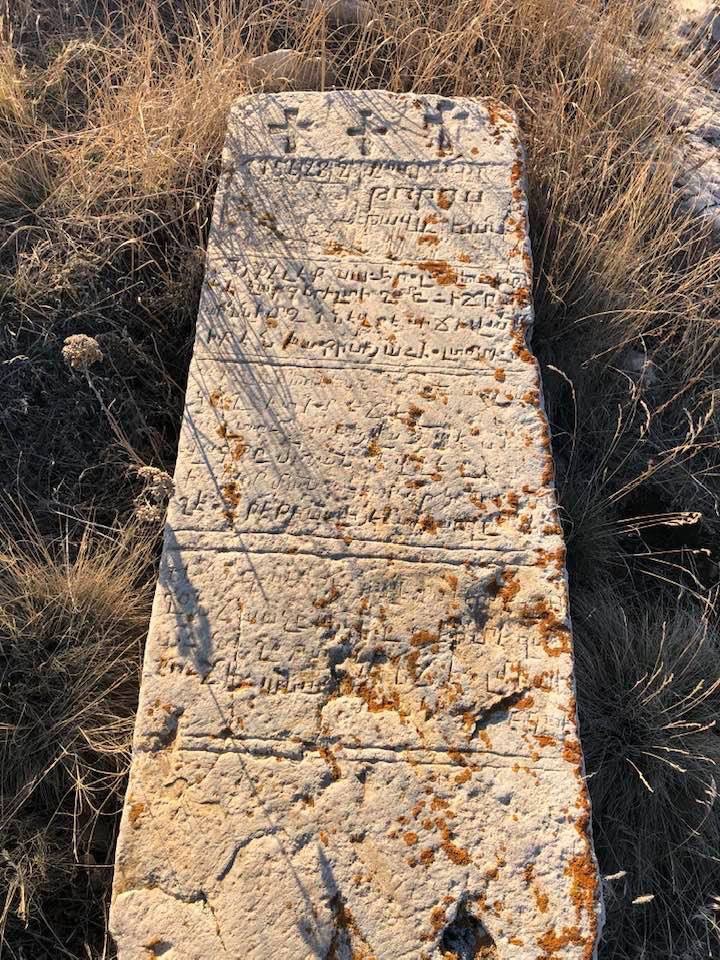
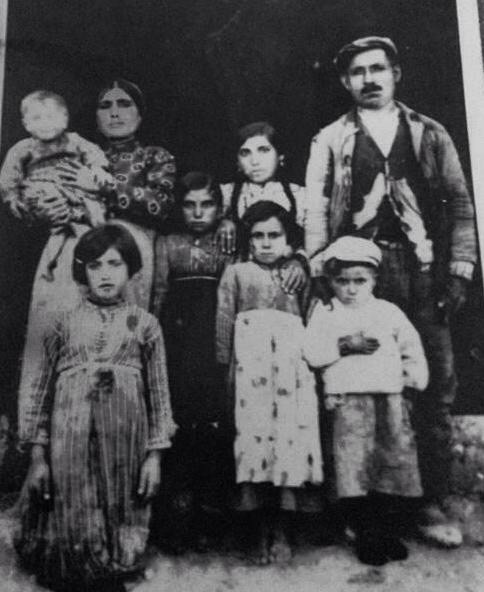
My great-grandfather, Toros Tavlıyan, one of those who migrated from Kangal in Sivas to Yozgat and founded the village of Çakmak, was murdered in 1915. Toros’ son, Garabet Tavlıyan, born in 1889, was protected by conscientious people and survived together with his sister Filor. He married Shahinar Torosoğlu, who had also survived, and took refuge in the village of Burunkışla.
They had children and, without exception, gave them the names of the parents, siblings, and relatives they had lost. In the meantime, with the Surname Law [1934], the family surname was changed from Tavlıyan to Alcan.
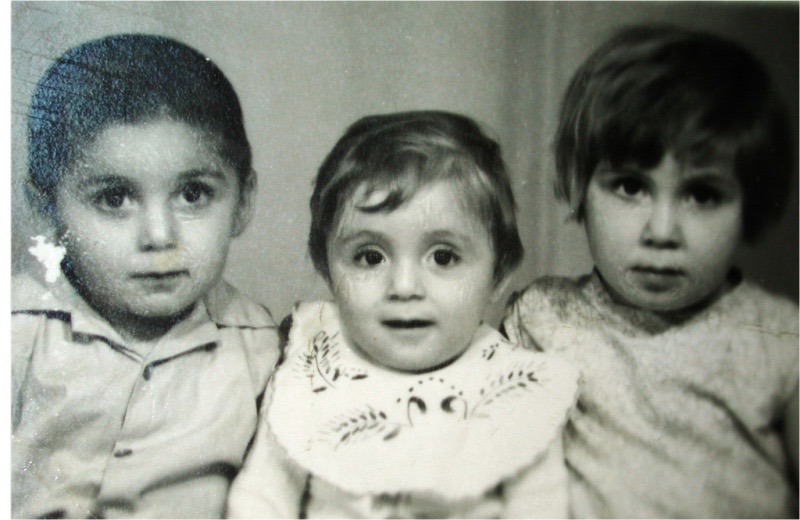
My uncle Toros (Tavlıyan) Alcan was born in Burunkışla in 1937. My grandfather Garabet gave him his own father's name.
In 1957, Toros died at a young age after gangrene developed following a fracture in his left foot. My father, Nazar, whose name had also belonged to Grandfather Garabet’s brother, was serving his military duty in Iğdır at the time and was unable to witness his brother’s burial. The event left deep wounds in his heart and soul.
The year was 1961, Istanbul
In 1961, Nazar (Tavlıyan) Alcan married Vartuhi (Güler) Panos in Istanbul. My mother Vartuhi’s father, Hacı Hacer, had been an orphan who fled from Saray Village in Yozgat to Magaroğlu Village. Like the other members of our family, he had tried to rebuild his life after immense losses and forced displacement.
Their first child was a boy, and my father gave him his brother’s name.
However, my eldest brother, Toros Alcan (Tavlıyan), the first child of our nuclear family, died of pneumonia when he was only six months old.
Later, my older sister was named Aghavni, and the brother born after her was given my grandfather’s name, Garabet.
As the youngest child of my family, I was born in August 1966 with a shortened left leg.
By the time I was born, our family had moved from the center of Samatya to Altımermer. Our new home was a modest house with a small garden, built on the site of a burned-down wooden house that had leaned against the wall of Surp Hagop Armenian Church.
When my father wanted to continue the family tradition...
When my father wanted to continue the family tradition by naming me Toros as well, my mother firmly objected. She said that no one in our family who had carried the name Toros had survived. My grandfather’s father had been murdered, my uncle Toros had died young, and my eldest brother Toros had died at only six months of age.
My mother also reminded my father of something he had said years earlier. When my uncle’s left foot had broken and become gangrenous, my father had been in the army. When he returned and learned of his brother’s death, he lamented for days:
“I wish you had amputated his leg and left him disabled as long as he had not died...”
Recalling those words, my mother said:
“Let’s not name another child Toros. Your grandfather died, your brother died, our first son died. Let this child live.”
Moreover, I was born with a shortened left leg. My mother took that as a sign. She wanted to name me after the saint of the church against whose wall our house stood: Hagop.
My grandmother supported the idea as well.
“They can’t do heavy work with a disabled leg. He’ll become an ophthalmologist; eye doctors work sitting down,” she used to say.
How my name changed at the civil registry
At the time, one of my father’s childhood friends had become a doctor despite having only one arm. They took inspiration from the famous Cerrahpaşa dermatology professor, Prof. Dr. Agop Gotoghyan, whose name was recently given to a preparatory school, and believed that the name Hagop would bring good fortune. (The Armenian name Hagop—Յակոբ—is generally written as Agop in Turkish.)
Eventually, the family decided to name me Hagop. But fate had another plan. When my father went alone to register my birth, he set aside my mother’s and family’s decision and registered me simply as “Toros.”
For many years, I did not even know that my name was officially Toros. When I started kindergarten at the Sahakyan Nunyan School in Samatya, I learned that Toros was my legal name. Until then everyone had called me Hagop, so whenever someone called out “Toros,” I would not even turn around. It took me quite a while to get used to the name.
Even today, my mother almost never calls me Toros. Although she may rarely use it in formal situations, I have always been Hagop for her. Most of my childhood friends, as well as relatives I met again many years later, still call me Hagop.
Perhaps my identity card says Toros, but in my family’s memory, in my mother’s heart, and on the lips of those who knew my childhood, I have always remained Hagop.
Whether I am worthy of the name Hagop is hard to say. But carrying both fate and sorrow of Toroses in every cell of my body, I came to love both of my names.
As if I had paid a portion of my left leg as tribute to the relentless misfortune that pursued our family, I have lived under the name Toros until today.
In April 2026, it was as though “the fate of the Toroses” wanted to play one final trick on us. My already shortened left leg broke.
But I did not die.
In fact, during the days when my leg was broken, events unfolded in a way that would change the course of my life. I was filled with hope. I had even forgotten about my broken leg.
Perhaps fate had tested my left leg once again, but this time it had failed to defeat me.
Just as I had reached the end of a full nine weeks of treatment and was preparing to breathe a sigh of relief, that merciless fate appeared once more.
Narod...
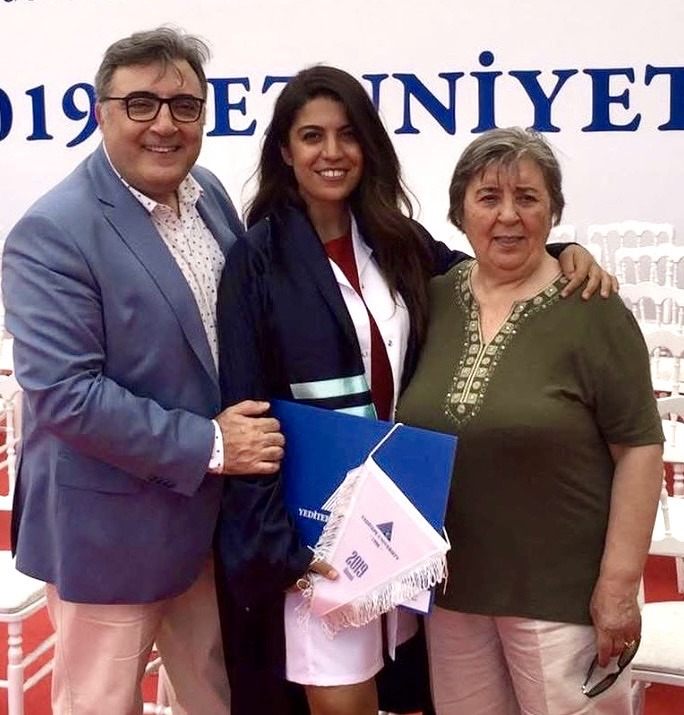
Just when everything seemed to be getting better, on June 25, devastating news shattered our family.
In Canada, we lost our beloved nephew Narod, in the very springtime of her life.
In an instant, all our hopes, all our joys, and all our plans lost their meaning.
Unlike our family tradition, Narod had been given a different kind of name. Yet it seemed that it was not names, but life itself, that carried a destiny we could never fully explain.
The name Toros, derived from Theodoros, meaning “God’s gift,” became associated with loss in our family across generations.
My great-grandfather Toros was murdered.
My uncle Toros died young.
My brother Toros died as a baby.
I was born with a shortened left leg and, years later, broke that same leg.
And Narod left us in the best time of her life.
For years, my mother never stopped calling me Hagop.
As a child, I never fully understood why.
Today, I understand much better.
Because Toros represented the burden carried in our family’s memory, while Hagop represented my mother’s silent prayer to protect me.
Perhaps my identity card said Toros.
But in my mother’s heart, I always remained Hagop.
Now, when I look back, I realize that throughout my life I have actually carried two names together.
One carried the sorrow of our past; the other carried hope for the future.
And I have carried them both with honor.


