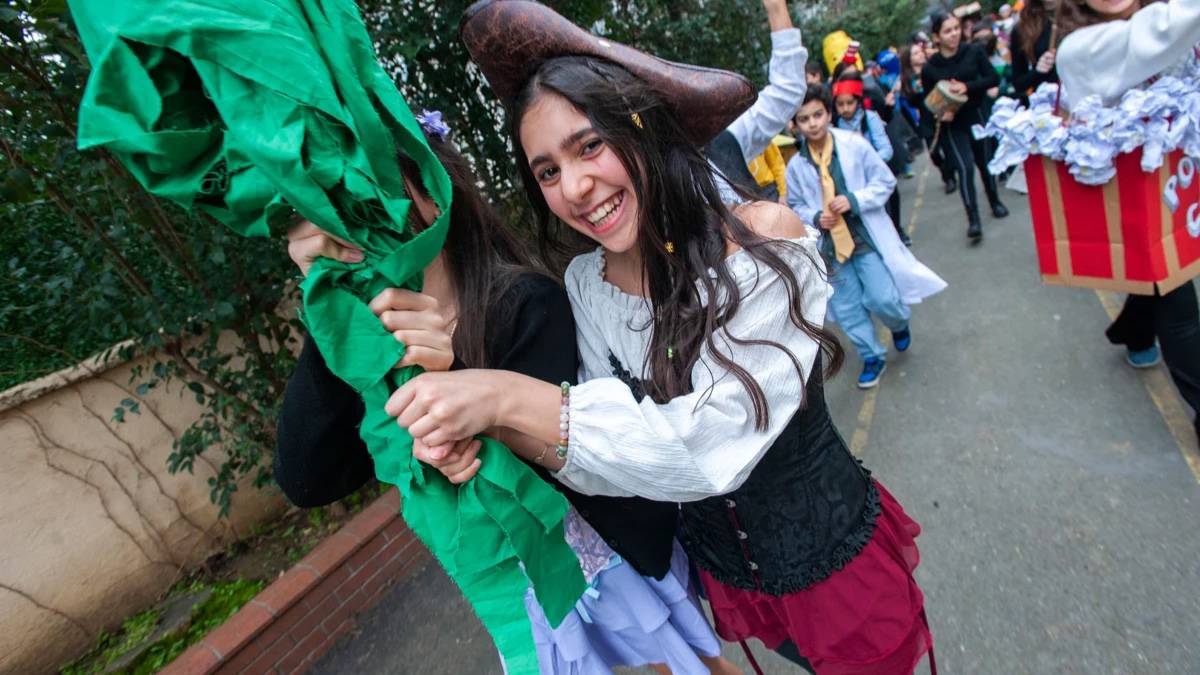

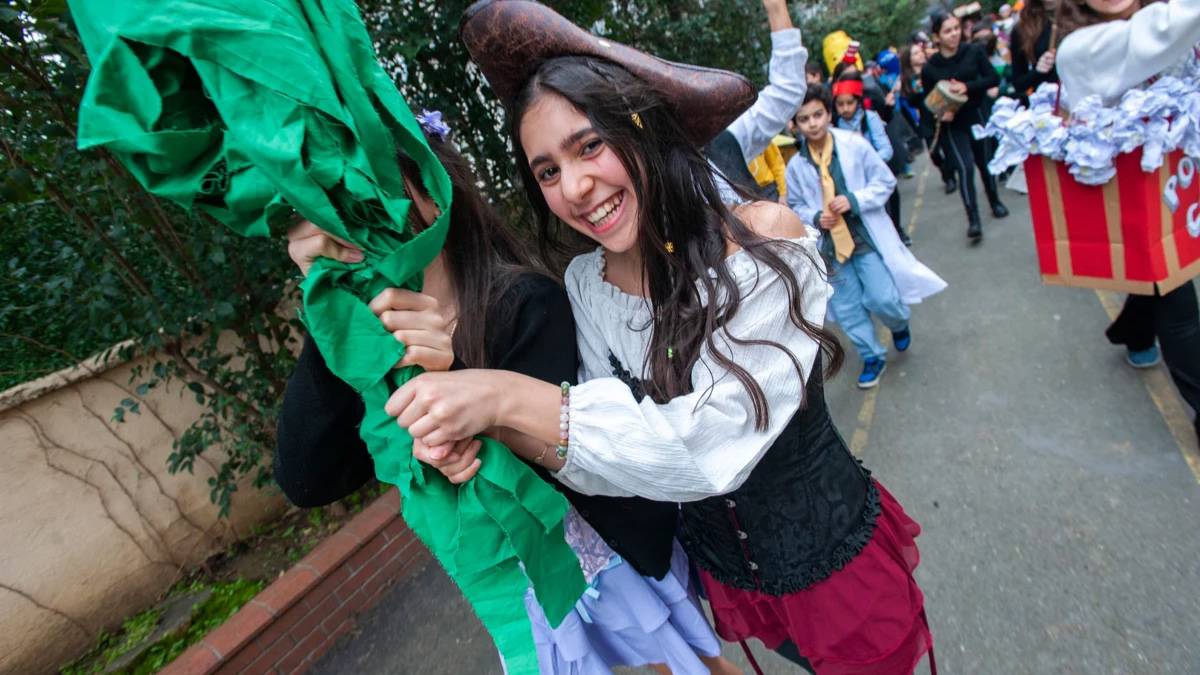
This year, once again, Paregentan (Carnival) was celebrated with great enthusiasm at Karagözyan. During a morning sharing event, students watched with interest a presentation regarding Paregentan and its various celebrations across different regions of the world. Photographer Berge Arabian captured these colorful moments.
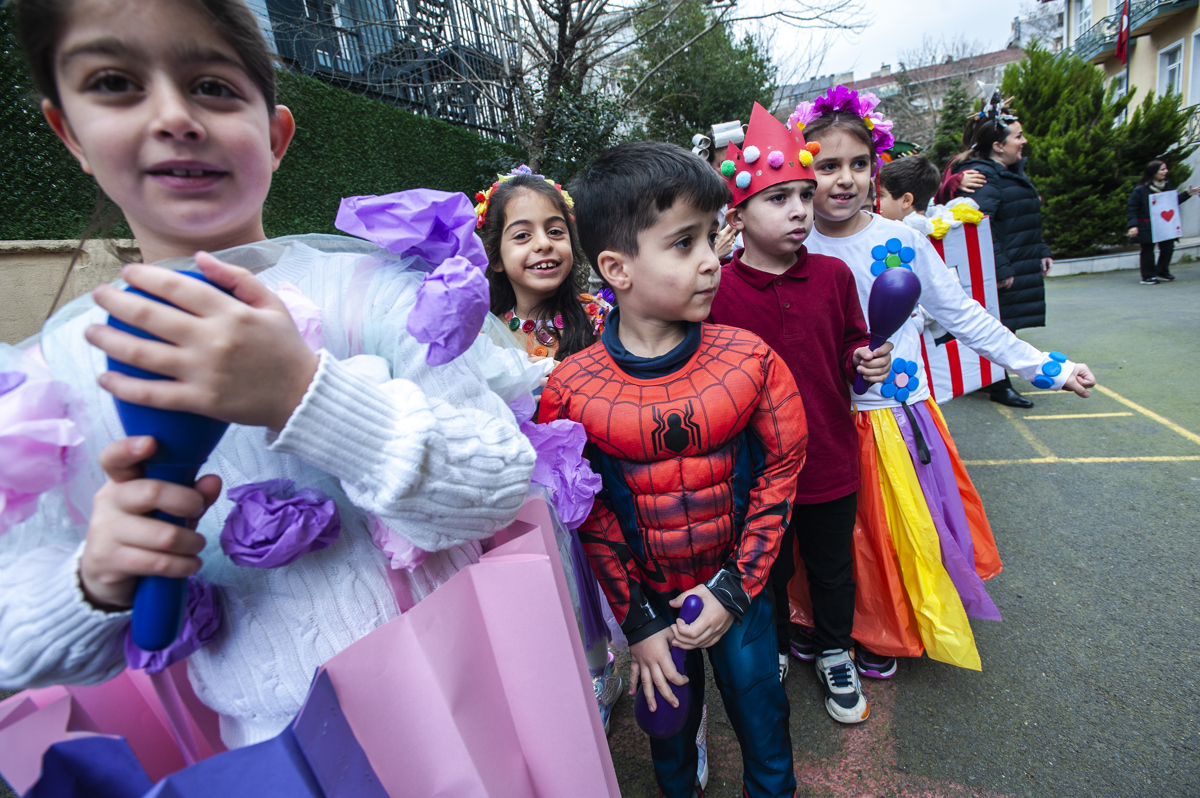 As part of the program, a traditional parade was held with the participation of all classes and teachers. Students designed their own costumes by recycling waste materials in line with a designated theme. The preparation process, which received support from families, produced creative and vibrant imagery. Following the parade, the event continued with traditional Paregentan games. Students both enjoyed themselves and had the opportunity to connect with cultural values.
The school management emphasized that such events play a vital role in transferring cultural heritage to new generations, stating that Paregentan celebrations enrich the social and cultural life of the school.
Sarkis Seropyan, whom we lost in 2015, once described Paregentan with these words:
“According to dictionaries, Paregentan is a ‘pagan era festival,’ a ‘day of good living.’ Generally, it is the name of the Saturday before the fast when eating, drinking, and playing games are permitted.”
“In Anatolia, among the public, Paregentan turned into festivities that pushed boundaries in every sense. While all types of rules were disregarded in cities and villages and celebrations lasted until dawn, churches and monasteries also took more than their share of the festivities. On the Saturday and Sunday before the fast, the novice monk, the senior monk, the abbot, and the bishop were considered equal; they ate, drank, and played together, and troubadours (ashughs) joined them. Mouths that recited the Bible, Psalms, Narek, and hymns every day praised wine during these days, even going so far as to claim that the wine Jesus Christ drank came from the vineyard of the Prophet Noah. For this reason, these lines were written for Paregentan, also known as ‘Apeghatogh’ (renouncing the cowl): ‘They have left the Bible / They have taken the tamburain hand.’”