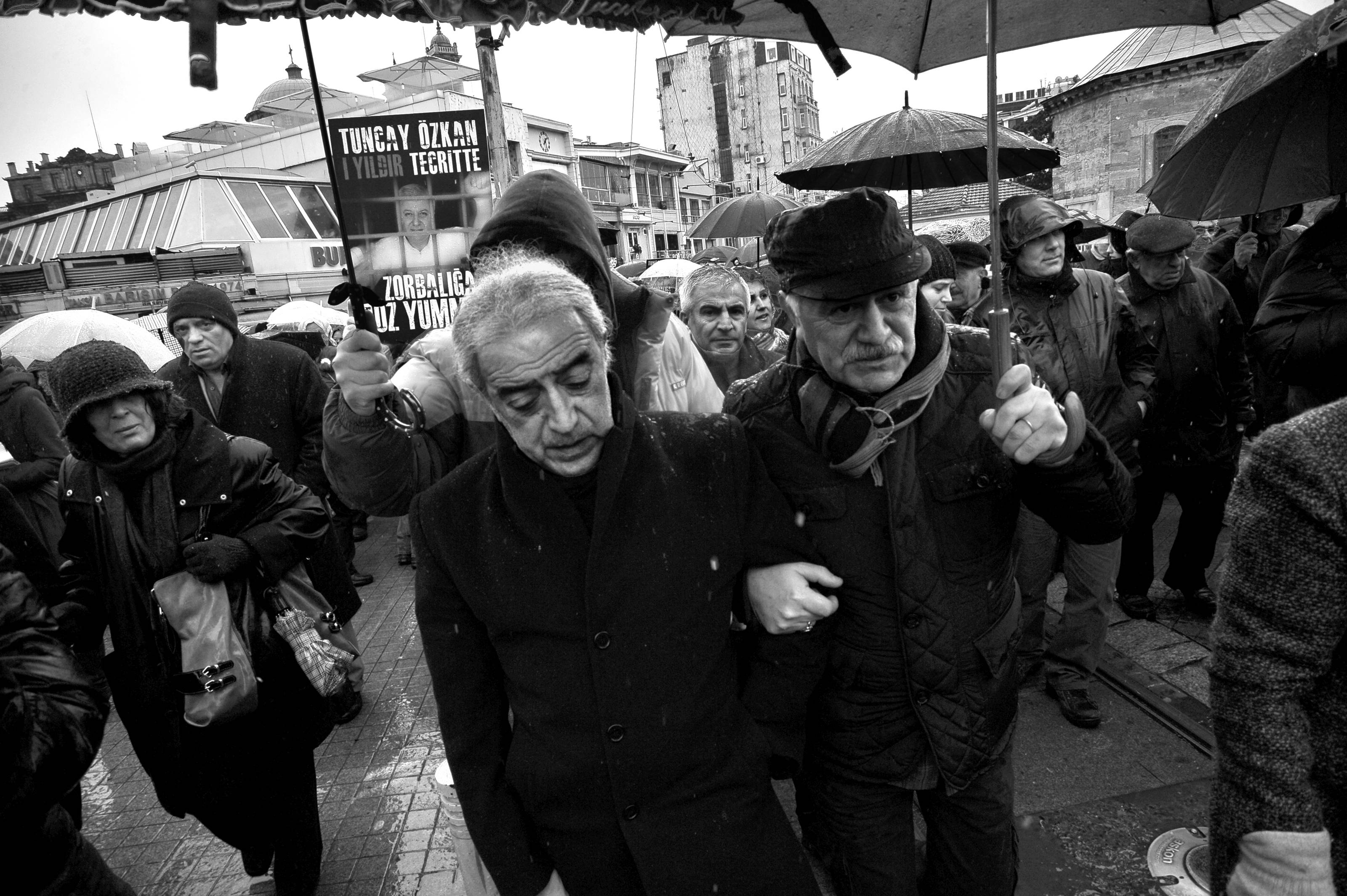

In the first years after I moved to Istanbul, one of the things I most photographed, were protests in Beyoğlu. There were plenty of them, almost daily. I did not even have to look for them. Unions, student organizations, women’s groups, actors’ guilds as well as commemoration gatherings, would crowd Taksim Square and after a few speeches, would march down Istiklal holding protest placards and banners, shouting slogans which most of the time I did not understand. I did not know much about many of these groups or their demands, but I always felt that I should record their protests with my camera.
Sometimes I would notice that there were important people there from the way, everyone opened the way for them or greeted them. Some of them had good posture or charismatic faces. I would then try to capture them with my lens, without knowing who they were. Years later, looking through my archive, I have come to realize that there are many famous actors, writers and politicians in those photos. I feel fortunate for having photographed intuitively.
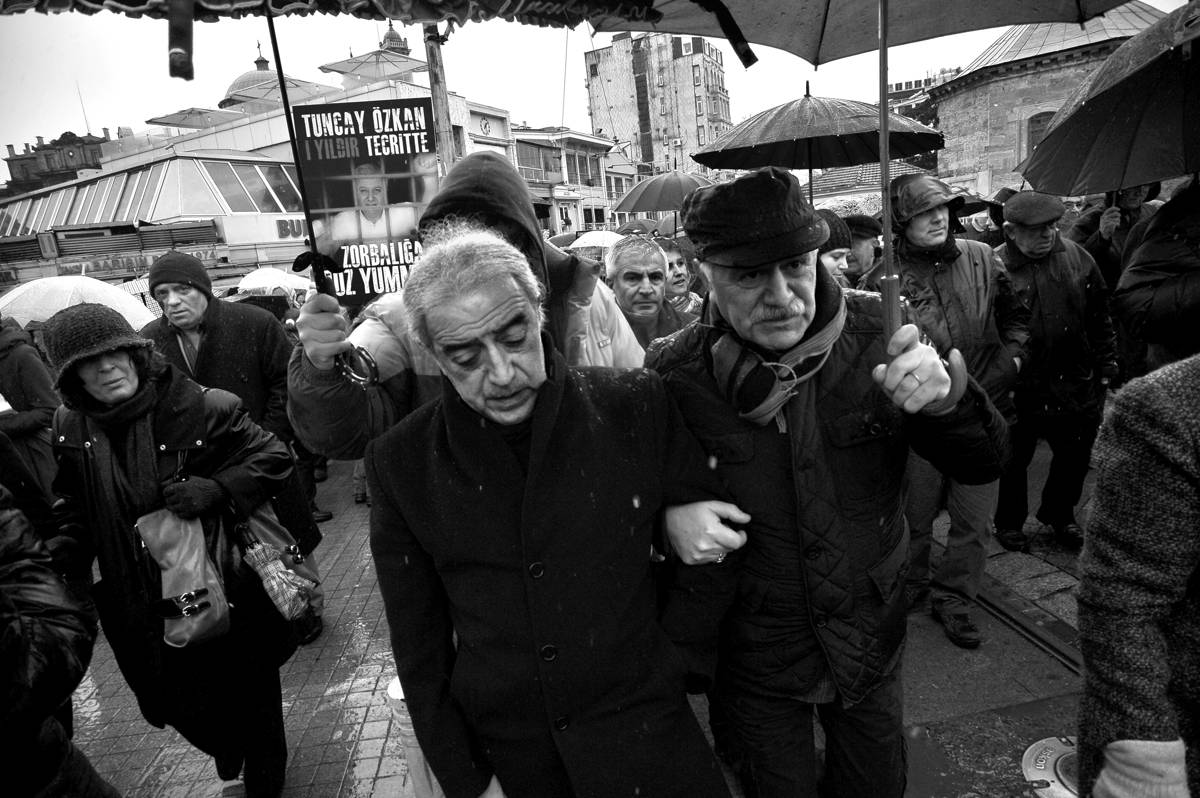
This photograph is one that I took one rainy morning as I rushed on the double-decker bus from Beylikduzu to Taksim, so that I could start photographing early and get back home to cook on time. I ran into this entourage as soon as I arrived at the Square. And then this man on the left, showed up. I somehow felt that his face was familiar, probably from a TV music program and that he must be a musician. I did not know his name either. But the way he carried himself around and the sense of respect the people showed towards him, made me want to click away as much as I could. Later that night, after seeing on of the photos, my wife told me that it was Edip Akbayram, the famous leftist singer.
What was so impressive about these protests on Istiklal was that most of them resembled the ones in Toronto in the sense that they started and ended peacefully, with many volunteers keeping the marchers in order. During my first few years in Istanbul, I never even noticed any police presence, even though I am sure they were there to keep law and order. People would gather, make their cause heard, feel a certain collective empowerment and then go home assured that some things will change for the better.
These peaceful marches impressed me in a way. Istiklal in my eyes was like Hyde Park in London, from what I had heard about it from one of my teachers when I was very young. He had told us that the British were so liberal that any of their citizens could say whatever they wanted, outright criticize their government whenever they wished in that park. No one would touch them. In the Park, they had immunity against arrest. Standing in Istiklal and watching the protest marchers would make me think that I was in a Turkish Hyde park: anyone who had a qualm, ran to Taksim or Istiklal flashing a banner. I would not be exaggerating if I were to say that there were days when one protest would wrap up and a second one would start…even a third one later on. And I rarely saw any clashes with the police or any violence until the events of Gezi Park in 2013.
I am not trying to make everything look rosy. Of course in other neighbourhoods and sections of Istanbul, protests must have been not so-peaceful. I used to watch the news after all and I knew enough about the sociopolitical and economic problems of the country. But you see, my impressions about the protests I saw in those first years were based on what I had experienced in my youth in Beirut. Somehow that experience had set a certain harsh standard for a young student like me, as to what a real protest full of police brutality is, when the grievance, the injustice and economic disparities felt by working class people are huge. Once upon a time I was a fourteen-year-old boy, who had just started becoming curious about the daily struggles of the poor. One day some tobacco workers went on strike because they thought enough was enough. The powerful and rich owners of the tobacco factory were not pleased. They asked their friendly government to help. The government sent the police to break the strike and force the workers back to work. The police took their task very seriously and shot down three of the strikers dead. A huge protest in solidarity with the strikers was organized by the opposition parties. We, my friends and I, the young buds of humanity, went to our first protest in solidarity with the families of the dead strikers. And there I saw what violence is for the first time in my life. And I will tell you about it hopefully soon.