

Following criticism on social media from AKP, ruling party in Turkey, lawmakers and Oktay Saral, a chief adviser to the Turkish president, Azerbaijan’s ruling New Azerbaijan Party (YAP) issued a written statement accusing others of conducting a smear campaign against Azerbaijan and calling on Turkey and its ruling party to respect Azerbaijan’s internal affairs.
How did it begin?
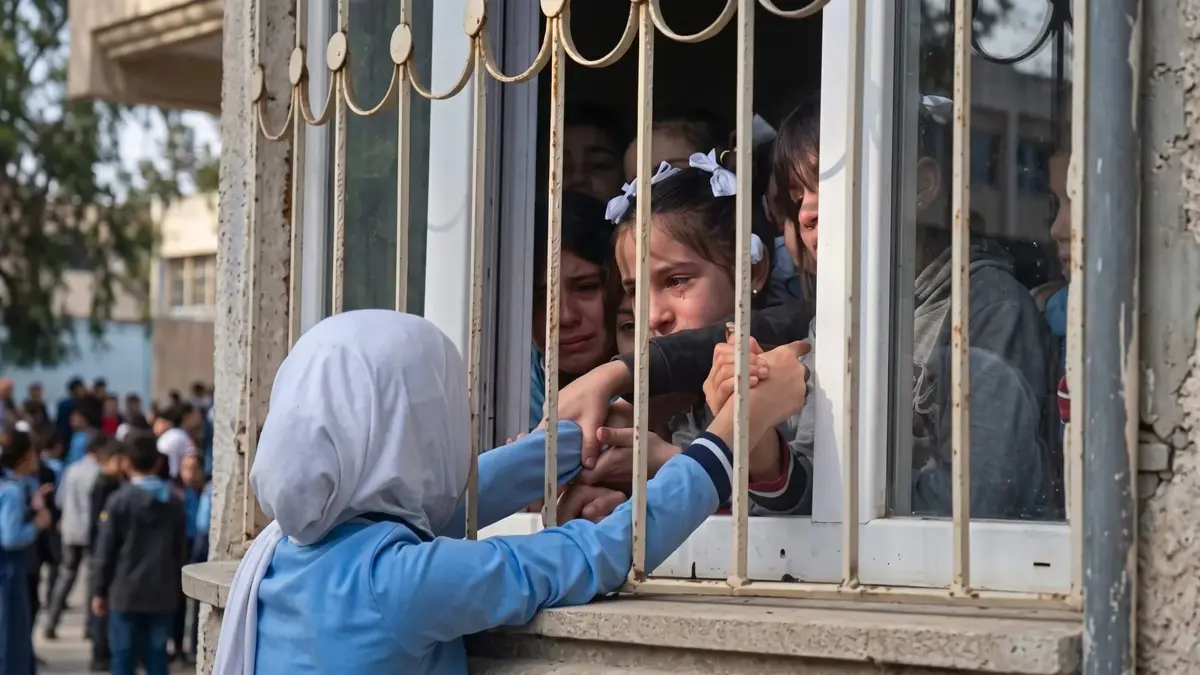
On July 7, 2026, an amendment signed by Azerbaijani President Ilham Aliyev added “secularism” (worldliness) to the educational principles set out in Azerbaijan’s General Education Law. On September 21, 2026, a Cabinet of Ministers decision, No. 309, signed by Prime Minister Ali Asadov, amended regulations governing student clothing in public schools. Although the decision did not explicitly mention the words “headscarf” or “hijab,” it stated that additional clothing items that disrupted the uniformity of school uniforms and did not comply with the principle of secularism in general education would not be permitted. In practice, the regulation was implemented as a headscarf ban. On October 6, 2026, new restrictions and rules were introduced, extending dress-code and secularism enforcement to include teachers as well. Protests over headscarves began in schools after students wearing headscarves were denied entry.
Reactions from Turkey
Criticism of the decision also mounted in Turkey, particularly among conservative circles. Oktay Saral, a chief adviser to the Turkish president, joined those voicing opposition. In a social media post, Saral described the refusal to allow students wearing headscarves to attend classes in Azerbaijan as unacceptable, writing:
“Is leaving a student who covers her head for religious reasons standing at the school gate compatible with any conscience, any sense of justice? The headscarf is not an obstacle; it is a requirement of faith! The right to education must not be sacrificed to any ideological imposition!”
“We expect Azerbaijan to reverse this mistake as soon as possible. We must open up opportunities for young people, not place obstacles in their way. Such an approach must never be allowed in this day and age!”
“A smear campaign”
Following Saral’s message, Azerbaijan’s ruling party, YAP, issued a statement on its official website, responding in strong terms to Saral and other figures from the AKP. YAP accused certain Turkish media outlets, including sources close to the government, as well as social media platforms, of spreading false and biased information about Azerbaijan.
In its statement, YAP described the developments as “a smear campaign against Azerbaijan.” The party said it had been compelled to issue a statement after Saral, who holds the position of chief adviser to Erdoğan, and several AKP lawmakers became “involved in such a campaign.” It emphasized that “this information campaign against Azerbaijan has recently become more aggressive, systematic, and explicitly defamatory.”
Relations between Israel and Azerbaijan
In its statement, YAP also responded to criticism of its relations with Israel, in addition to the criticism from Turkey over the school dress-code ban.
Rejecting criticism of Azerbaijan-Israel relations, the statement emphasized that Baku supports a Palestinian state within the framework of a two-state solution, with East Jerusalem as its capital, and provides financial and humanitarian assistance to Palestinians.
It further stated that Azerbaijan’s relations with the Islamic world “are based not on any political conjuncture, but on the principles of mutual respect, equality, and solidarity.”
YAP said, “Our country’s contributions to strengthening Islamic solidarity are appreciated by Muslim states.”
Erdoğan’s remarks
Some commentators have suggested that these statements were an indirect response to Erdoğan’s speech at the UN General Assembly in September. In his speech, Erdoğan criticized restrictions on headscarves in schools, describing them as “an attack on women’s most fundamental rights,” and linked the issue to “Islamophobia.” Although Erdoğan did not explicitly name Azerbaijan, many interpreted his remarks as being directed at Baku.
Returning to Saral’s statements, YAP accused the presidential chief adviser and Turkish lawmakers of “making populist and irresponsible statements without considering the essence of the issue.”
The party said, “Such statements run counter to the spirit of brotherly relations between Azerbaijan and Turkey and may serve to create artificial tensions in public opinion.” It maintained that the state treats all religions equally.
YAP defended the implementation of the headscarf ban by arguing that it stemmed from Azerbaijan’s secularism policy and noting that this principle “is also guaranteed by the Constitution of the Republic of Turkey.”
The statement concluded with the following words: “The New Azerbaijan Party believes that representatives of the Justice and Development Party, particularly those holding senior positions in the state, should demonstrate political responsibility in their statements and respect the sovereignty, constitutional order, and internal affairs of the Republic of Azerbaijan.”
Again after 16 years
Azerbaijan also saw a debate over new school dress code regulations in 2010. Protests were held between 2010 and 2012 against the regulations the government sought to introduce at the time.
The issue has returned to the agenda 16 years later following the Cabinet of Ministers’ latest decisions.
Azerbaijani local media have reported that some students and teachers wearing Islamic dress have been denied entry to schools. Protests began following these developments. According to Azerbaijan’s Ministry of Internal Affairs, 37 people have been detained.
Turkey and Iran were the two countries that voiced opposition to the ban. In Turkey, criticism came particularly from conservative and Islamist circles.
On October 3, a group gathered outside the Azerbaijani Consulate in Istanbul following a call by the Association for Freedom of Thought and Educational Rights (Özgür-Der) and held a press statement.
In addition to Saral, AKP Deputy Parliamentary Group Chair Leyla Şahin Usta quoted a video about the issue posted on the Yeni Şafak newspaper’s account on X, writing: “We hope Azerbaijan reverses this mistake as soon as possible. These distressing images are unworthy of today’s world.”
AKP Bursa MP Müfit Aydın also issued a statement on social media, saying, “Azerbaijan must do what brotherhood requires and immediately put an end to this practice!”
Gaziantep Mayor Fatma Şahin called on Azerbaijan in her statement: “Come on, my brother, reverse this mistake.”


