


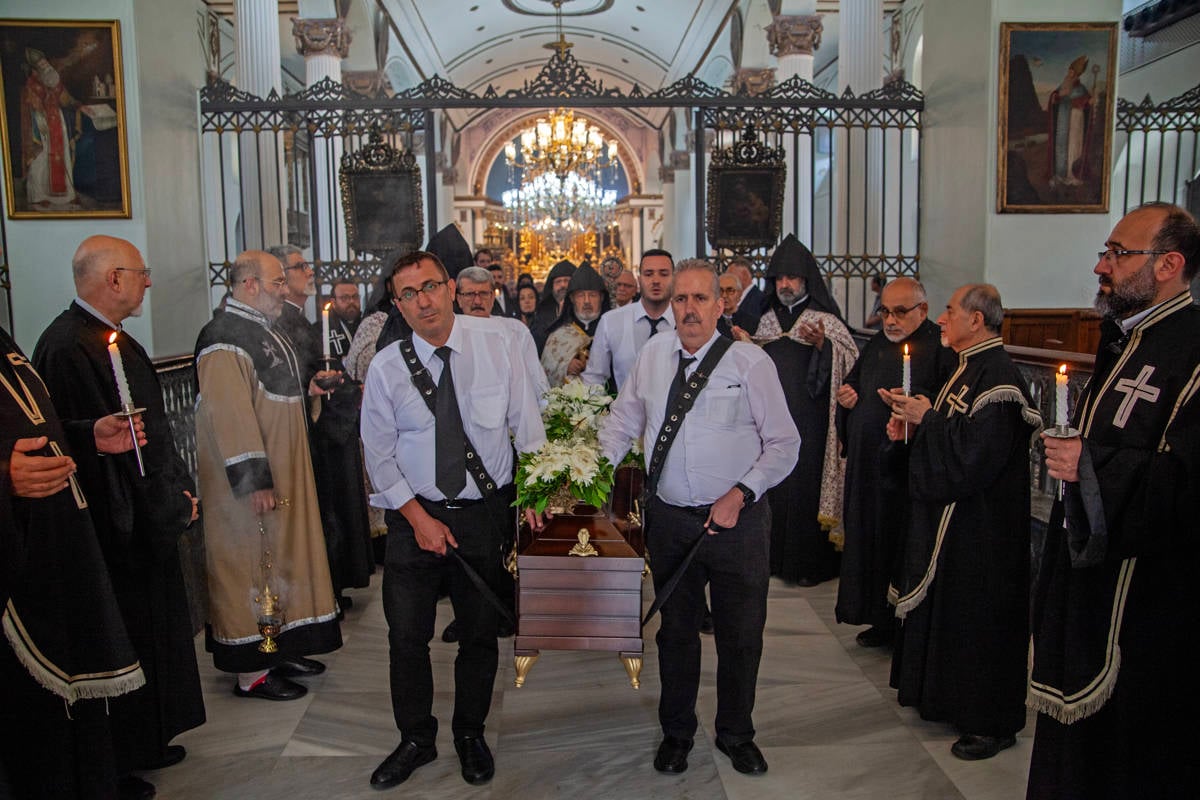
To organize a completely free funeral ceremony, one must be registered with the poor relief branch of the neighborhood. In this case, even if the funeral is held at the church, the owner of the funeral does not make any payment. While the number of free funeral ceremonies was 68 in 2024, 78 families applied for this path in 2025. This increase experienced in one year shows the extent to which the economic crisis is affecting community members.
On the other hand, the Armenian Patriarchate of Turkey had announced on its social media account in the final days of 2025 that it had increased the prices of wedding, baptism, and funeral ceremonies by 50% due to the inflationary environment.
In the statement, it was specified that it was decided by the Spiritual Council that the Patriarchate share would not be taken if no extra clergyman or church decoration is used in baptisms, if weddings are held with 2 clergymen and no decorations are used, and if funerals are held with 1 clergyman in cemetery chapels. With the Patriarchate waiving this share for the first time this year—having previously received a Patriarchate share in every situation—and with the funeral ceremony being held in a chapel instead of a church, the funeral fee decreases significantly.
How is a free funeral ceremony conducted?
Taking this picture into account, we researched which path families experiencing financial difficulties can follow after losing their relatives. Accordingly, a person in need, after losing a relative from their family, goes to the church in the neighborhood where they live or close to that neighborhood. If they are included in the church's poor relief branches list, the church foundation assumes that person's funeral expenses.
A community member in need who is not registered on the church poor relief branches list can still follow the same path. They can go to the church in their neighborhood and apply. The church foundation where the application for the funeral ceremony is made sends a letter to the Patriarchal seat for the person not registered on the list. After that, the foundation management and organizers try to provide the necessary facilities. However, this situation does not mean that funeral ceremonies will be “completely free.” If the funeral ceremony was conducted for free, the requiem (ayin-i ruhani) ceremony is also conducted for free.
In the current situation, when these paths are not resorted to for funeral ceremonies, even the most modest funeral ceremony can reach at least 100,000 TL, while the highest-priced funeral ceremonies exceed 200,000 TL.
Would you like me to prepare a summary of these economic developments for a community bulletin?


