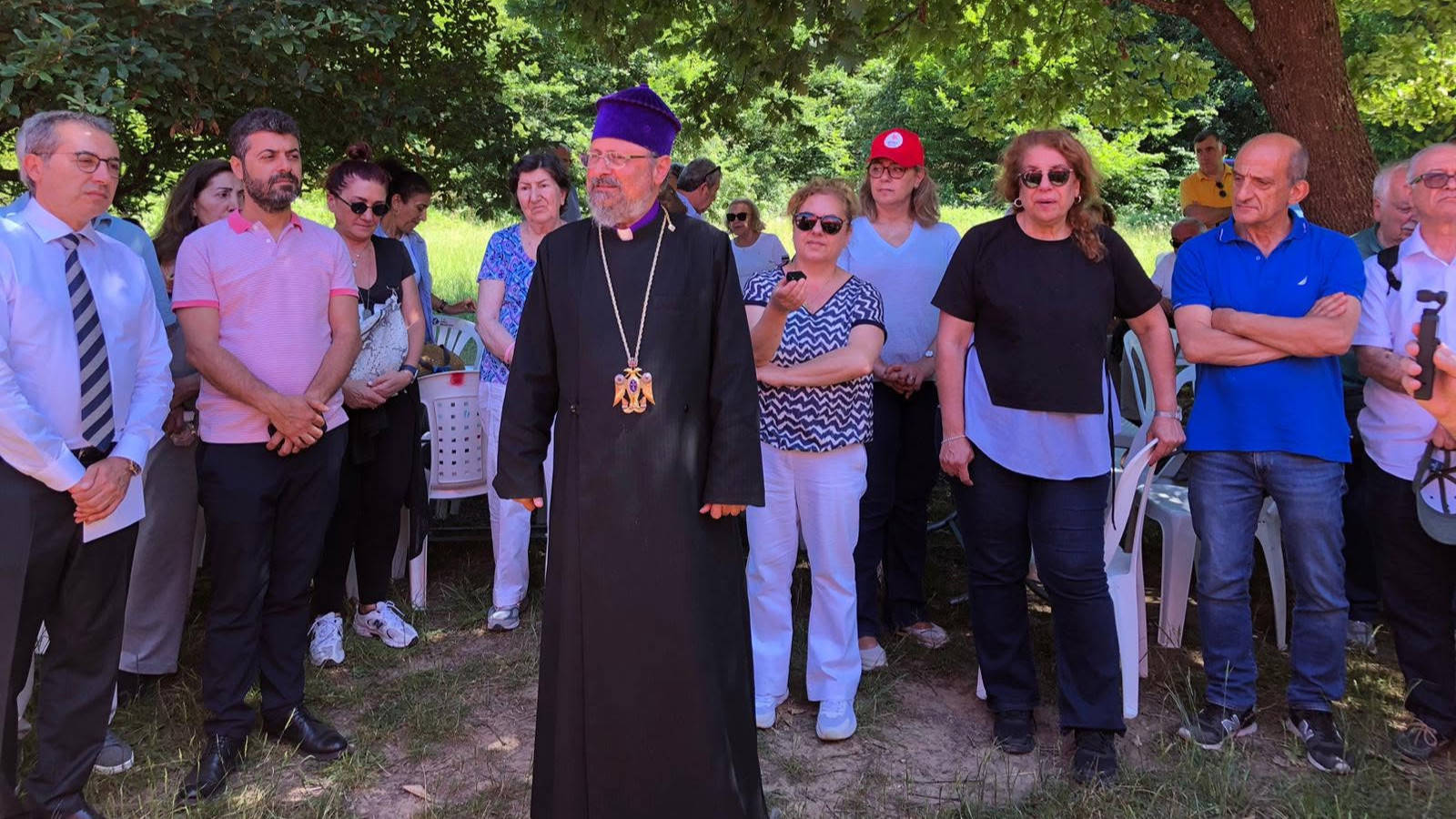


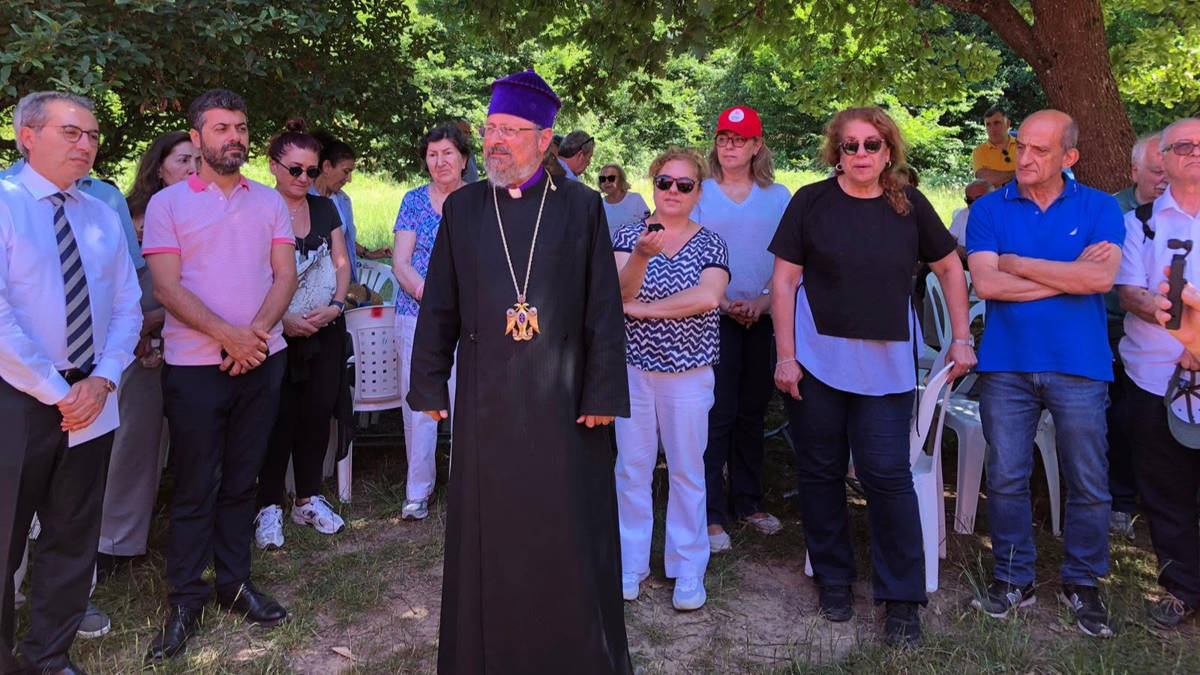
The buses stopped in front of the town mosque; in the past, an Armenian church had been standing on the same site. Here, Agos writer and architect Zakarya Mildanoğlu provided information about the former residents of Armash, the monastery school, and monastic life. Mildanoğlu listed the names of clergymen who had been educated at the school to serve the Armenian Apostolic Church at the highest levels, placing particular emphasis on the late Patriarch Karekin Khachadourian, founder of today’s Üsküdar Surp Haç Tbrevank. When Khachadourian’s name emerged as a candidate for the patriarchate, he reportedly made his support contingent upon the construction of a new monastery school. This wish became reality in 1953 when the Üsküdar Surp Haç Tbrevank School began operating.
From Mildanoğlu’s account, we learned that no trace of the former monastery building in Armash remains today. The theological school has completely disappeared, and a school was later built in its place. This building was damaged by earthquakes and subsequently demolished. The only structure left from the past is the monastery’s printing house; after being filled with garbage for many years, it was recently cleaned and now stands completely empty. The old mill also survives, though in a ruined state.
The pilgrimage also had the character of a countryside excursion, as members of the Surp Haç Tbrevank Association had meticulously transformed the monastery’s former farm property into a comfortable recreational area. With the municipality’s support, tables and chairs were placed there. A picnic was also held during the visit.
Patriarch Sahak Maşalyan, Archimandrite Harutyun Damatyan, and Patriarchal Vicar Senior Father Krikor Damatyan also participated in the trip. Following the meal, Patriarch Maşalyan praised the association’s efforts and invited the participants to recite the “Lord’s Prayer” together.
It should be emphasized that this pilgrimage has gradually taken on a traditional character. This most recent gathering was the fourth visit bringing together Tbrevank alumni from all over the world.
Trips to Amasya and Gümüşhacıköy
While the Armash visit on June 11 was a one-day event, another group visited Amasya, Merzifon, and Gümüşhacıköy between June 12 and 15. According to information provided by Karekin Barsamyan, former principal of Bomonti Mkhitaryan School and a deacon, this three-day pilgrimage coincided with the reopening of the spring in Amasya now known as “Venk Suyu” (“Monastery Water”), formerly called Işık Pınarı (“Spring of Light”).
Barsamyan, who led the trip, shared the following information: “Those familiar with the history of the region recalled that this water, emerging directly from the rock, was once used for baptismal ceremonies.” Through restoration work carried out by the Municipality of Amasya and the Eastern Black Sea Regional Development Administration, which is a specialized Turkish state institution under the Ministry of Industry and Technology, the spring regained its former appearance, and special invitations to the opening ceremony were sent to the Greek Orthodox and Armenian Patriarchates. Indeed, congratulatory messages from both patriarchs were read during the official inauguration ceremony. Amasya Governor Önder Bakan also attended the event.
The subsequent destinations of the visit were Merzifon and Gümüşhacıköy, which in the past had significant Armenian populations. At the former Armenian cemeteries, memorial prayers were offered for those who had passed into eternity.
The group of 42 participants returned to Istanbul on Sunday, June 15.