

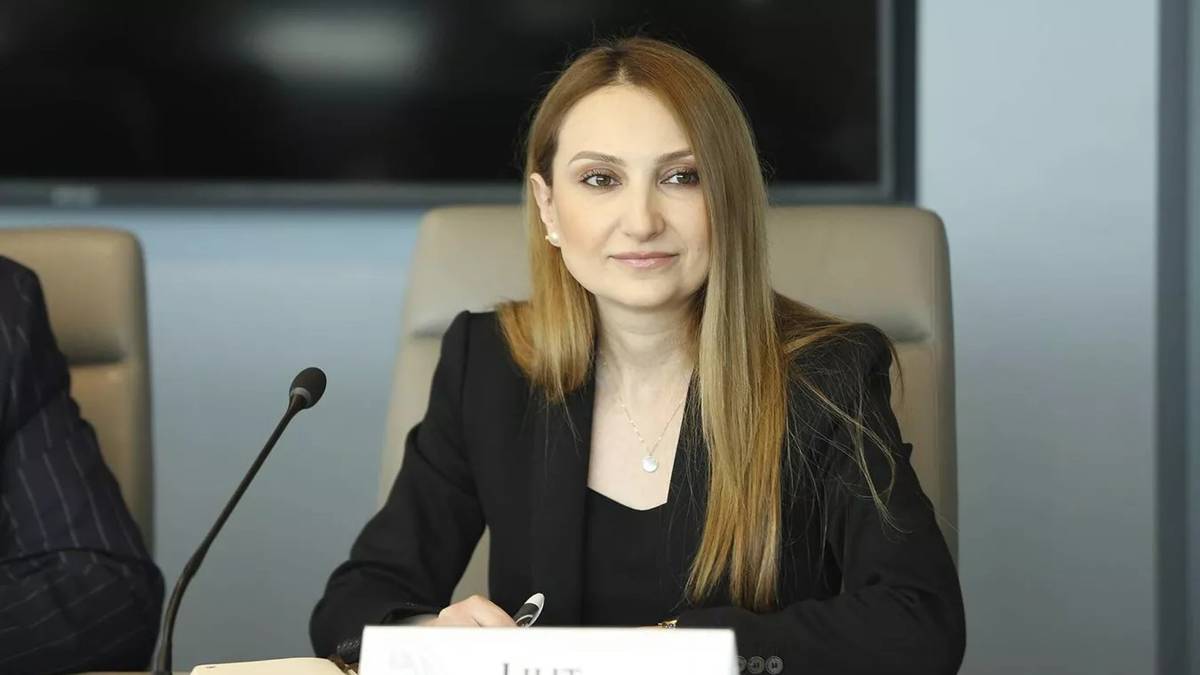
As the US and Israeli attacks on Iran continue, the stance of the Pashinyan government—which maintains good relations with Tehran—is under scrutiny. This is particularly significant given that Armenian, Azerbaijani, and US leaders agreed on the “Trump Route” passing through Armenia last year, and US Vice President JD Vance recently held high-level talks in both Armenia and Azerbaijan. Arshaluys Mghdesyan from CivilNet interviewed Lilit Makunts. Here are her responses:
The region is currently in a very volatile state. Iran is at war with America and Israel; we know there are mutual attacks, and Iran’s spiritual leader has been killed. Armenia officially contacted the Iranian side on the third day of the war, expressing condolences and offering humanitarian aid. Can you explain the reasons for this diplomatic delay?
I would not characterize this as a "delay" on the part of the Republic of Armenia, because reactions are not limited to public statements. Armenia’s response to the situation is, first and foremost, to analyze what is happening in the region and how it might affect Armenia. In other words, it was not a delay. There were contacts and meetings with the parties throughout the process.
The situation in Iran is quite difficult, as it is in the Gulf countries, because Iran is also attacking American military bases there. There are Armenian citizens and representatives of the Armenian diaspora in both Iran and the Gulf. Is there any work being done to evacuate these people?
The Ministry of Foreign Affairs (MFA) has issued several statements indicating that our diplomatic missions in the aforementioned countries are actively dealing with this issue. There is a hotline, and we are in active contact with our citizens. I hope people will reach Armenia in the near future.
Armenia's Ambassador to Iran held a press conference yesterday and presented Yerevan’s official view. He mentioned that Armenia and Iran are developing a strategic cooperation document that could be signed this year. Given the current situation—where we have a document on strategic relations with the US on one hand and are developing a similar one with Iran on the other, while these two sides are in a bloody war—how will we balance these interests?
The Armenian government has repeatedly and publicly stated its goals to establish a strategic partnership with Iran. Therefore, this situation is not a surprise to our citizens or our friendly and partner states, including the US. Generally, the Republic of Armenia conducts its foreign relations as follows: we are very transparent when building relationships and clearly state what is acceptable or unacceptable for us.
We have been very transparent with the US and emphasized the importance of Iran as a crucial southern neighbor for us. Of course, there are many reasons for this. As you correctly noted, these military operations involve states that are key and friendly to Armenia. In this case, all of Armenia's statements and positions must stem solely from our state interests. Our position is clear: every step must first and foremost express our own interests.
Does this mean the document on establishing strategic relations with Iran will be signed? What is Yerevan’s current perspective?
The MFA will announce this when the time is right. I cannot make any claims regarding changes. As for exactly when the strategic partnership document will be signed, the MFA will clarify that.
Since you served as Ambassador to the US for a long time, how would Washington react if Armenia does not change its stance on this document and continues negotiations? For example, VP Vance was recently in Armenia and expressed clear support for Armenian officials, especially PM Nikol Pashinyan.
We are transparent in our relations with all our allies and partners. Regarding the US, we are aware of the sensitivity of the Iran factor for them, but Armenia has always clearly stated that while trying to normalize relations with its two difficult neighbors (Turkey and Azerbaijan), it does not aim to complicate or worsen relations with other neighbors.
The second point is that we clearly state to all our partners what is possible for us and what our red lines are. The third important aspect is the predictability of states' behavior. Will a specific state use its relations against a third state? The Republic of Armenia does not position itself this way. There are criticisms about whether our relations with the US could be used against any of our neighbors. Of course not; there is no such thing. Likewise, our relations with our neighbors cannot be used against another state.
To simplify: Armenia says to the US, “We are building similar relations with Iran, but we have no intention of harming you with this,” and vice versa. Is that correct?
Exactly. You are quite right; that is precisely the case.
Is this accepted calmly, or is there any opposition?
It requires difficult, daily, meticulous, and consistent work. Achieving this perception is not easy... And I can confidently say that currently, the US has a clear perception of Armenia's relationship with all its neighbors.


