
Written by: Rıza Oylum
In early June 2023, I went to Yerevan to film my documentary “Yerli Yurtsuz” (Rootless Resident), which focuses on the life of Yervant Demirci. On this journey, which we embarked upon with tickets obtained through the Hrant Dink Foundation Travel Grant, we set off for Yerevan on a plane that departs once a week and lands in the early hours of the morning. I had previously traveled multiple times to Georgia, Azerbaijan, Iraq, Syria, and Iran. Armenia was the only neighboring country I had not visited. When I arrived, the state of war with Azerbaijan had recently ended. Prime Minister Pashinyan had also traveled to Ankara to attend the inauguration ceremony of the President of Turkey.
Entering the Country: “Why Azerbaijan?”
Tripods, lights, light stands—items I had packed into my suitcase for the documentary shoot… In short, I stepped off the plane with a massive suitcase full of equipment. We arrived at Zvartnots International Airport as two people, and we were the only ones holding Turkish passports coming from Turkey. The rest of the passengers consisted entirely of Armenian citizens.
After filling out the visa documents with sleepy eyes in the early morning, I arrived at the police checkpoint. The moment I saw the officer press the page of my passport with an Azerbaijani stamp against the glass, every trace of my sleepiness vanished. The passport officer's question was very clear: “Why Azerbaijan?” I explained that as a journalist, I had gone there five years ago to follow a film festival, but the officer was not satisfied with this explanation. In a country that had just emerged from war, the reactions made one feel "Caucasian aggressiveness" to the core. Everyone else had passed; only I and my friend with a Turkish passport—whose passport only contained an Iranian stamp—remained at the next booth. They let him through. But it seemed my passage would not be easy. The officer slowly turned every page, checking the visas. UK visa, Schengen visas… in the final year of my ten-year passport, there were entry-exit stamps from nearly 20 different countries. Then he picked up a magnifying glass and began to examine it more closely. The situation was escalating.
He called another officer. He pointed to the page showing my entry into Azerbaijan. He seemed to have no intention of letting me into the country. An older officer stepped in; I believe he said something more moderate. Then they looked at the documents for the place I would be staying and finally pressed the stamp.
If they had opened and checked my massive suitcase at that moment, I would have been in trouble. Camera, lights, tripod… it would not have been easy for a Turkish passport holder coming from Turkey, without a filming permit, and with an entry-exit record for Azerbaijan, to explain himself.
A year later, in 2024, I had to go back to Yerevan for additional filming. I had to endure the same treatment in the same place. I had a friend with a Turkish passport with me. He also got his share of the situation. After asking questions for 10-15 minutes, the answers to which they didn't even care about, they finally stamped the passports. This time, my cameraman was Iranian. He passed through easily. Seeing the prestige of an Iranian passport for the first time, he was quite pleased.
I always think that border police and taxi drivers are a common "nation" independent of all nationalities. I have seen similar practices everywhere: it is never clear to whom, when, or where they will be applied.
The First Shoot: Composing the Sunrise
Let’s return to 2023. Yervant and his close friend in Armenia, Gago ahparig, were waiting for us with curious looks. I got into the car with a stress I tried not to let them notice. In the early morning, we set off towards Nor Kharberd (Harpert/Harput). Morning was breaking.
When we arrived, despite our exhaustion, we tried to record the sunrise through the greenery before sleeping. This footage, which we used in the documentary, would symbolize hope, a new era, and budding possibilities.
Filming with a View of Ararat
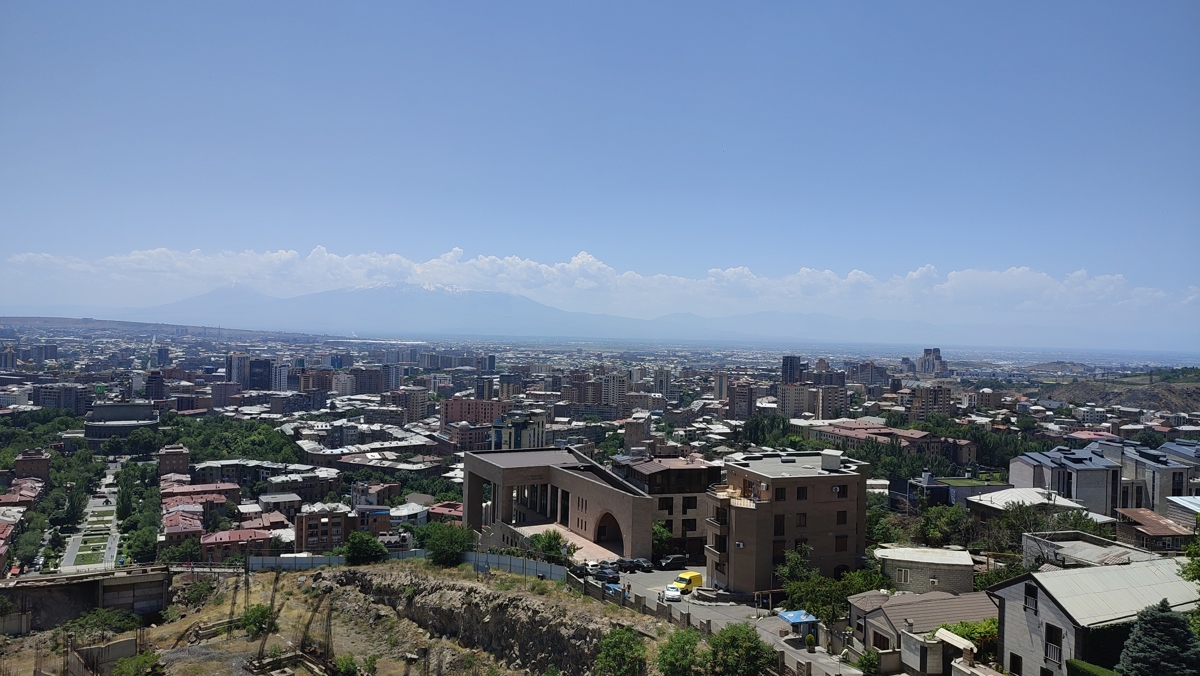
In the morning, we set out for Yervant’s land in the Ayntap region with a view of Ararat. The ten-acre land, rich in greenery, radiated a unique peace that made one forget the border tensions. During the week-long shoot, we focused on field planting, daily routines, Yervant’s efforts to adapt to Armenia, his experiences learning Armenian, his attempts to communicate with his neighbors in Armenian, and the peace brought by practicing his faith in the church he visited every Sunday without fail.
Yerevan City Tour
After finishing the shoots, we practically dragged Yervant ahparig on a journey toward the center of Yerevan. Having come to these parts to find the peace of nature, ahparig was reluctant to enter the crowds of Yerevan. We left the car outside and took the metro to the center.
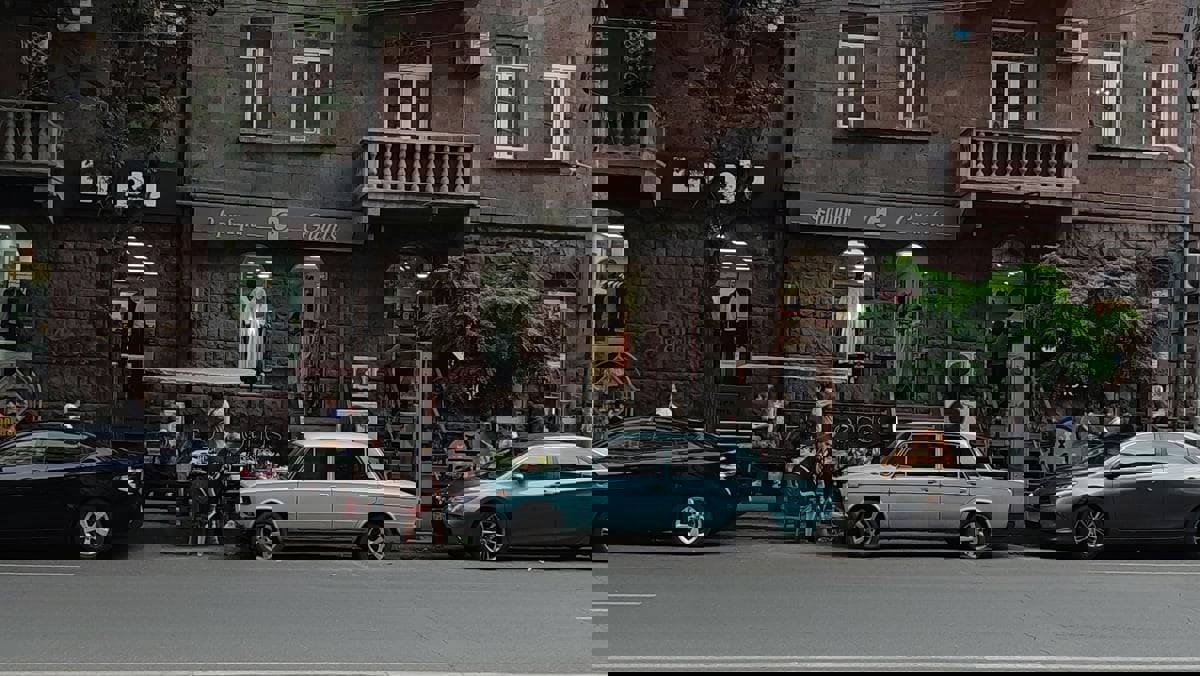
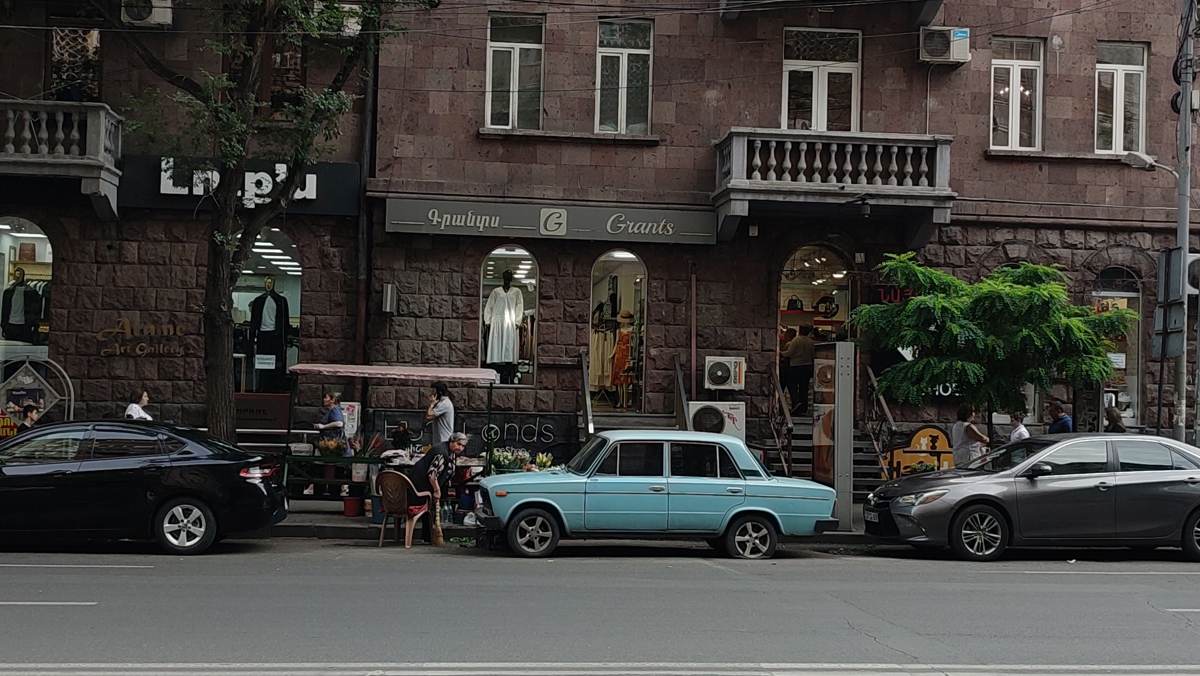
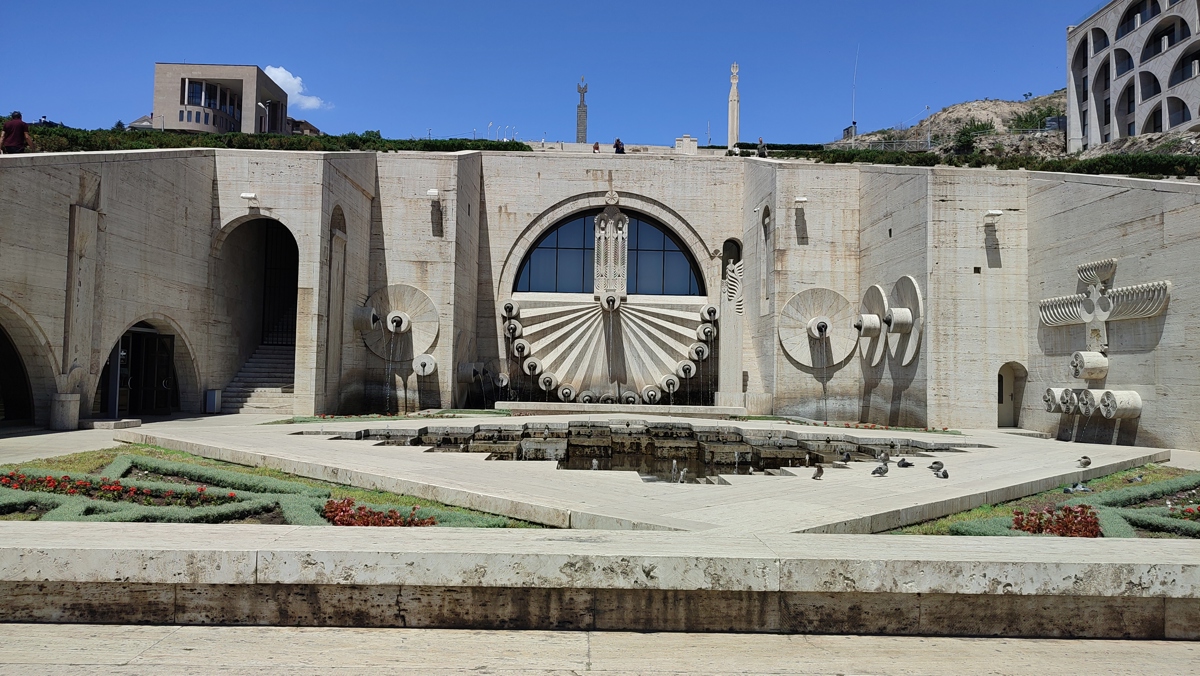
Yerevan possesses one of the most beautiful city centers I have seen in the Middle East and the Caucasus. Unique stone structures, vast Soviet-style squares, boulevards, the aesthetics of street names and signs, parks, and statues… It gave the appearance of a city where art breathes.
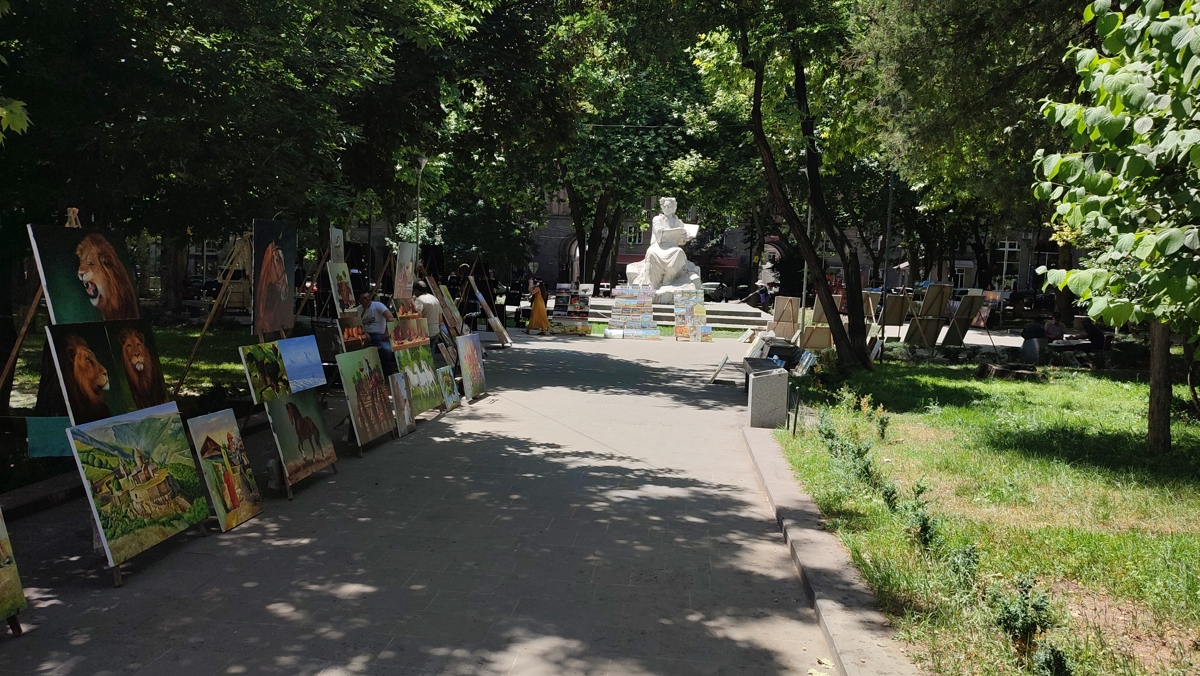
Walking along its wide avenues created the feeling of wandering through the streets of a European city rather than being in the center of a country that shares a border with Turkey. The works of painters you encounter in the parks, old books spread out in the squares, authentic fountains flowing sweetly on street corners… The city’s architectural approach made one say, “such a city is possible.”
Courtyard Culture in Yerevan
The courtyard culture opening onto the street, which I have seen in almost all Soviet cities, was also prevalent in Yerevan. In this architectural feature, you pass through an arched hallway that feels like entering a building from the main street and reach a common living area for multiple buildings.
It is a world isolated and controlled, away from the trouble of traffic. A common area where the grocer and greengrocer wait for you around the corner and where children play freely… In this courtyard, where four or five large apartment buildings stand together, only a few steps separate you from the city crowd.
An Unforgettable Experience: Parajanov Museum
In Yerevan, it would be unthinkable not to visit the museum of my favorite director. The Sergei Parajanov Museum is one of the most important details that makes Yerevan special for me. In cinema, Parajanov, who recreated the layered world of literature and brought the pleasure of poetry to the visual world, brought the life of the great 18th-century Armenian poet of the Caucasus, Sayat Nova (The Color of Pomegranates) in 1968; the Georgian story Ambavi Suramis Tsikhitsa (The Legend of Suram Fortress) in 1985; and a Turkish folk tale Ashik Kerib in 1988 to the screen with his poetic style. Parajanov left behind a unique visual treasure by knowing how to melt the cultures of neighboring countries, from the Caucasus geography to the entire Middle East, in his films. Visiting his house, filled with his belongings, was an unforgettable experience.
The Blue Mosque
In the center of Yerevan, there is also a mosque under the auspices of the Iranian state. The Blue Mosque (also known as the Gök Mosque), dating from the 1700s, is a large complex with a dome. Along with the mosque, it offers classrooms, small boutiques selling handmade products, and a large, peaceful garden. With its Islamic architecture, which stands apart from the general stone architecture of Yerevan, it stands like a silent island within the city.
In this period, where visa facilities are also starting to come into play and as the weather turns toward spring, I want to rediscover Yerevan. I hope that this time I can go by road, on the occasion of the opening of the border that has been closed for more than 30 years. On this occasion, I hope that more people like me add Yerevan to their tourist destinations. For, despite the fact that passport police occasionally scrutinize visitors, the commonalities between Turkey and Armenia are greater than their conflicts.