e-Newspaper/Archive
Agents
Contact
Subscribe Now
Login
Tr
Հայ
Search
Armenian Society
Authors
Book/ԳԻՐՔ
Hrant Dink
Agos' Agenda
Türkiye
Armenia
World
Faces/Stories
Human+Rights
Once Upon a Time
Culture And Arts
Life
Search
☰
☰
ORTA SAYFA
Lessons of October
3 November 2017
Ronald Grigor Suny
China as Refuge for Armenian Genocide Survivors*
28 July 2017
Khatchig Mouradian
Story of academics who stay to resist
The state of emergency declared after the coup attempt on July 15 resulted in a purge in universities that has never been seen before in Turkey's recent history. The emergency decrees have been used for dismissing both experienced academics who carried out many researches in universities and young academics whose careers had just begun. However, despite everything that happened, some academics hold on to their profession, which they define as “reason for being”. In this regard, Kocaeli Solidarity Academy is a precursor and guiding initiative. Having completed its first term of “alternative education”, it has also the purpose of establishing an open and free school of life for people with a new two-tear program.
17 May 2017
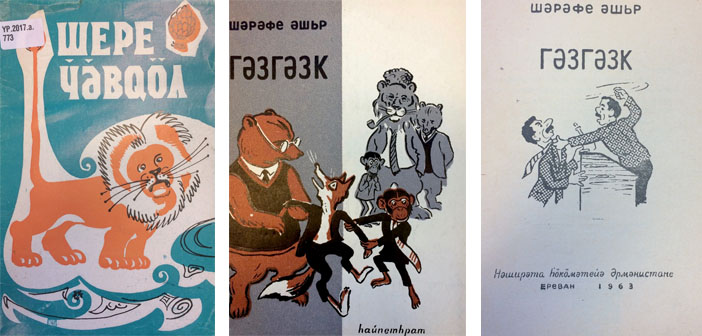
Tracing the children's books that raised “Armenia of Kurds”
Asia and Africa collection of British Library in London offers books that tell a story of Kurdish language and culture that is not widely known. More than hundred works in Kurdish, especially children's books, that were published in Soviet Armenia in Cyrillic, Armenian and Latin alphabets have come to light again thanks to cataloging efforts of Michael Erdman, library's curator of Turkish and Turkic languages.
12 May 2017
Fatih Gökhan Diler
“Ateşyan should clear the way for the election”
What does Armenian society think about the crisis in the patriarchal election?
24 February 2017
Fellows knowing and introducing Turkey by producing
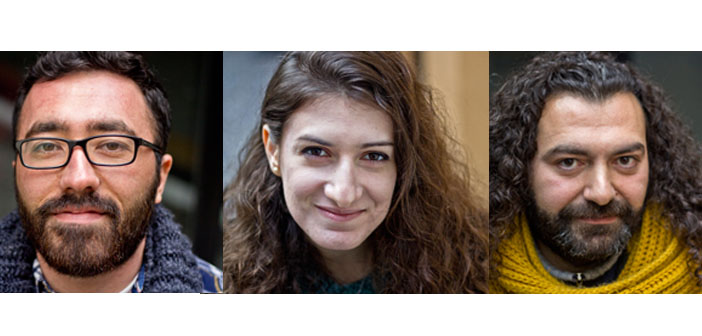
Hrant Dink Foundation's Turkey-Armenia fellowship program sponsored by the EU encourages the professionals from the neighboring country to form cross-border cooperation networks since 2014. Armen Ohanyan (Hayastantsi), Maria Yeghiazaryan and Artsrun Pivazyan, who came to neighboring Turkey for new experiences thanks to the fellowship program, shared their experiences.
3 January 2017
Varduhi Balyan
Back to homeland: ‘New locals of Imroz’
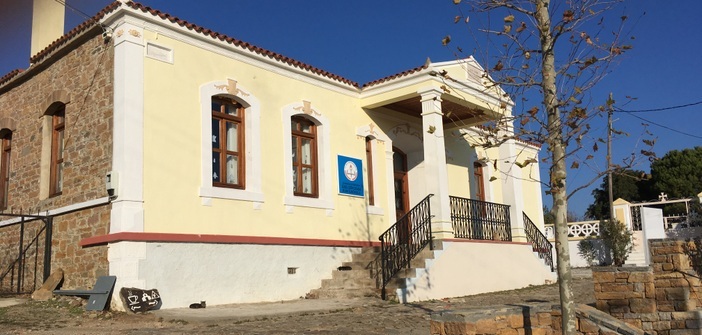
In the last 2 years, 15 families from Thessaloniki, Athens and Crete settled in their ancestral land Imroz. We met these “new locals” of Imroz, who are trying to build a new life and sending their children to the newly-established Greek schools on the island.
17 December 2016
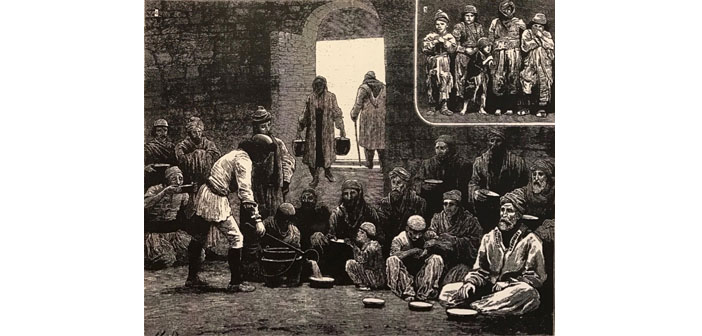
Plunder, Famine and Destitution: The Figure of the Beggar from Van
Vazken Davidian made a presentation at “Van and the Region” conference organized by Hrant Dink Foundation and tried to provide an insight to the relationship between Ottoman Empire and Ottoman Armenians in a time of complicated ideological transformations. Here is a broad summary of the presentation by Davidian, who says that “The Figure of the Beggar from Van personified the economic wretchedness and misery of Ottoman Armenia on the streets and the hans [slums] of the imperial capital.”
5 December 2016
Vazken Davidian
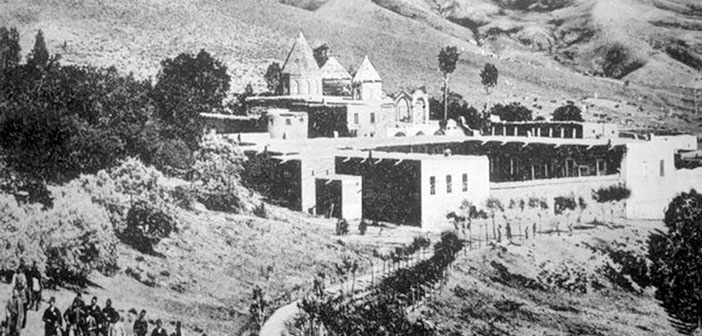
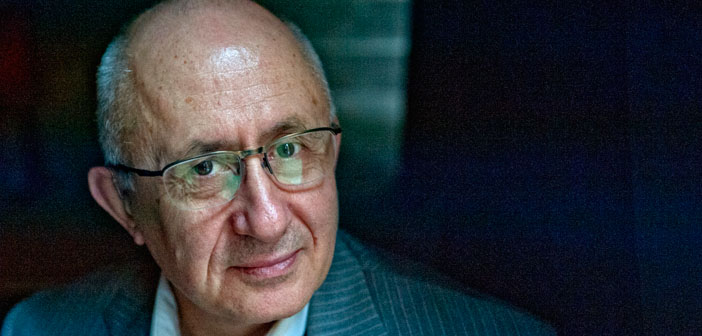
“Van was the epicenter of the earthquake of genocide”
“The Social, Cultural and Economic History of Van and the Region” conference organized by Hrant Dink Foundation was held in Anarad Hığutyun building on November 11 and 12. We talked to Dr. Yektan Türkyılmaz, who was the keynote speaker of the conference, about Van's importance in Armenian and Ottoman history.
18 November 2016
Yetvart Danzikyan
Are “Talat Pasha Telegrams” real?
Prof. Dr. Taner Akçam, in his recent book, published the memoirs of Naim Bey, who played an important part in the historiography of the Armenian Genocide and whose existence had been denied. With this book, Prof. Akçam responded the claims and broke a new ground in the historiography of the Armenian Genocide.
7 October 2016
Vartan Estukyan
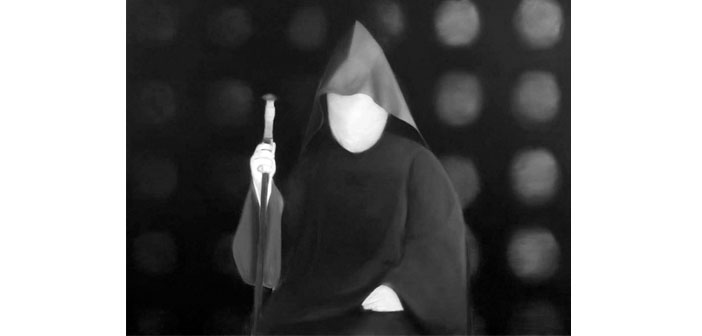
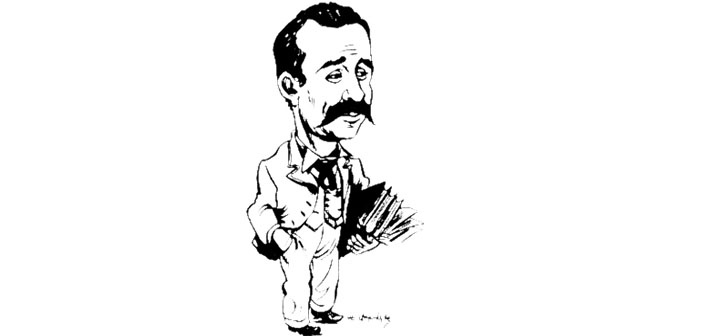
Castigat ridendo mores* or Hagop Baronyan on the 125th anniversary of his death
Baronyan had always been running counter to Armenian clergy and elites whom he criticized satirically, and he lived in reduced circumstances because of his conflict with those circles which, in Baronyan's opinion, had been managing the economic resources of the society in accordance with their own interests. Even when he found out that he got tuberculosis at the age of 45, he hadn't given up resisting. (*a Latin phrase meaning “one corrects customs by laughing at them", which was used by French poet Jean-Baptiste Santeul (1630-1697) for the first time.)
27 May 2016
Ararat Şekeryan
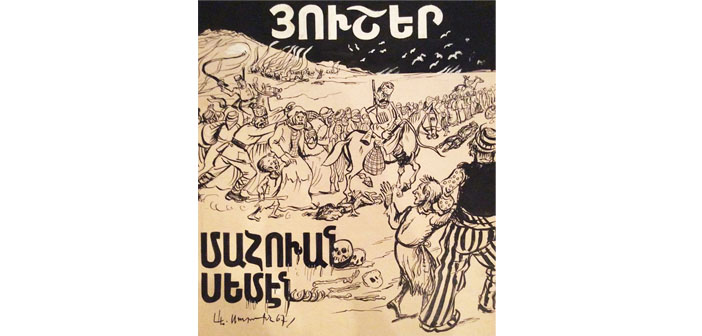
Armenian Genocide recorded in historical drawings
Killings of Armenian people in Anatolia started in 1890 and reached its peak in 1909 Adana Massacre and 1915 Armenian Genocide. This tragic history is not only recorded by witnesses, but also by the striking caricatures published in the newspapers and humor magazines. On the occasion of 101st anniversary of the genocide, here is a collection of such caricatures selected by caricaturist-artist Vrej Kassouny.
13 May 2016
Vrej Kassouny
Did the ember fall on the 'Giaour neighborhood' as well?
The debates that started after the urgent expropriation decision, which involves the churches in Diyarbakir, made the history of Sur, Suriçi a current issue. Having an important role in the history of Anatolian Armenians and Christians, Diyarbakir, and especially Suriçi, have been at the center of such practices throughout its history. Zakarya Mildanoğlu tells about the story of Suriçi churches and the expropriation history of Diyarbakir.
31 March 2016
Zakarya Mildanoğlu
Armenian Hanife's Kurdish grandson narrates
25 March 2016
Fatih Gökhan Diler
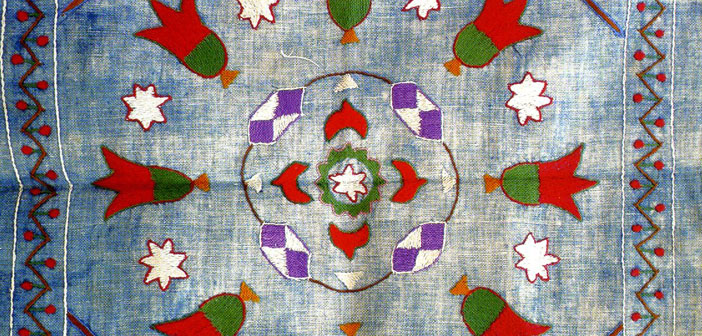
"Needlework styles in Ayıntab, Ourfa and Marash indicates that Armenian culture is a whole"
Following artist and researcher Hradzan Tokmakjian, we look at the needlework that women from Marash, Ourfa and Ayıntab, who survived the genocide and managed to go to Aleppo, brought with them, the differences between the needlework styles of 3 cities, the changes in those works in 100 years and the craft that mothers have been teaching to their daughters.
18 March 2016
Maral Dink
Hodorçur: where lost spirits still wander around
We interviewed with Nubar Gianighain about his father Raffaele Gianighain's book on his homeland Hodorçur on the occasion of its publication in Turkey.
11 March 2016
Armenian is not a foreign language to be learned later!
On the occasion of February 21 International Mother Language Day, we talked to philologist and Jamanak newspaper editor Sevan Değirmenciyan, who is also Armenian teacher in Pangaltı Mıhitaryan High School, about the importance of Western Armenian for Armenians in Turkey.
19 February 2016
Vartan Estukyan
Hayeren right now!
On the occasion of February 21 International Mother Language Day, we focused on the initiatives working for making Western Armenian a living language. We spoke to Ani Garmiryan, who is responsible for the "Promotion of Western Armenian" program of Gulbenkian Foundation.
19 February 2016
Maral Dink
Yves Ternon: Turkey is still being governed by the Young Turks mentality
Yves Ternon is one of the historians that comes to mind, while talking about “crimes against humanity” and “genocide”. Working especially on Rwanda, Jewish and Armenian genocides, Ternon worked as a physician for years and then devoted himself to historical research. We interviewed with Ternon about his journey from medical practice to historical research and his studies.
13 February 2016
Nazlı Temir Beyleryan
Cultural inventory of a civilization destroyed revealed
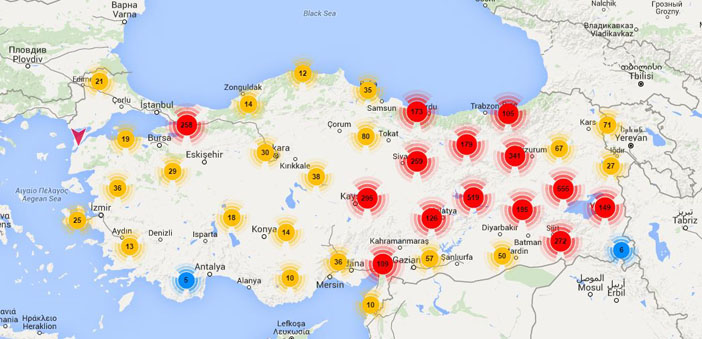
Cultural Heritage Map of Turkey is created at the end of a months-long study and research. Thanks to the project of Hrant Dink Foundation, an interactive online map is created. Through this map, it is possible to list and examine the sanctuaries, schools, hospitals and cemeteries of Armenians, Greeks, Syriacs and Jews in Turkey.
5 February 2016
Uygar Gültekin
Subscribe!
You can support Agos by subscribing. Subscribe, gift a subscription, leave a suspended subscription.
A journey to Kastamonu with flashes of memory
Arlene Voski Avakian, Head of University of Massachusetts Amherst Department of Women, Gender, and Sexuality Studies, came to Turkey for the first time in 2009 for attending Workshop in memory of Hrant Dink. Last summer, she went to Kastamonu, which is her family's motherland, following the traces of her family. Avakian sincerely wrote what she had been feeling before this journey, what she felt while she was seeking for the traces of her family and her encounter with the locals of Kastamonu and experience in a government office.
8 January 2016
Arlene Avakian
Recognition: maybe some other time
2015 was really important, since it is the centennial of the Armenian Genocide. Preparations started months ago and the people were waiting for what will happen with bated breath. We covered the events throughout the year, but some questions prepossessed us toward the end of the year: “How was 2015 in terms of recognizing 1915?” and “What have Armenian community in Turkey done in terms of producing ideas and activities?” In order to find answers to those questions, we talked to the people who are actively working on these issues and producing ideas. Moreover, we talked to people from Armenia. Majority agrees that there is some progress, but it is obvious that there are still many things that should be achieved.
25 December 2015
Childhood remained in a train to eternity
We talked to Özcan Alper about his movie “Memories of the Wind” and the issue of representing the disaster.
11 December 2015
Maral Dink
Martin van Bruinessen: Turkish state will eventually come to table with PKK
Having contributed and conduced to many researches on Kurds and Kurdistan, Martin Bruinessen talked to Agos about the current condition of Kurdish question.
12 November 2015
Nazan Özcan
This is the best response to those who say ‘Armenians should bring out their documents’
Zakarya Mildanoğlu’s book ‘Armenian Periodicals 1794-2000’ has been published by Aras Yayıncılık. Mildanoğlu’s work brings together around 3650 Armenian periodicals from the year 1794, when the first Armenian newspaper Aztarar was published, until the year 2000. We talked with Zakarya Mildanoğlu about his book which is the product of around 30 years of work, and the over 200 year history of Armenian periodicals.
7 November 2014
Tr
Հայ
Search
Agos' Agenda
Türkiye
Armenia
World
Faces/Stories
Human+Rights
Once Upon a Time
Culture And Arts
Life
Armenian Society
Authors
Illustrators
Hrant Dink
e-Newspaper/Archive
Agents
Book/ԳԻՐՔ
Contact
Subscribe Now
Login