
They say, “ It’s a small world”, don’t they? It is an old saying that has been proven true a few times in my life. Let me tell you about one very good example. Almost a decade back, I did a visual story about my father’s family’s migration from Diyarbekir to Aleppo around 1930. I was trying to do the story by taking a car trip on dirty roads from Diyarbekir to Kilis retracing the journey that my elders had done clandestinely by a caravan. I have mentioned this road trip with my friend Hüsamettin Bahçe a few times in my stories. We began with Hazro, where my father was born. So, here I was in the centre of the town and I was asking the townspeople if anyone was familiar with the name Araboğlu, my father’s clan. No one had heard of them. Finally, I entered a grocery shop and asked the cashier if he knew anything about the Armenians who had lived there. He said that he was too young to know but his father, who was sitting outside, might and that I should talk to him.
We found the old man and Hüsamettin did the translation for us. He explained to him in Kurdish the story I was doing about my elders from Hazro who had settled in Kamishly. Hearing the word Kamishly, the old man became curious and asked my grandfather’s name. When I told him Khacho Araboğlu, his face beamed saying in excitement, “Ahh...Malbata Haço! Malbata Haço!”(the family of Khacho). And he began telling that he knew Haço. After every few sentences, Hüsamettin would translate to me what the man was saying. Apparently, my grandfather’s and his family knew each other. Kurds and Armenians used to live together like brothers in those days. The two families were rich landowners and worked together.
I started feeling sentimental and excited because he had known my elders. Then the man continued saying that one day, Haço’s family had decided to move away from Hazro. Much later, news came that the Araboğlus had settled in Kamishly. Many years later around 1964, this Kurdish man and his uncles planned to go for Haj. His father asked him to pass by Kamishly and give his greetings to Haço. So, on their way they stopped by, searched for and found my grandfather who was extremely happy to see these old friends. After a few days, they continued on their piligrimage journey. As Hüsamettin was translating this part of the story, it felt like a deja vu, and an uneasy feeling overtook me. His story sounded fake all of a sudden because I was familiar with the narrative but the intentions of the trip did not sound right.
Asdghig, a friend of our family had told me that in the mid 1960s she had witnessed the arrival of some Kurds from Hazro who were looking for Araboğlu Haço. Her family was from Diyarbekir and lived next to my grandparents in Kamishly…they were best friends. In her version of the story, I guess details filled in by her father, the guests were from a family that used to work for the Araboğlus in Hazro. When the events of 1915 take place and the clan is perished, save for my grandfather, the workers take over their vineyards and possessions. Within 50 years, they end up bankrupt. So, their elders convene and decide that maybe they can ask for financial assistance from Haço in Kamishly because they have heard that he and his sons are well off. That’s why they send their men to Kamishly. In Asdghig’s version, there is no pilgrimage story nor any friendship calls. It is strictly greediness.
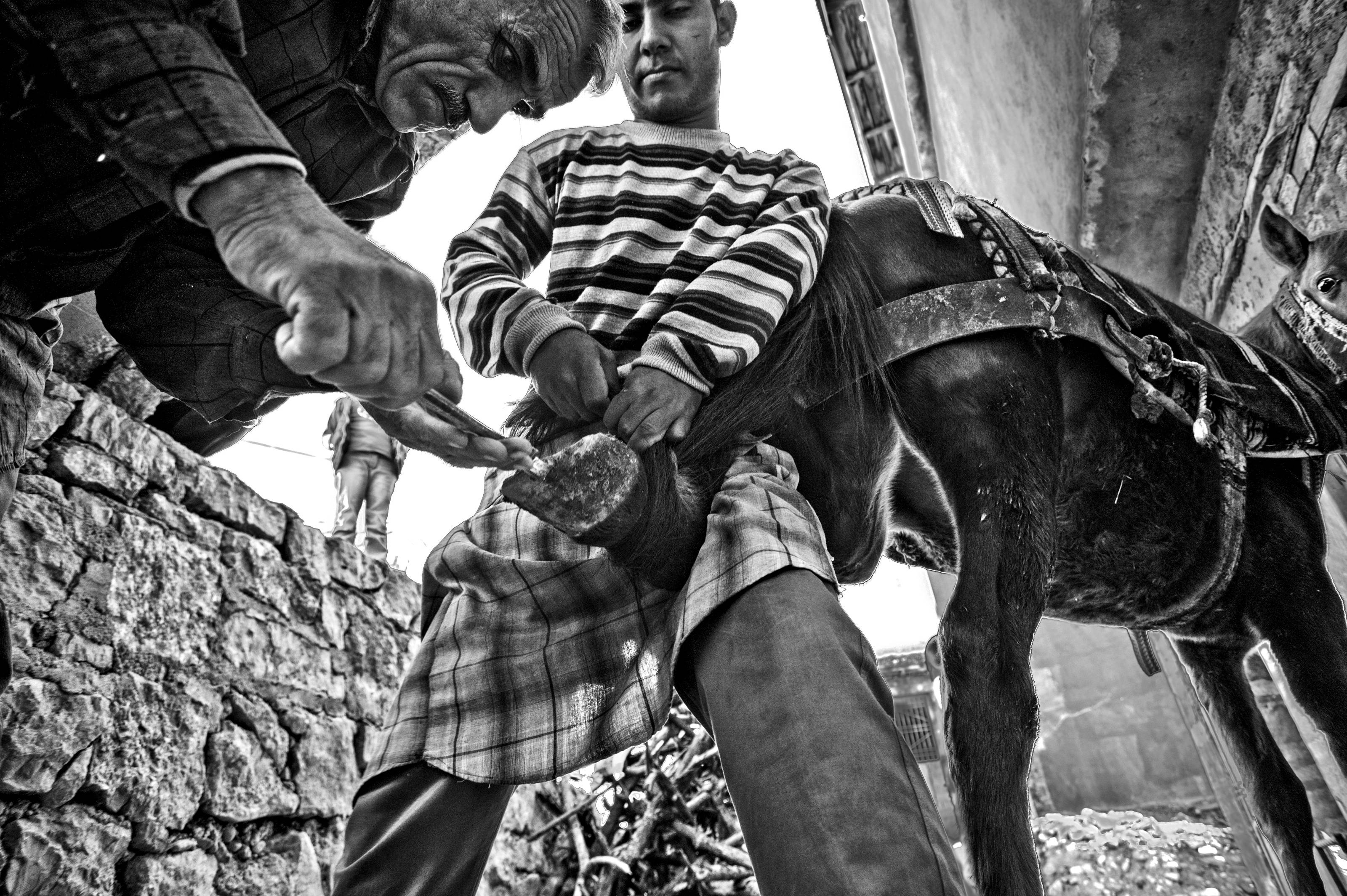
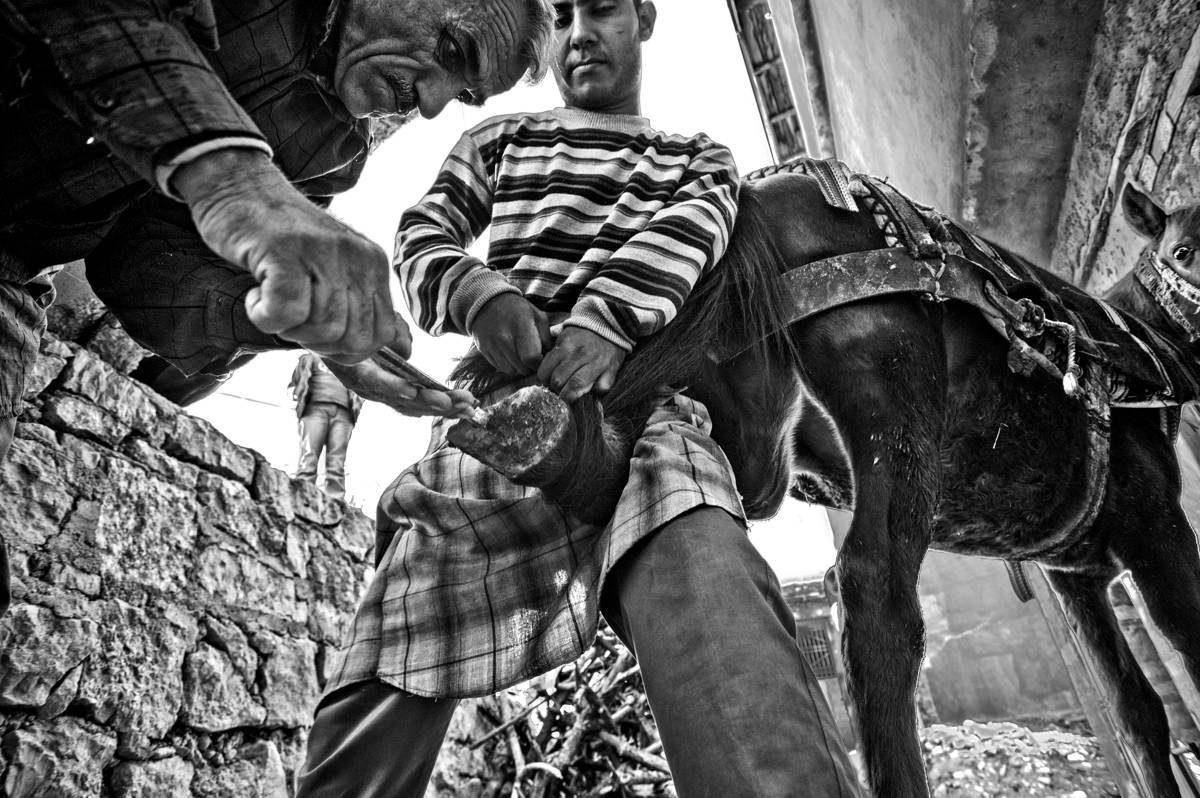
What is impressive is the way my grandfather apparently reacts to these visitors from Hazro. When he finds out who they are and what they want, he is outraged. He is also so saddened that he takes out a bundle of money bills, forces it in their hands, and in tears he tells them to go away and never ever dare come back. His final words are something like this, “I lost my entire family, you took all our property, you ate up all our possessions and it was not enough, now you have come here begging me to help you? have you no shame…?” for a few days after they leave, my grandfather does not recover from his sadness. That’s what Asdghig told me. This photograph is from that morning we arrived in Hazro with Hüsamettin. The horror in the horse’s eye makes me think of my grandfather Khachadour.
So, you understand how the old man’s tale about the Haj and the friendship visit to my grandfather felt fake to me, having heard Asdghig’s recollections from that visit. As the man was talking and Hüsamettin was translating, all of a sudden my eyes filled with uncontrollable tears. An overwhelming sadness overtook me and I couldn’t help but tell Hüsamettin to stop the interview. Saying, “come on! We are going. This man is a liar!”, I left them there and went to the car. The realization that this was one of the men from Asdghig’s story sent shivers in my body. Truely, “It’s a small World”!!