

On March 20, 2003, a US administration under the ideological grip of the neocons launched an unprovoked attack on Iraq ruled by Saddam Hussein. The pretext was the Iraqi “weapons of mass destruction” were supposedly a threat to US security. No one defended the gangster regime of Saddam back then, not even his own soldiers. After initial carpet bombing, American troops advanced from the south and occupied city after city and reached Baghdad in two weeks. They captured the dictator hiding in a hole, and passed him to his Iraqi Shia enemies, who executed him by hanging.
The American neocons had great plans for the Middle East. By occupying Iraq, and using its limitless oil reserves, they planned to finance a new Middle East dominated by America, and friendly to Israel. They did not trust their traditional allies, the Saudis, who were in the grips of a Salafi-Jihadi ideology. And by dominating over the Middle Eastern hydrocarbons (25% of global exports), the US could exert its influence far beyond, over Europe, India, and especially on China.
Yet wars have a bad habit of not following the original plan. The influential Sunni officers of Saddam’s security forces, who were ejected from power by the US occupation, rebelled against the occupation, used roadside bombs for which US troops were not ready for, and caused over 4’000 American casualties, and trillions of dollars. That was not the worst: the American occupation handed the keys of Baghdad to pro-Iranian Shia parties namely al-Da’wa and the Supreme Council for the Islamic Revolution in Iraq, both closely associated with the Iranian regime. Americans, with their 2003 invasion, not only eliminated Saddam, Iran’s main enemy, handed Iraq and its resources to the Mullahs, but also in an overnight they turned the Islamic Republic of Iran into a regional empire, stretching from Tehran all the way to South Lebanon and beyond.
The Islamic Republic of Iran exaggerated its outreach, leading wars from Syria to Yemen. While Barak Obama tolerated the Iranian expansion, even collaborated with the Islamic Revolutionary Guards Corps of Qasem Soleimani to fight Daesh in Iraq and Syria, Donald Trump and his Israeli allies did not tolerate that. The assassination of Soleimani in 2020, even before the Hamas attacks of October 7, 2023, was the count-down of reshaping the regional (dis)order. The pretext is the Iranian nuclear weapons, just like Saddam’s chemical and biological weapons, but that is only the pretext as the aim is total domination over the Middle East.
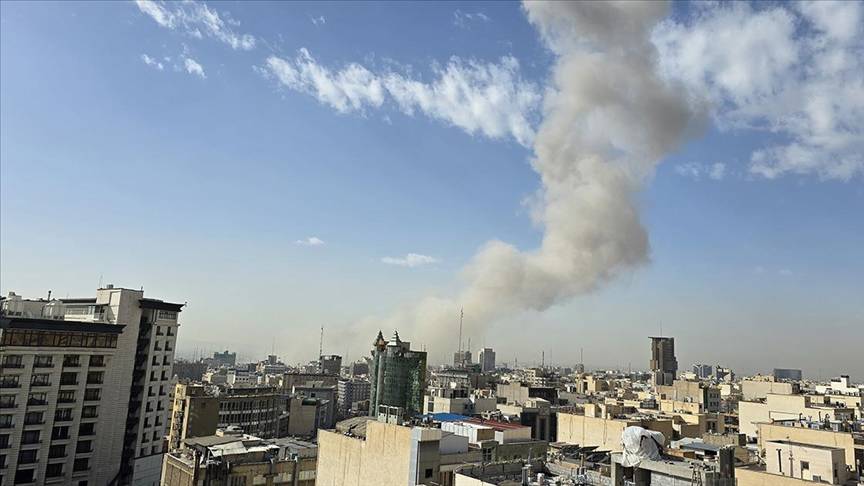
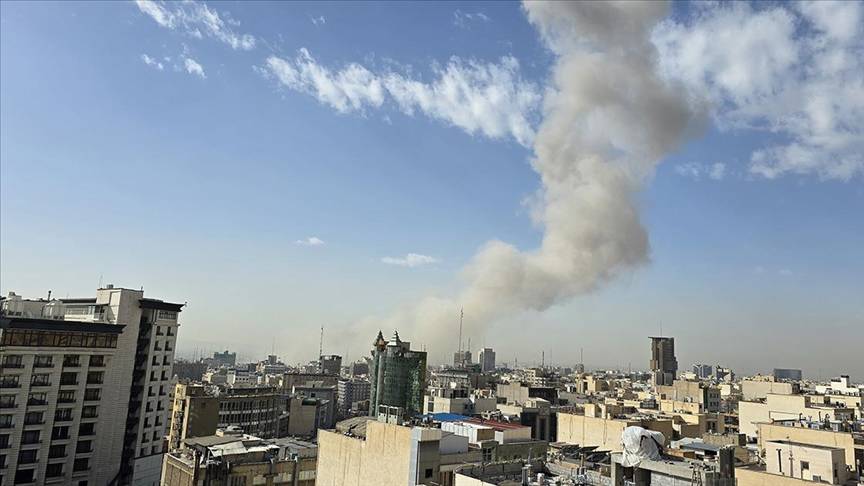
Yet the Iranian leadership did not understand that the times were changing. With the start of the Gaza war, the Lebanese Hizballah launched its “Support War” (H’arb al-isnad), giving Israel the pretext to turn the Genocidal war against the Palestinians into a total war to redraw the map of the Middle East. Ali Larijani, one of the powerful personalities in Iran, wrote on March 2, 2026, in Arabic on “X”: “We will not negotiate with the United States”. His words only confirm the hopeless situation after an Israeli-US air attack assassinated the Spiritual Leader of the Islamic State Ali Khamenei. A total war it is, pushing the Iranian ruling circles into a mystic sense of martyrdom. They are now throwing all that they have into this total war; either they survive and preserve their regime, or they perish fighting a war they did not choose.
This suicidal, “end-of-the-times” mindset is evident from Iran sending its drones and missiles on all Gulf countries. It is also evident from ordering the Lebanese Hizballah to launch a few Katyusha missiles on northern Israel, although the Lebanese Shiite militia was decapitated in its conflict with Israel in 2024. The few primitive Katyushas do not make any sense militarily, but will plunge Lebanon and especially its Shiite population into a merciless Israeli retaliation.
The current war in the Middle East is the modified continuation of the 2003 invasion. Yet it is necessary to underline the differences as well. Unlike in Iraq in 2003, there will be no foreign occupation, no American “boots on the ground”. The American-Israeli alliance do not aim at changing the Iranian regime with another, loyal one. The bombing waves that are targeting the Revolutionary Guards, the Basij, and even Police offices suggest an intention to degrade the central state structures and leave Iran to become a “failed state”.
There are no guarantees that the decline of Iran will lead to regional stability. A new regional conflict is already brewing on the horizon: a new confrontation between Isreal and Turkey. Israeli officials – former and current – are increasingly describing Turkey as “The New Iran”, and that Türkiye poses a threat to Israel through a “Sunni alliance”. Therefore, the current military madness is not a “war to end all wars”, but just one more on the way of Israel becoming the uncontested regional hegemon. But it seems rulers in America and Israel fail to understand that it is not possible to dominate and to rule with blood and iron only.