The Silent Language of Armenian Needlelace

There is always a danger when writing about Armenian memory through objects, textiles, lacework, or inherited fragments. The work can easily become nostalgic, aestheticized, almost frozen inside the beauty of loss itself. The recently launched Armenian Needlelace Initiative (https://www.armenianneedlelace.org/home) created by Deborah Valoma and Elise Youssoufian, is not simply a digital archive of Armenian lacework. It is a living archival space where textiles, photographs, oral histories, poetry, and family narratives continue speaking across generations. Encountering the project brought me back to a conversation I had the privilege of moderating last year in Istanbul as part of the “Ancestral Journeys: Reflections on Land and Belonging”(https://hrantdink.org/en/announcements/4565-ancestral-journeys-ondemand-deborah-valoma) series. During the event, Deborah Valoma spoke about returning to her ancestors’ villages in the Kharpert region and listening to the stories embedded within her grandmother’s textile archive. What stayed with me most strongly was the way her work approached inheritance. It does not romanticize the past. It listens to it. Quietly, patiently, through thread, touch, repetition, and return.
During the talk, Valoma described how an interdisciplinary artistic journey led her back to her ancestors’ villages in the Kharpert region and toward the hidden narratives stitched into her grandmother’s textile archive. What remained with me most strongly was not only the archival richness of her work but also the embodied quality of her encounter with inheritance. At one point during her visit to her grandmother’s ancestral land, she described feeling an urge to sit down. Almost instinctively, her hands reached into her bag, took out her crochet work, and began stitching. There was no grand performance in this gesture. No declaration. Just hands moving. A silent conversation unfolding across generations. In that moment, the land itself seemed to hold memory. Her grandmother Elizabeth was absent, long gone, yet strangely present through gesture, rhythm, repetition, and touch.
Later in our conversation, Valoma spoke about the importance of responsive making rather than reactive making. Not creating directly from the shock of trauma itself, but from a quieter relationship to presence, continuity, and return. I remember asking her afterward what the crochet piece looked like. She laughed softly and replied: “Oh, just a mess.” Yet perhaps that is precisely the point. Not mastery. Not perfection. But embodied connection. A hand responding before language fully catches up.
This sensibility quietly runs throughout the Armenian Needlelace Initiative. The archive does not treat lacework as a decorative artifact alone, but as a material carrier of displacement, labor, migration, grief, and survival. Photographs, essays, family histories, lace patterns, oral narratives, and poetry exist alongside one another, allowing Armenian needlelace to emerge not simply as craft, but as lived history.
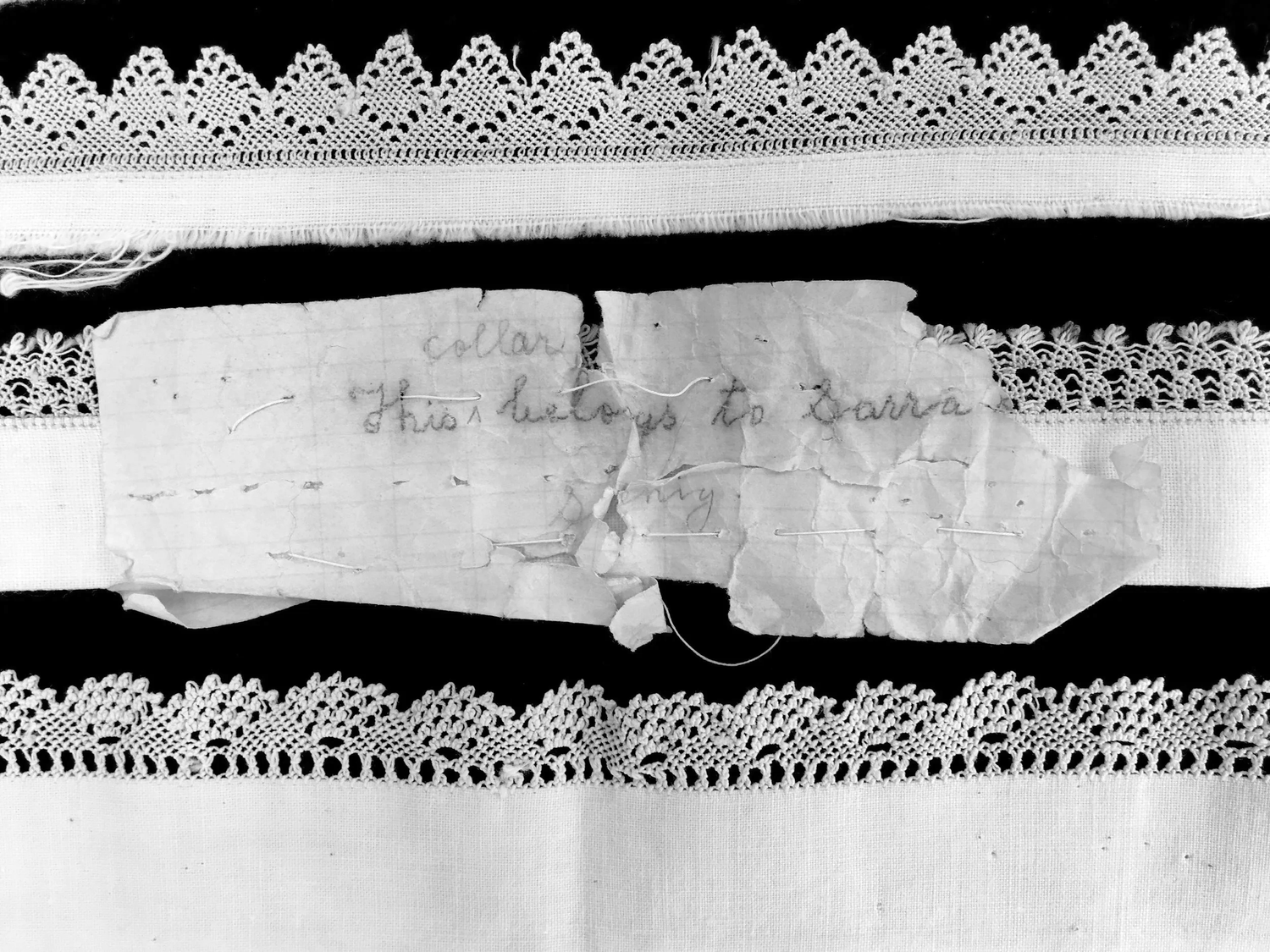
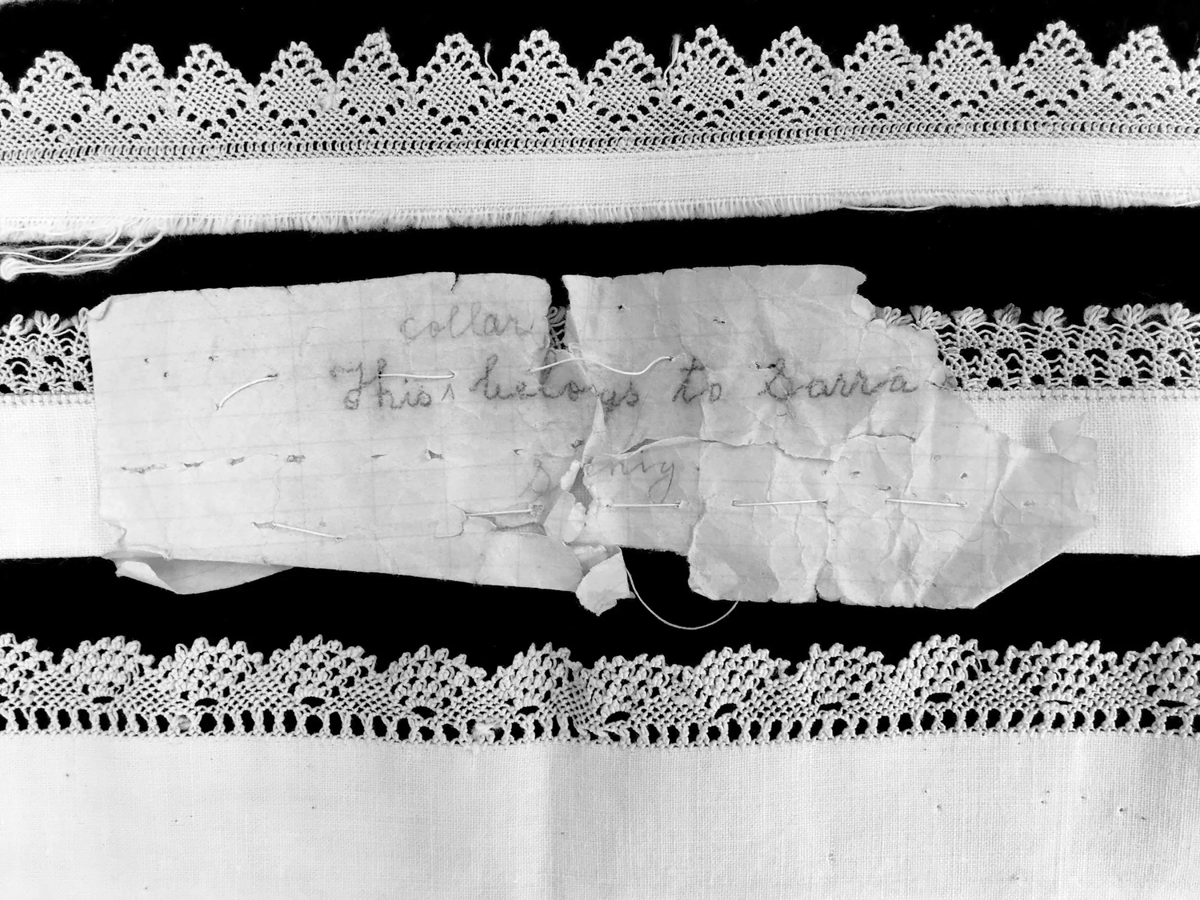
One story from the archive especially stayed with me. Valoma recounts discovering three cotton collars trimmed with Armenian needlelace, wrapped carefully in a handkerchief inside her grandmother’s cedar chest. Attached was a note explaining that the collars had been sent by her cousin Satinig from Kharpert shortly before the deportations and before Satinig died on the road to Aleppo. Years later, a fourth collar emerged, carrying the penciled words: “This belongs to Sarra.”
Such tiny objects. Yet entire worlds survive inside them. Satinig’s hands touched these threads before her death. Decades later, Valoma touches the same fabric. Textile becomes encounter. Material becomes witness.
Throughout the archive, poetry accompanies these fragments. Elise Youssoufian’s final stanza from “Let the Candle Keep Burning” seems to capture the spirit of the project itself:
Pull the thread and it will sing
No shortcuts to the moment of making
Let all its light and shadow dance
Your path lit by a small, solitary candle
Each step on fertile ground, nothing more or less
These are not simply poems about lace. They are poems about transmission, about the fragile continuity carried through gesture, touch, and making.
In many silenced homes shaped by rupture and displacement, it is often women who are left to gather fragments, hold incomplete narratives, and thread interrupted stories together again. The work is never fully finished. Perhaps that is why needlework becomes such a powerful metaphor here. Stitch by stitch, memory remains in motion.
The Armenian Needlelace Initiative asks for a particular kind of attention. It is not a website one quickly scrolls through. One enters not only a textile archive, but a space where collars, stitches, handwritten notes, photographs, poetry, and family histories continue speaking across generations. In these delicate acts of stitching and keeping, some pasts remain unfinished, yet still capable of being held, touched, and carried forward with care.