OPEN LETTER FROM THE DIASPORA ON THE GOVERNMENT-CHURCH CONFLICT
“You are causing more harm than even the Ottomans and Soviets could”

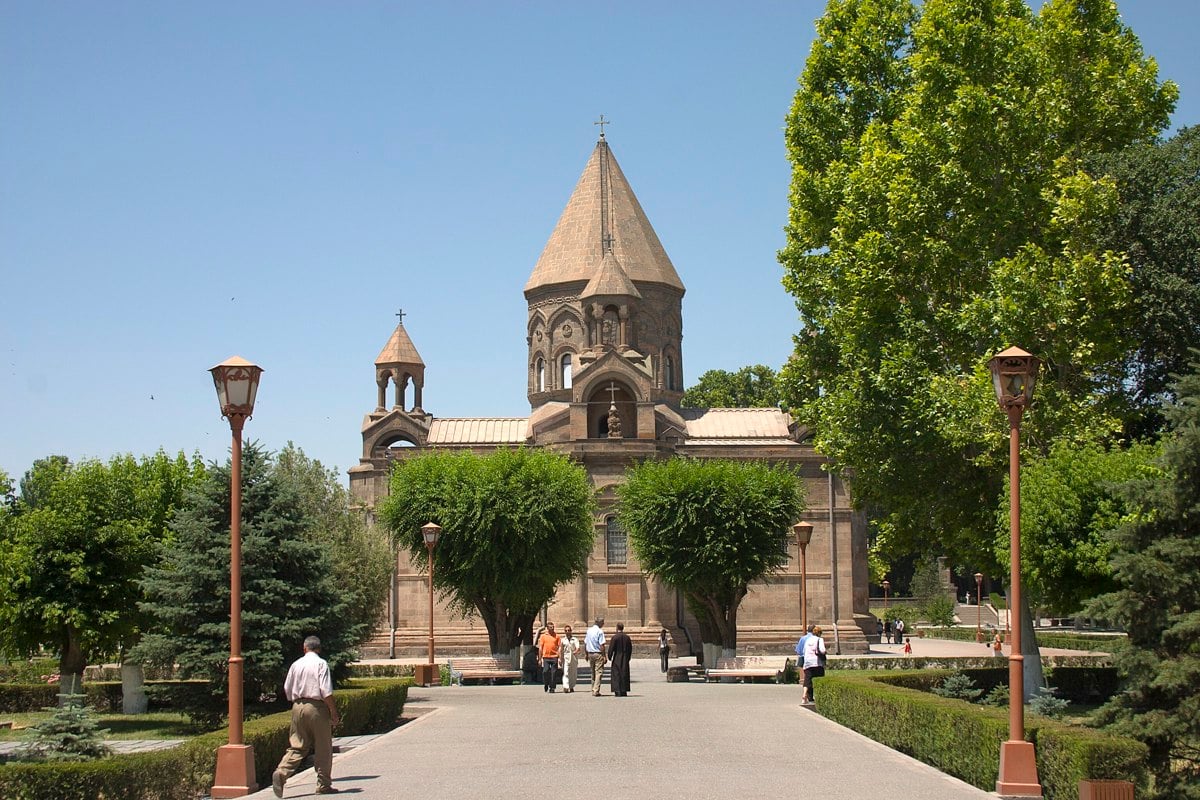
Leaders of the Armenian diaspora have warned that the government’s stance in its conflict with the Armenian Apostolic Church (Etchmiadzin) risks damaging ties with Armenians worldwide to a degree that “even the Ottoman Empire or the Soviet Union could not achieve.”
In the open letter published on Thursday, authored by seven leading figures of the Armenian diaspora, it was stated: “The Armenian government’s approach, even if not intentional, risks severing its relationship with the diaspora; something that even the Ottoman Empire or the Soviet Union failed to achieve.”
The letter was signed by Noubar Afeyan, co-founder of Moderna; Anthony Barsamian, former chairman of the Armenian Assembly of America; Lord Ara Darzi (Baron Darzi of Denham), a British-Armenian surgeon and member of the UK House of Lords; Eric Esrailian, a UCLA physician and philanthropist; Vatche Manoukian, businessman; Joseph Oughourlian, a French financier; and Berge Setrakian, former president of the Armenian General Benevolent Union (AGBU).
The Case of Samvel Karapetyan
The diaspora’s letter comes amid escalating tensions between Prime Minister Nikol Pashinyan’s government and the Armenian Apostolic Church, led by Catholikos Karekin II. In recent months, the dispute has intensified further with legal actions targeting high-ranking clergy and harsh criticism of the Church by government officials.
“Recent ongoing political disputes in Armenia—including the growing conflict between leaders of the Armenian Government and leaders of the Armenian Apostolic Church—have culminated in government demands for the removal of the church leader,” the letter stated.
The signatories argued that the Catholikos was elected in accordance with church regulations and that any removal process must take place within church structures, not under state pressure.
The statement also drew attention to criminal cases filed against clergy and the imprisonment of Russian-Armenian businessman Samvel Karapetyan. “Certain archbishops have been imprisoned on charges of making political statements, and a prominent Russian-Armenian philanthropist and businessman was jailed for publicly supporting the church’s position,” the statement read.
The Vienna Meeting
The letter highlighted the “Holy Assembly of Bishops,” scheduled to be held in Vienna on February 17-19, which the Church convened to address internal issues.
“The Church had previously called for an assembly of bishops to be held in Vienna. Unfortunately, it is reported that the government has sent legal notices to several bishops, prohibiting them from leaving the country to attend the meeting,” the signatories wrote.
In January, Armenian authorities reportedly blocked several bishops from attending the planned meeting by imposing travel bans ahead of the mid-February assembly in Vienna. Following this meeting, a session of the National Ecclesiastical Assembly—described as “the highest governing body of the Church and the only body that elects the Catholikos”—was expected to take place.
“It is vital for the Church to govern itself for continuous development and reform,” the signatories stated, calling for all disputes to be resolved within church governance structures.
The Diaspora Dimension
The diaspora leaders addressed the conflict between the government and the church as an issue with global consequences. They argued that the institution has long been at the center of Armenian identity, citing Armenia's adoption of Christianity in 301 AD and the role the Church played following the 1915 Genocide and during Soviet rule.
“It was the Church that helped the people survive and revive in the period following the Genocide. It was the Church that helped resurrect the Armenian spirit, and the same Church is needed for an ancient nation scattered across the world to flourish,” the letter said.
Considering that approximately 3 million Armenians live in Armenia and an estimated 7 million in the diaspora, the signatories noted that actions affecting the Church resonate far beyond the country’s borders.
“The Armenian Church offers a spiritual bond to all Armenians, including the vast majority of Armenians living outside of Armenia. Therefore, any attack or interference in the governance or activities of the Church directly affects Armenians around the world,” they wrote.
The letter concluded with the following words: “Armenia is at a critical turning point in its history. This is not the time to allow internal divisions between church and state in Armenia to further weaken the Armenian nation spread across the world. On the contrary, it is time to de-escalate this internal crisis so that the Armenian state, the Armenian church, and the Armenian diaspora can move toward a new era of peace and prosperity.”