
An article written by Karen Harutyunyan, editor-in-chief of the Yerevan-based news platform CivilNet:
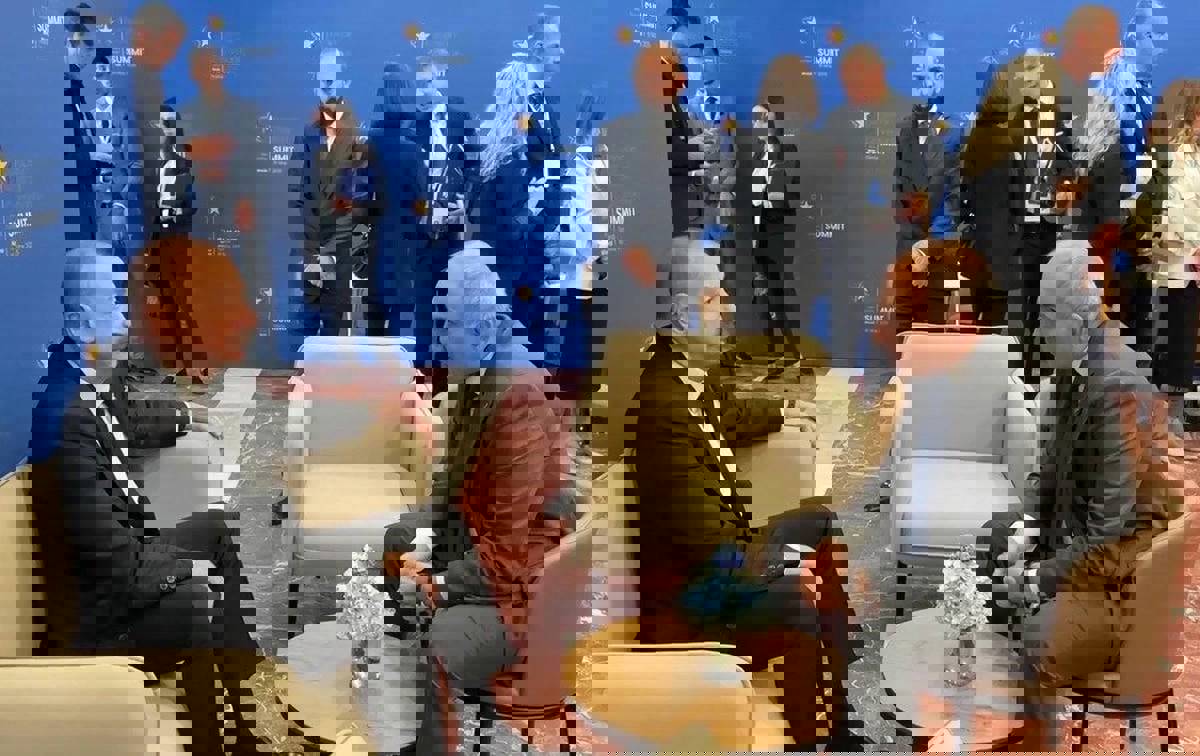
“Armenia’s prime minister Nikol Pashinyan and Azerbaijan’s president Ilham Aliyev were awarded the Zayed Award for Human Fraternity “in recognition of the establishment of peace between Armenia and Azerbaijan.” The symbolism was striking. Yet peace itself remains elusive. The two sides have so far only initialed a draft document, witnessed by U.S. President Donald Trump in August 2025, while Azerbaijan continues to introduce new preconditions for signing a final agreement.
This moment also crystallized a powerful narrative that has taken root both inside and outside Armenia: that previous Armenian governments were uncompromising, maximalist, and uninterested in peace—and that only the current leadership has had the courage to abandon illusions and pursue reconciliation with Azerbaijan. It is a convenient story. It is also false.
Since the late 1990s, every serious international plan to resolve the Nagorno-Karabakh conflict—without exception—was built on a core premise: the return of the territories surrounding Nagorno-Karabakh to Azerbaijani control. From the very beginning of formal negotiations, Armenian leaders accepted that territorial compromise was unavoidable. The disagreement was never about whether land would be returned, but when, how, and under what security and status arrangements.
The first comprehensive proposals came in 1997, under the auspices of the OSCE Minsk Group. Both the “package” and the subsequent step-by-step (phased) variants envisaged Armenian withdrawal from six or seven adjacent districts, the deployment of international peacekeepers, and the normalization of Armenian-Azerbaijani relations. The key difference lay in sequencing: whether Nagorno-Karabakh’s final status would be determined simultaneously with territorial withdrawals or deferred to a later stage.
In 1998, mediators advanced the so-called “common state” proposal, which envisioned Nagorno-Karabakh as a statelet within a shared state framework linked to Azerbaijan. In 2001, the parties came remarkably close to a deal at Key West, where discussions included far-reaching territorial swaps. Although the talks ultimately collapsed, their very existence alone undermines the claim that Armenia categorically rejected compromise.
The pattern continued in the following decade. The 2007 Madrid Principles—and their later modifications—rested on the same pillars: the return of surrounding territories, an interim status for Nagorno-Karabakh with security guarantees, a corridor linking it to Armenia, and a legally binding expression of will on final status at a later stage. Even the much-debated so-called Lavrov Plan followed this logic. None of these initiatives offered Armenia the option of keeping conquered territories indefinitely. Armenian negotiators knew this and negotiated accordingly.
Why, then, did these plans fail? The answer cannot be reduced to a lack of Armenian willingness for peace. Azerbaijan’s role must also be acknowledged. Over time, buoyed by energy revenues and geopolitical leverage, Baku increasingly framed negotiations not as a process of mutual compromise but as a vehicle for imposing outcomes. Parallel to this, Azerbaijan invested heavily in a state-run propaganda ecosystem that dehumanized Armenians, normalized Armenophobia, and portrayed any compromise as a betrayal—further shrinking the political space for a negotiated settlement.
At the same time, Armenian and Azerbaijani governments alike lacked the sustained political will required to prioritize the resolution of the conflict. None of this absolves Armenia’s previous governments of their shortcomings. Peace demanded far greater effort in preparing societies for compromise, explaining the real parameters of negotiations, and confronting entrenched nationalist myths. Instead, leaders on both sides largely kept negotiations opaque, shielding their publics from difficult truths and allowing radical narratives to harden, rather than actively cultivating support for peace.
This shared failure, however, does not justify rewriting history. It is particularly striking that the most radical rhetoric of all Armenia’s leaders came from the man now presented as a peace pioneer. Nikol Pashinyan was the leader who declared “Karabakh is Armenia,” who asserted that the Treaty of Sèvres had not lost its political or legal significance, and who sidelined decades of accumulated negotiation logic by insisting that talks had to begin “from zero.” These positions were not harmless slogans. They helped deepen the diplomatic impasse and contributed to conditions that ultimately made renewed war more likely.
Acknowledging this history does not mean denying the complexity of the conflict or the constraints leaders faced. But myths are dangerous substitutes for analysis. Today’s narrative, which casts past Armenian governments as uniquely obstructionist, collapses under even minimal scrutiny of the record.
For Armenians, this debate unfolds against the backdrop of profound generational trauma. The loss of Nagorno-Karabakh in 2023 and the forced displacement of its entire Armenian population marked not just a geopolitical defeat, but the erasure of a lived homeland. Any serious conversation about peace must reckon with this reality. Without honesty about the past—and empathy for the human cost of its outcomes—peace risks becoming not a shared project, but an imposed slogan, fragile and reversible.”