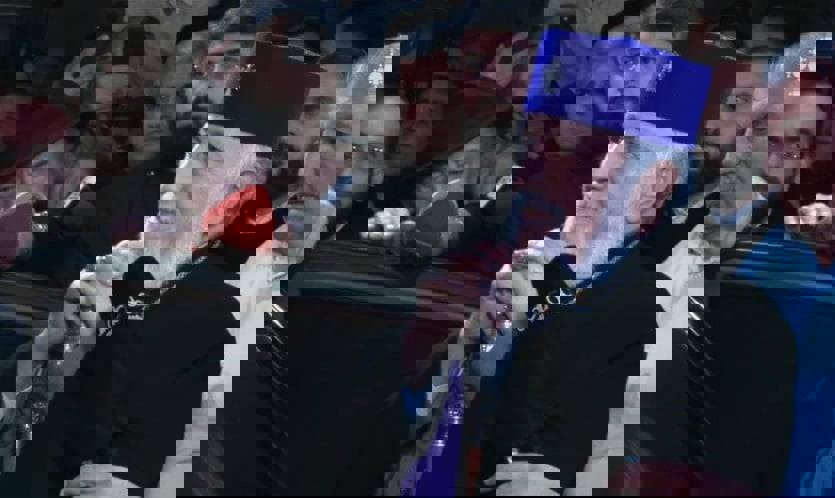

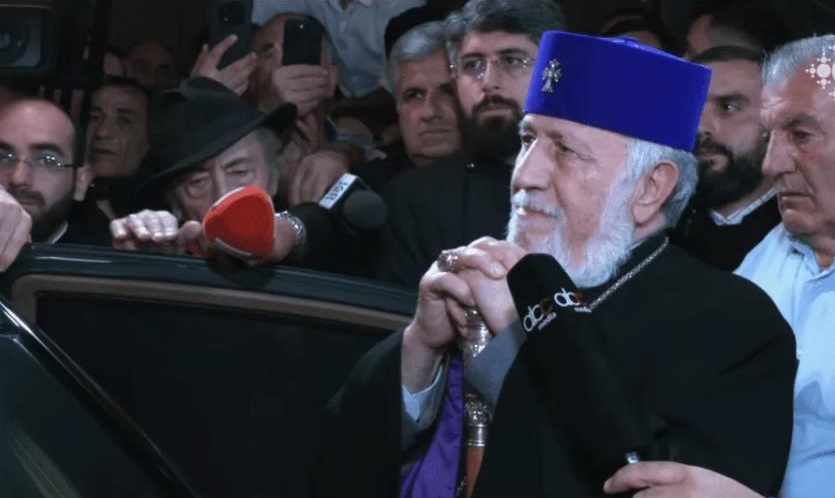
The ongoing crisis between the government and the Church in Armenia has reached a new stage. The Prosecutor General’s Office announced that it has launched a criminal prosecution against Karekin II. Ara Zohrabyan, the Church’s lawyer, stated on Saturday that prosecutors have filed a case accusing the Catholikos of obstructing the implementation of a court decision regarding Bishop Gevorg Saroyan, the former spiritual leader of the Masis (Masyatsotn) Diocese. Zohrabyan noted that a travel ban was imposed on the Catholikos as part of this prosecution, calling it an attempt to disrupt the assembly meeting scheduled for February 16–19.
Prosecutor General’s Office Declines to Give Details
The case is based on the dismissal of Bishop Saroyan. According to a statement from the Mother See of Holy Etchmiadzin, Catholikos Karekin II dismissed Saroyan from his leadership role on January 10, citing abuse of power, neglect of duty, and alleged pressure on the clergy. Saroyan—who is among a group of bishops calling for the Catholikos’s resignation and who has met with Prime Minister Nikol Pashinyan—challenged the decision in court and obtained an order for his temporary reinstatement.
Investigators claim that members of the Church’s Supreme Spiritual Council obstructed the implementation of this court order. On January 31, several senior clergymen were summoned as defendants and banned from leaving the country. This effectively prevented them from attending the assembly in Austria.
Legal experts have questioned the unusual haste in executing the decision regarding Saroyan and the speed of the investigation, noting that many court rulings in Armenia remain unimplemented for years.
Earlier this month, the Vienna-based Forum for Religious Freedom-Europe (FOREF Europe) stated that the actions against senior clergy amount to "systematic interference" in the internal affairs of the Armenian Apostolic Church and threaten constitutional guarantees of religious freedom.
A Widening Rift
These developments occur amidst a widening conflict between Prime Minister Nikol Pashinyan and the Church. Over the past year, Pashinyan has openly questioned the legitimacy of Catholikos Karekin II and called for his resignation, while insisting that legal actions target alleged criminal behavior rather than the institution itself.
Critics argue that the scope and timing of the measures—including travel bans imposed days before a planned bishops' meeting abroad—create the appearance of political interference in church governance. Government officials, however, maintain that court rulings must be implemented regardless of status.
The criminal case against the Catholikos follows earlier prosecutions of senior clergy. Currently, at least 11 clergymen are either in prison, in detention, or facing criminal prosecution. Bishop Mikayel Ajapahyan of the Shirak Diocese was sentenced to two years in prison, while Archbishop Bagrat Galstanyan is being held in custody in Yerevan awaiting trial. Authorities have also arrested Archbishop Arshak Khachatryan, Chancellor of the Mother See of Holy Etchmiadzin, along with other senior clergy, and initiated criminal proceedings against six bishops and a priest who were summoned as defendants and placed under travel bans.
The Mother See of Holy Etchmiadzin condemned the criminal proceedings against Catholikos Karekin II and the travel ban, describing the measures as "baseless, illegal," and politically motivated. In a statement, the Church accused the authorities of unconstitutional interference in its internal affairs, stating that these actions disregard the historical role of the Church and millions of believers while obstructing the spiritual duties of the Catholikos. Etchmiadzin urged prosecutors to immediately review the decisions targeting the Catholikos, six bishops of the Supreme Spiritual Council, and their secretary, warning that these steps risk deepening social divisions and damaging the country’s reputation.
(Civilnet)